
Assoc. Prof. Dr. Pınar Kadiroğulları
Assoc. Prof. Dr. Pınar Kadiroğulları is a specialist in obstetrics and gynecology. She works in the areas of pregnancy monitoring, HPV and cervical health, genital aesthetics, and gynecological surgery.
Her approach is based on current scientific guidelines.
Infertility treatment aims to identify and resolve medical conditions that prevent couples from having children. This condition can develop due to female or male-related factors, and treatment options are planned according to the cause.
In modern gynecology practice, in line with ESHRE (European Society of Human Reproduction and Embryology) and ASRM (American Society for Reproductive Medicine) guidelines; a personalized treatment plan is created by taking into account the couple’s age, duration of infertility, and accompanying health conditions. At her practice in Nişantaşı, Istanbul, Assoc. Prof. Dr. Pınar Kadiroğulları plans the evaluation and follow-up of couples in line with scientific guidelines.
Information Note
An infertility diagnosis is made when pregnancy does not occur within 1 year for couples under 35, or within 6 months for couples over 35, despite regular and unprotected intercourse. Early evaluation is important. Information on the Endometriosis (Chocolate Cyst) Treatment page may also be useful.
What is Infertility?
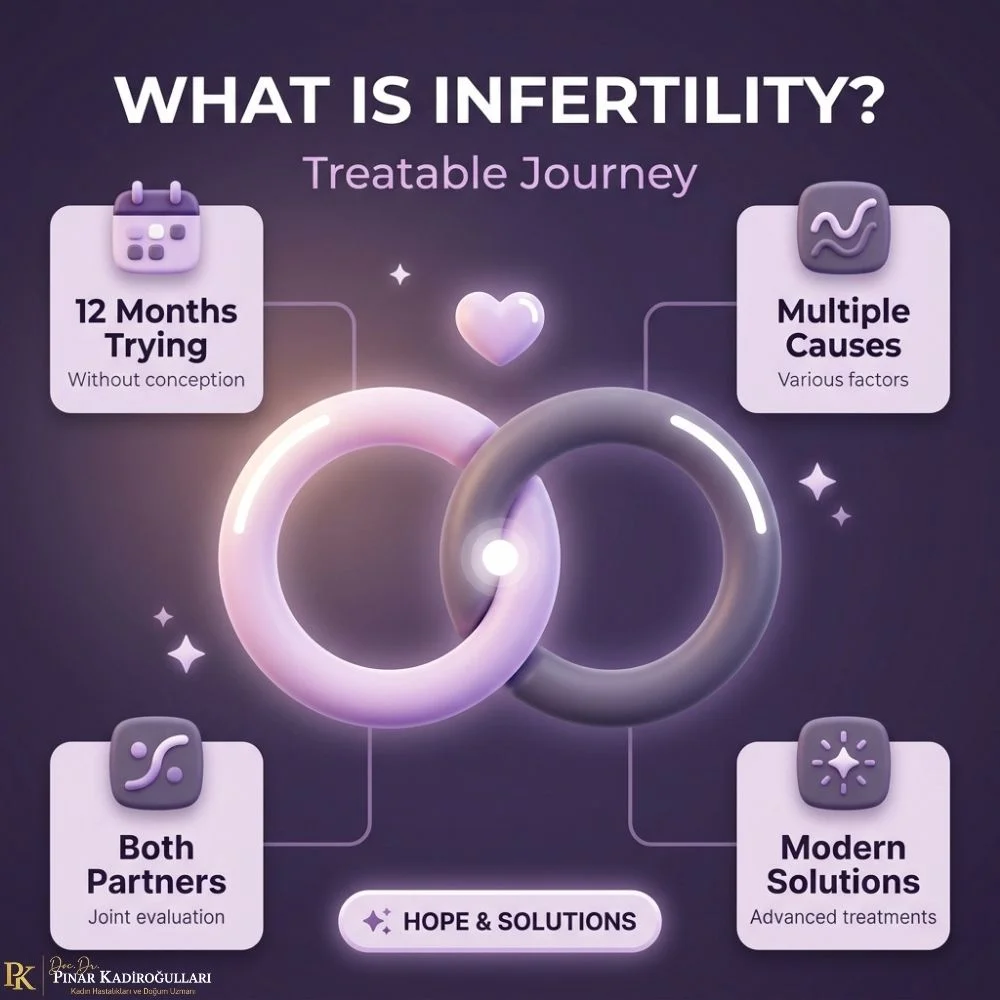
Infertility is defined as the inability to achieve pregnancy despite regular unprotected intercourse. The criteria for diagnosis are 1 year for couples under the age of 35 and 6 months for those over 35. According to World Health Organization (WHO) data, 10-15% of couples of reproductive age encounter this condition.
Infertility factors may involve the female partner, the male partner, both partners, or may remain unexplained. The primary goals within the scope of treatment are as follows:
1. Accurate and Early Diagnosis: Identifying the underlying cause through detailed evaluation of both partners.
2. Treatment Directed at the Root Cause: Correction of hormonal imbalances, structural issues, or lifestyle factors.
3. Assisted Reproductive Technologies (ART): Application of insemination, IVF (In Vitro Fertilization), and microinjection when natural success cannot be achieved.
Important Information
Infertility is a shared issue for the couple; it should not be attributed to only one partner. It is essential that both partners are evaluated together during treatment. Since the chance of pregnancy decreases with age, couples who do not achieve results within the specified period should undergo an evaluation.
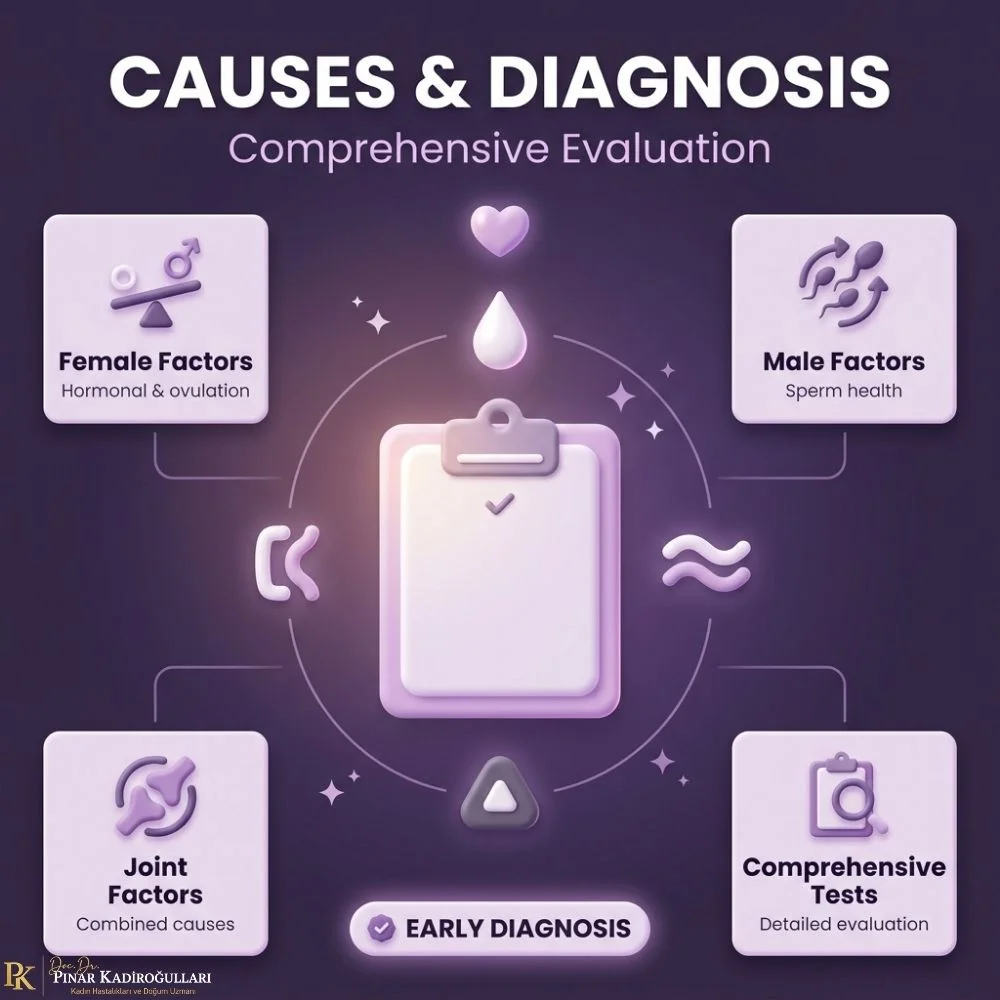
Causes of Infertility and Diagnostic Methods
The success of infertility treatment depends on identifying the correct underlying cause. Both partners must be evaluated in detail because infertility is a shared issue for the couple.
1. Female Factors
- Ovulation disorders: PCOS, hypothyroidism, hyperprolactinemia
- Tubal blockages: Following pelvic infections or previous surgeries
- Endometriosis and chocolate cysts
- Intrauterine issues: Fibroids, polyps, septum, Asherman’s syndrome
- Diminished ovarian reserve and age factor (significant decline after age 35)
- Chromosomal and genetic abnormalities
2. Male Factors
- Sperm abnormalities: Low count (oligospermia), poor motility (asthenospermia), abnormal morphology (teratospermia)
- Varicocele: Enlargement of the veins within the scrotum
- Hormonal imbalances (testosterone, FSH)
- Obstruction in the reproductive ducts
- Genetic factors or history of previous infections/surgeries
3. Unexplained Infertility
- Cases where pregnancy does not occur despite all tests being normal; lifestyle and environmental factors may be influential.
- Assisted reproductive treatment may be considered; this is decided by the physician.
4. Diagnostic Methods
- Detailed medical history (anamnesis): Menstrual history, past illnesses, lifestyle
- Hormone tests: FSH, LH, AMH, prolactin, thyroid, estradiol
- Transvaginal ultrasound and HSG: Evaluation of the ovaries, uterus, and tubal patency
- Hysteroscopy: Examination of the inside of the uterus using a camera
- Spermiogram: Analysis of sperm count, motility, and morphology
- Genetic tests: Karyotype analysis when necessary
Doctor’s Advice
An infertility evaluation is not a one-time examination; the process is typically expected to be completed within 4-6 weeks. Early and accurate diagnosis is important for planning treatment.
Infertility Treatment Methods
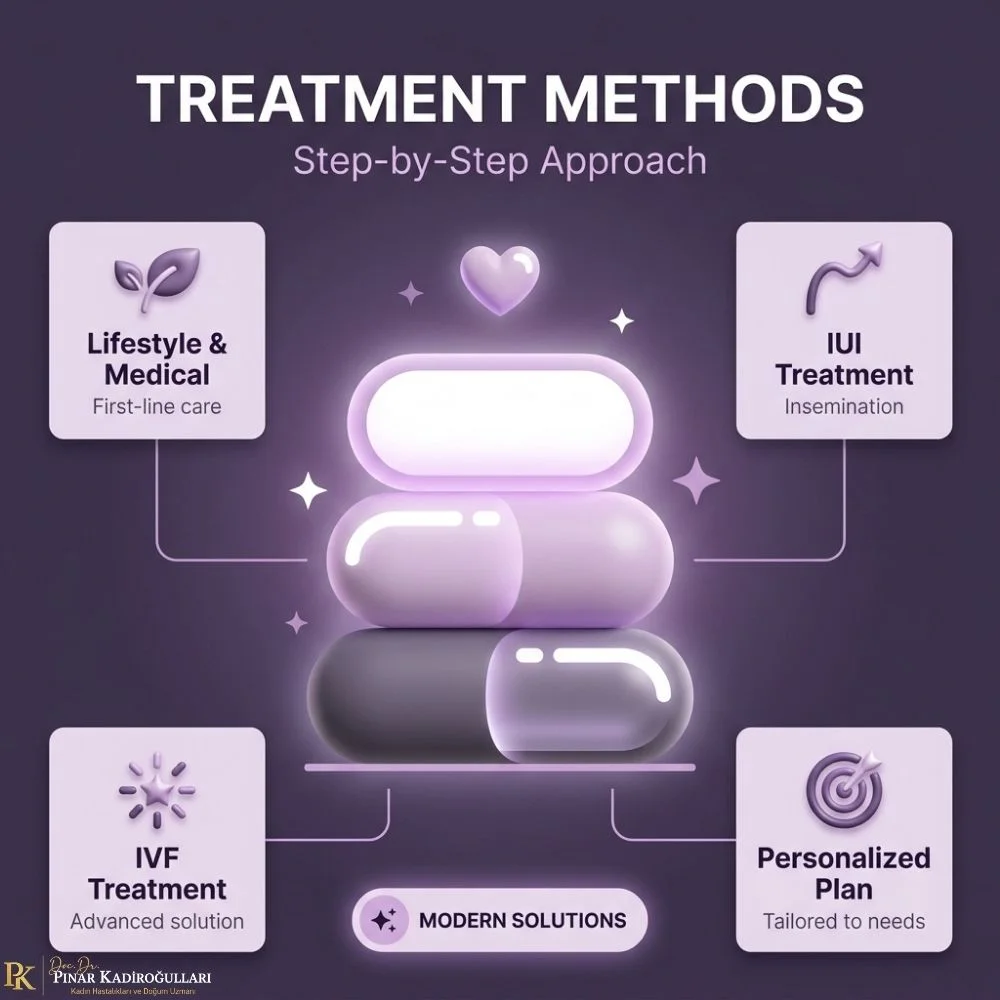
Infertility treatment is planned with a stepped approach, taking into account the couple’s age, the cause of infertility, and its duration. Treatment is personalized and generally starts with the simplest method, progressing to advanced techniques when necessary.
Step 1 Treatment
Treatments Directed at the Root Cause
- Ovulation Induction: Medication-supported ovulation induction when indicated.
- Hormonal Regulation: Treatments for thyroid, prolactin, and insulin resistance.
- Surgical Intervention: Hysteroscopy (polyp, fibroid, septum) and laparoscopy (endometriosis, chocolate cyst, tubal problems).
Step 2 Treatment
Insemination (IUI)
- Ovulation Stimulation: Supporting egg development with medications.
- Sperm Preparation and Transfer: Direct placement of high-quality sperm selected in the laboratory into the uterus.
- Success rates vary according to age and the individual situation.
Step 3 Treatment
In Vitro Fertilization (IVF) and Microinjection (ICSI)
- In Vitro Fertilization (IVF): Bringing the egg and sperm together in a laboratory environment.
- Microinjection (ICSI): Directly injecting a single sperm into the egg; the healthy embryo is then transferred to the uterus.
- Success rates vary according to age and the individual situation.
Lifestyle Recommendations and Supporting Fertility
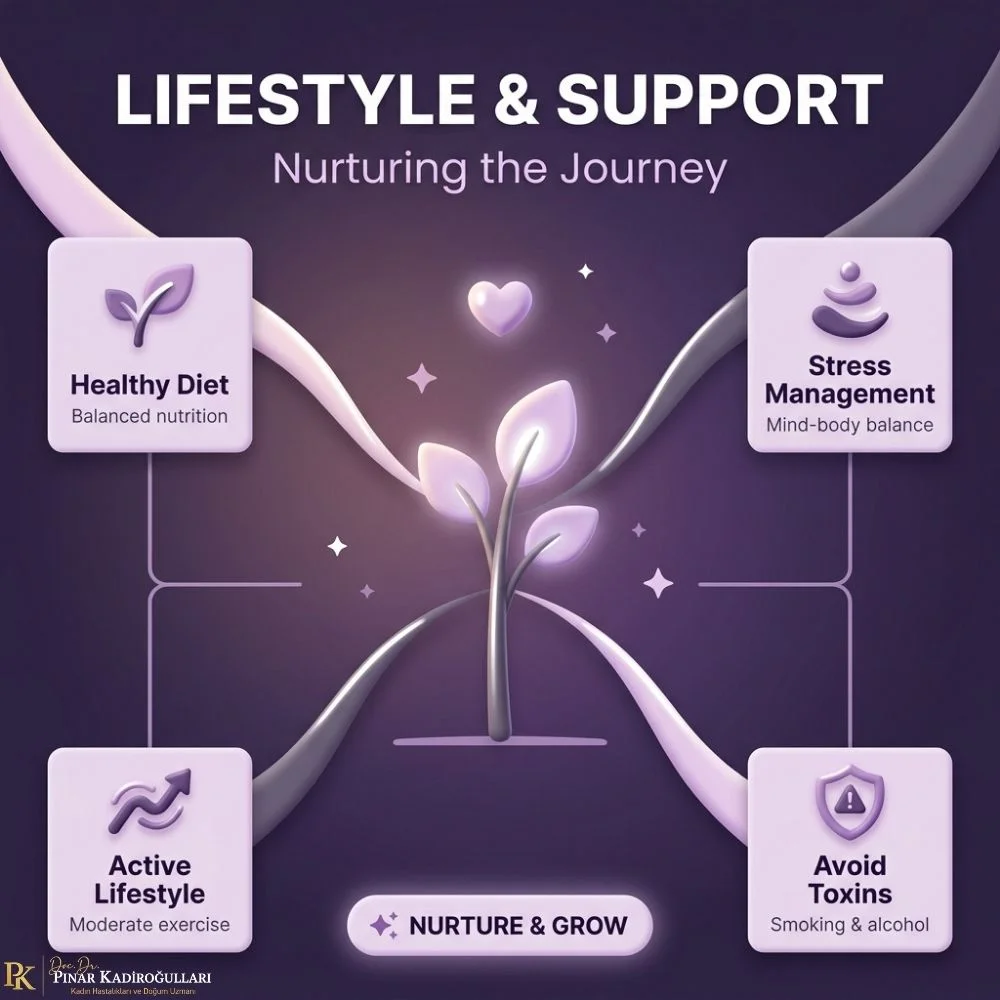
Lifestyle adjustments during the infertility treatment process may support the chances of natural conception and the course of assisted reproductive treatment. The following recommendations are evidence-based and supported by ESHRE and ASRM.
Nutritional Recommendations
- Mediterranean-style diet: Vegetables, fruits, whole grains, and olive oil support fertility.
- Folic acid and other supplements: Discuss with your physician before pregnancy.
- Antioxidant-rich foods may be part of a balanced diet.
- Avoid processed foods and trans fats.
- Limit caffeine and alcohol — they may reduce the chance of pregnancy.
Lifestyle Adjustments
- Weight management: A healthy body weight is recommended; discuss your individual target with your physician.
- Regular exercise: 150 minutes of moderate intensity per week is recommended.
- Avoid excessive exercise — it can lead to ovulation disorders.
- Stress management: Yoga, meditation, and breathing exercises can be supportive.
- Be sure to quit smoking and alcohol — they impair egg and sperm quality.
- Quality sleep: 7-9 hours a day is necessary for hormonal balance.
- Avoid environmental toxins (paints, plastic lids, pesticides).
⚠️ Situations Requiring Early Consultation with a Physician
- Under age 35: If there is no pregnancy despite 1 year of unprotected intercourse
- Over age 35: If there is no pregnancy despite 6 months of unprotected intercourse
- Menstrual irregularity or periods with intervals longer than 35 days
- History of pelvic infection or previous surgery
- Diagnosis of endometriosis or chocolate cyst
- A previously identified sperm problem in the male partner
- Family history of early menopause or genetic disease
Important Reminder
Treatment outcomes vary according to the cause and the couple’s individual situation. Patience, mutual support between partners, and open communication with the treating team are important in the process.
Frequently Asked Questions
Is Infertility Hereditary?
Some causes of infertility are hereditary, but most cases are not genetic. There may be a genetic predisposition in early menopause, polycystic ovary syndrome (PCOS), endometriosis, and certain sperm disorders. If there is a history of menopause under the age of 40 in your mother or close relatives, an early evaluation is recommended. However, most infertility cases stem from environmental factors, lifestyle, or acquired conditions.
How long does IVF treatment take?
An IVF treatment cycle lasts approximately 4-6 weeks. The process consists of ovarian stimulation (10-14 days), egg retrieval, fertilization, embryo development, and transfer stages. The outcome depends mostly on the woman’s age; embryo quality, the uterine environment, and previous treatment history are also important factors.
Does Stress Cause Infertility?
Stress is not a standalone cause of infertility, but it can affect the process. Intense and long-term stress can lead to imbalances in the hypothalamus-pituitary-ovarian axis, causing ovulation disorders and menstrual irregularities. In men, stress can also negatively impact sperm quality. Yoga, meditation, and psychological support can help in coping with the treatment process.
Why is age so important in infertility treatment?
Egg count and quality decrease with age. Women are born with a fixed number of eggs, and this reserve is depleted as they get older. The decline accelerates after age 35, and the chance of pregnancy decreases significantly after age 40. In men, sperm quality also begins to decline after age 40. Therefore, evaluating couples with suspected infertility at the appropriate time is important.
What is the difference between Insemination (IUI) and IVF?
Insemination (IUI) is the process of placing sperm directly into the uterus; fertilization occurs inside the female body. It is preferred for mild male factors, unexplained infertility, and cervical issues. In vitro fertilization (IVF), on the other hand, is an advanced method where the egg and sperm are combined in a laboratory, and the embryo is then transferred to the uterus. IVF is applied in more complex cases — tubal blockage, advanced maternal age, or severe sperm issues.
Our Treatments






References
The medical content on this page has been prepared based on current clinical guidelines and scientific publications from international and national authoritative organizations. Publications on ovarian reserve and fertility authored by Assoc. Prof. Dr. Pınar Kadiroğulları are also listed among the references.
ESHRE Clinical Practice Guideline on Unexplained Infertility (2023): 52 Evidence-Based Recommendations
Source Author: European Society of Human Reproduction and Embryology (ESHRE) Guideline Group | Publication: Human Reproduction 2023;38(10):1881-1890 | Source Type: International Clinical Practice Guideline
WHO Global Infertility Prevalence Report (2023): One in Six People Worldwide
Source Author: World Health Organization (WHO) | Publication: WHO 2023 — Data from 1990-2021 | Source Type: International Health Authority Report (Lifetime prevalence 17.5%)
NICE CG156: Fertility Problems: Assessment and Treatment — UK National Clinical Guideline
Source Author: National Institute for Health and Care Excellence (NICE) | Publication: NICE Clinical Guideline CG156 (Updated 2017) | Source Type: National Clinical Guideline (PDF)
Australian 2024 Infertility Guideline: 40 Evidence-Based Recommendations Based on ESHRE 2023
Source Author: Australian NHMRC Centre for Research Excellence in Reproductive Life | Publication: Medical Journal of Australia 2024;221(8):438-446 | Source Type: National Clinical Practice Guideline (PubMed)
Infertility Due to Polycystic Ovary Syndrome: Global Burden of Disease Study 2021
Publication: Frontiers in Public Health 2025 | Study: Global data analysis 1990-2021, PCOS-infertility relationship | Source Type: Large-scale Peer-reviewed Epidemiological Study (Full Text)
The Role of Laparoscopy in Modern Fertility Practice: A Case-Control Study of 600 Infertile Women
Study: 600 infertile women, combination of laparoscopy and hysteroscopy | Publication: International Journal of Reproductive BioMedicine 2017 | Source Type: Large-scale Peer-reviewed Clinical Study (PubMed PMC, Full Text)
Effects of Laparoscopic Cystectomy on Ovarian Reserve in Endometrioma and Dermoid Cysts
Authors: Karadağ C, Demircan S, Turgut A, Çalışkan E | Publication: Turkish Journal of Obstetrics and Gynecology (TJOD) 2020 | Source Type: Peer-reviewed Clinical Study — Ovarian Reserve & Fertility (PubMed PMC)
⭐ Academic Publications by Assoc. Prof. Dr. Pınar Kadiroğulları on Ovarian Reserve and Fertility
Directly related to infertility — scientific publications authored by the doctor in the fields of ovarian reserve, ovarian function, and fertility preservation
Relationship Between HbA1c Levels and Ovarian Reserve: A Fertility Study in Patients with Type 1 Diabetes
Authors: Kadiroğulları P, Demir E, Bahat PY, Kıyak H, Seçkin KD | Publication: Gynecological Endocrinology 2020;36(5):426-430 | Source Type: Peer-reviewed Scientific Article (PubMed)
📍 This publication directly addresses ovarian reserve (egg quality/count) and fertility — along with anti-Müllerian hormone (AMH) and antral follicle count, it is a fundamental indicator of ovarian reserve in infertility assessment.
Dermoid Tumor Co-occurring with Endometrioma in a Single Ovary: Laparoscopic Approach and Fertility Preservation
Authors: Kıyak H, Kadiroğulları P, Karacan T, Seçkin KD, Karataş S | Publication: CRSLS – Journal of the Society of Laparoendoscopic Surgeons 2019 | Source Type: Laparoscopic Surgery Case Report
OHVIRA Syndrome and Laparoscopic Hemi-Hysterectomy: Management of Fertility and Reproductive Health
Authors: Kıyak H, Türkgeldi LS, Yücel B, Karacan T, Kadiroğulları P, Seçkin KD | Publication: Fertility and Sterility 2019;112(1):177-179 | Source Type: Peer-reviewed Reproductive Medicine Journal
Important Note
The information on this page is for general informational purposes and does not substitute for individual medical advice. For diagnosis of infertility, treatment planning, IVF/IUI evaluation, and personal health questions, please consult your specialist gynecologist. The page content has been prepared by Assoc. Prof. Dr. Pınar Kadiroğulları in the light of clinical experience and current scientific literature.
“Obstetrics and Gynecology”