

Assoc. Prof. Dr. Pınar Kadiroğulları
Assoc. Prof. Dr. Pınar Kadiroğulları is a specialist in obstetrics and gynecology. She works in the areas of pregnancy monitoring, HPV and cervical health, genital aesthetics, and gynecological surgery.
Her approach is based on current scientific guidelines.
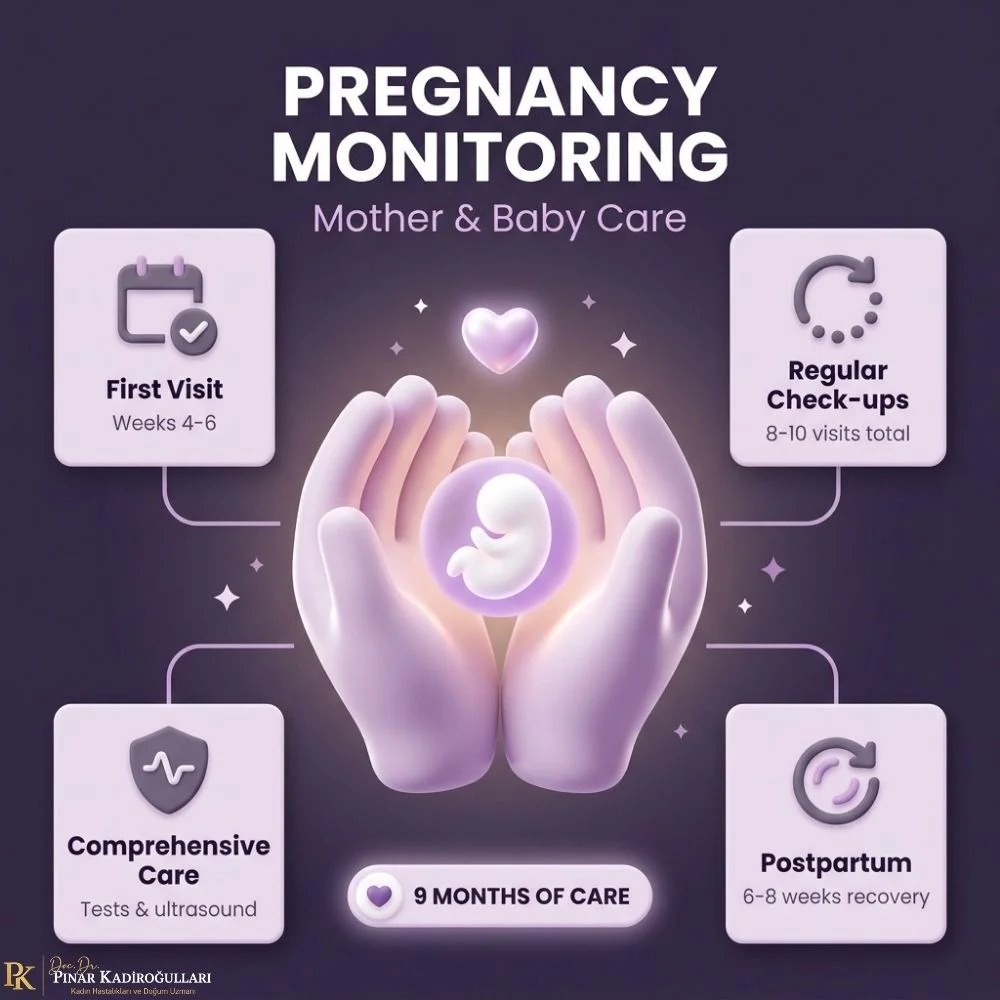
Pregnancy monitoring is a systematic process that follows the health of both mother and baby at every stage. The monitoring plan is tailored to each expectant mother.
Assoc. Prof. Dr. Pınar Kadiroğulları plans pregnancy monitoring in line with ACOG and TJOD guidelines.
What Is Pregnancy Monitoring?
Pregnancy monitoring is a comprehensive medical process that begins before conception and extends through the postpartum period, safeguarding the health of both mother and baby. Through regular examinations, screening tests, and ultrasound assessments, potential risks are detected early and necessary interventions are carried out in a timely manner.
In obstetric practice, personalized pregnancy monitoring is important. In accordance with the guidelines of the ACOG (American College of Obstetricians and Gynecologists) and the TJOD (Turkish Society of Gynecology and Obstetrics), a tailored monitoring plan is developed for each expectant mother based on her age, medical history, and risk factors.
Assoc. Prof. Dr. Pınar Kadiroğulları, a specialist in obstetrics and gynecology, plans pregnancy monitoring from standard pregnancies to high-risk pregnancies.
Information Note
The first prenatal visit should be scheduled as soon as possible after a positive pregnancy test. An early examination is important for the baby’s healthy development, the early detection of conditions such as ectopic pregnancy, and for discussing supplements with your physician.
Pregnancy Symptoms and Diagnostic Methods
Although early signs of pregnancy vary from person to person, most women experience similar physiological changes. These symptoms result from hormonal shifts and typically become noticeable between weeks 4 and 6.
The most common early pregnancy symptoms include:
- Missed period: The most evident sign in women with regular menstrual cycles.
- Breast fullness and tenderness: Develops in response to hormonal changes.
- Nausea and vomiting: More frequent in the morning hours, commonly known as “morning sickness.”
- Fatigue and weakness: A natural consequence of rising progesterone levels.
- Frequent urination: The growing uterus places pressure on the bladder.
- Changes in taste and smell: Aversion or disinterest toward certain foods may develop.
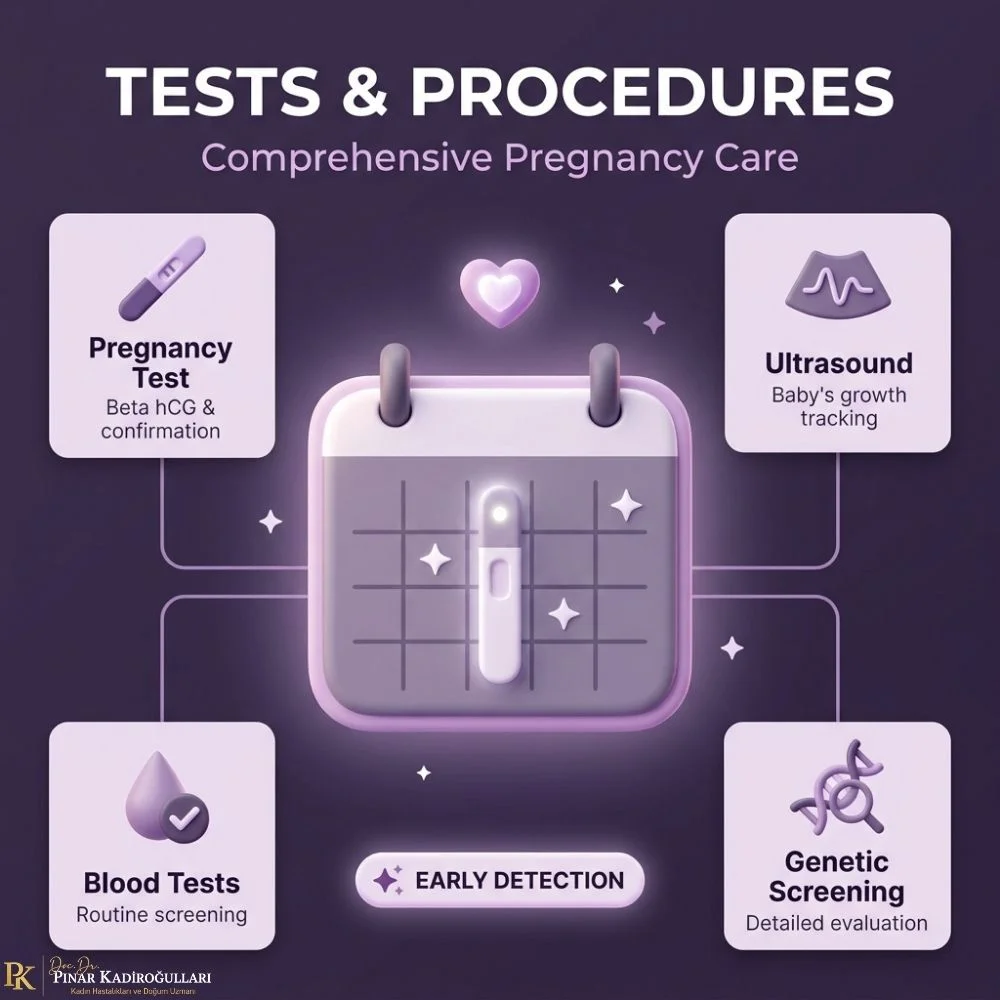
Beta hCG Test
The blood beta hCG test is a commonly used method for diagnosing pregnancy. In a healthy pregnancy, beta hCG levels double every 48 to 72 hours and generally peak between weeks 8 and 11 before beginning to decline.
When pregnancy is suspected, a physician should be consulted to confirm the diagnosis through a blood test and transvaginal ultrasound. The initial examination assesses the location of the pregnancy, gestational age, the baby’s heartbeat, and potential risks.
Pregnancy Monitoring Process and Tests Performed
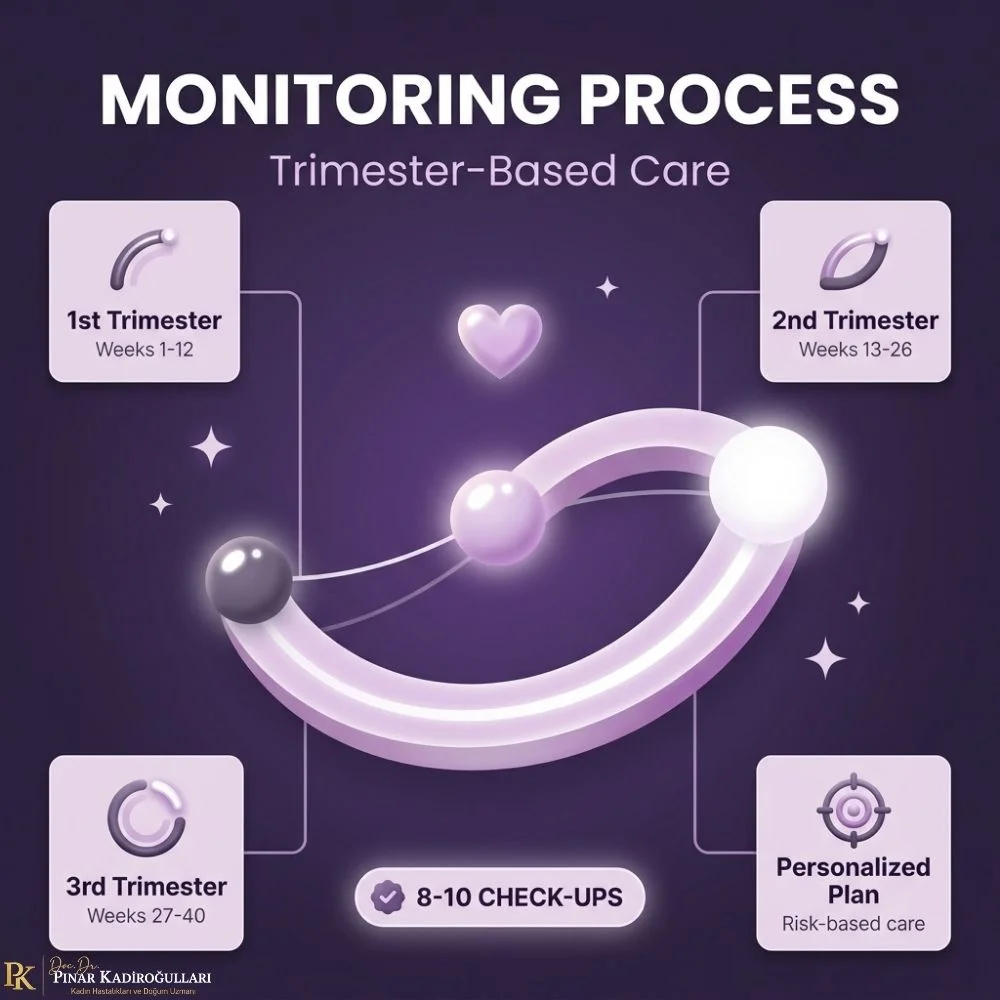
The pregnancy monitoring process is organized into three trimesters in order to systematically track the health of both mother and baby. Each trimester involves its own specific check-ups, screening tests, and ultrasound assessments.
According to the protocols of the TJOD and the Ministry of Health, at least 8 to 10 examinations are recommended for a normal pregnancy. In high-risk pregnancies, this number is increased depending on the condition of the mother and baby.
First Trimester
Weeks 1-13: Initial Assessment
- First examination (weeks 4-6): Medical history, blood/urine tests, and transvaginal ultrasound.
- Fetal heartbeat (weeks 6-8): Confirmation of the heartbeat via ultrasound.
- NT (Nuchal Translucency) Screening (weeks 11-14): The first screening for Down syndrome.
- Combined (Dual) Screening Test (weeks 11-14): Measurement of PAPP-A and free beta-hCG.
Second Trimester
Weeks 14-27: Detailed Evaluation
- Triple Screening Test (weeks 16-18): Anomaly screening based on AFP, hCG, and estriol values.
- Detailed Ultrasound (weeks 20-24): Comprehensive examination of all the baby’s organs.
- OGTT – Glucose Tolerance Test (weeks 24-28): Detection of gestational diabetes.
- Anti-D Injection (week 28): Administered to Rh-negative mothers.
Third Trimester
Weeks 28-40: Preparing for Delivery
- Biweekly Check-ups (weeks 28-36): Monitoring of blood pressure, weight, and ultrasound.
- NST (Non-Stress Test) (after week 36): Assessment of the baby’s heartbeat and movements.
- Weekly Check-ups (week 36+): Evaluation of delivery method and the baby’s position.
- After Week 40: Examination every 2-3 days; labor induction if necessary.
Important Reminder
Screening tests are not diagnostic tests; they assess risk. In cases of high risk, advanced tests such as amniocentesis or CVS may be recommended for a definitive diagnosis. In high-risk pregnancies, additional procedures such as Doppler ultrasound, biophysical profile, and perinatology consultation are performed alongside standard monitoring. Information is also available on the High-Risk Pregnancy Monitoring page.
Childbirth Process and Postpartum Care
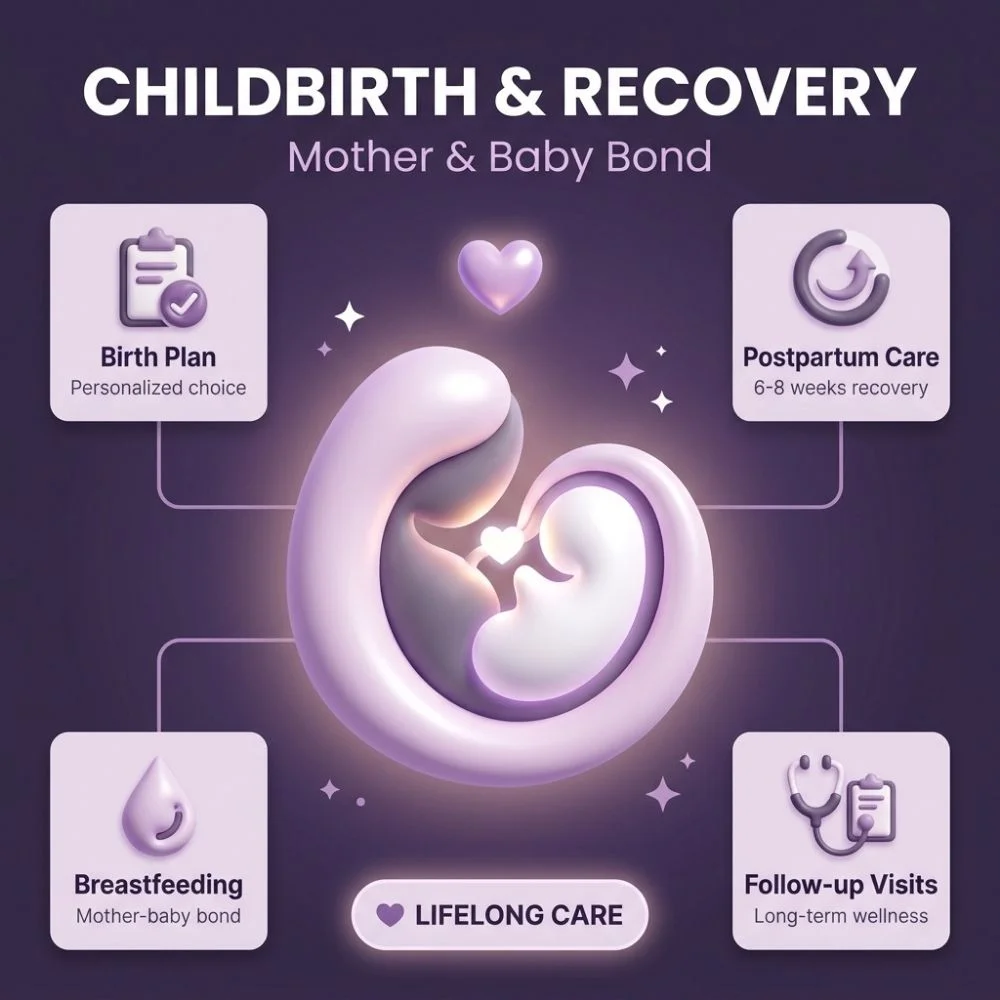
The childbirth process and the subsequent postpartum period (6-8 weeks), which marks the final stage of pregnancy monitoring, are important for the health of both mother and baby. The mode of delivery is determined based on the mother’s health condition, the baby’s position, and previous birth history.
Modes of Delivery
Vaginal Birth and Cesarean Section
- Normal (Vaginal) Birth: Hospital stay of 1-2 days, with full recovery taking approximately 6 weeks. It facilitates early mother-baby bonding and breastfeeding.
- Cesarean Section (C/S): Performed surgically; hospital stay of 2-4 days, with full recovery taking approximately 12 weeks.
Postpartum Period
The First 6-8 Weeks After Birth
- Lochia (Postpartum Bleeding): Subsides within 4-6 weeks, with the color changing from red to white.
- Uterine Involution: The uterus returns to its pre-pregnancy size within 6 weeks.
- Breastfeeding: The WHO recommends exclusive breastfeeding for the first 6 months.
- Hormonal Changes: Estrogen levels drop while prolactin rises; mood changes may occur.
- Postpartum Follow-ups: According to the Ministry of Health protocol, 5 follow-ups are conducted (the first immediately after birth, and the last on day 42).
When to Consult a Doctor
If any of the following symptoms occur during the postpartum period, medical attention should be sought without delay:
- Fever above 38°C or foul-smelling vaginal discharge
- Excessive bleeding (soaking through more than one pad per hour)
- At the incision site: redness, swelling, discharge, or wound separation
- In the breasts: excessive engorgement, redness, or warmth
- Persistent sadness lasting more than 2 weeks: may be a sign of postpartum depression.
After delivery, sexual intercourse and strenuous exercise are not recommended for 40 days. Bathing should be done as a standing shower; bathtubs should be avoided. After the 6-week check-up, normal daily activities can be resumed gradually.
Frequently Asked Questions
At what week should pregnancy monitoring begin?
Pregnancy monitoring should begin as soon as the pregnancy test is positive. The first examination is usually planned between weeks 6 and 8 of pregnancy. During this stage, a transvaginal ultrasound is used to confirm the location of the pregnancy (intrauterine or ectopic), the baby’s heartbeat is checked, and the gestational age is precisely calculated. An early examination is important for the timely diagnosis of conditions such as ectopic pregnancy.
How often should I see the doctor during pregnancy?
In a normally progressing pregnancy, the frequency of examinations varies according to gestational week:
- Weeks 1-28: Once a month
- Weeks 28-36: Every 2 weeks
- Week 36 and beyond: Once a week
- Week 40 and beyond: Every 2-3 days
In high-risk pregnancies, this frequency is increased.
Does frequent ultrasound harm the baby?
Ultrasound is an imaging method that uses sound waves; it involves no X-rays or radiation. Authorities such as the WHO, ACOG, and TJOD consider ultrasound used for medical indications in pregnancy monitoring appropriate. The number of ultrasounds is planned by your physician according to the pregnancy.
In which situations should I seek immediate medical attention?
If any of the following symptoms occur during pregnancy, medical attention should be sought without delay:
- Vaginal bleeding or leakage of fluid
- Severe abdominal pain or persistent contractions
- A noticeable decrease in fetal movements (for 6-7 hours)
- Severe headache, visual disturbances, or sudden swelling (preeclampsia)
- High fever (above 38°C) or persistent vomiting
When should folic acid and other supplements be taken?
Folic acid should be started at least 3 months before a planned pregnancy and continued through the first 12 weeks of pregnancy. This vitamin significantly reduces the risk of neural tube defects (spina bifida) in the baby.
Other supplements recommended during pregnancy:
- Iron: Generally after week 16
- Vitamin D: Throughout pregnancy
- Calcium: If dairy intake is insufficient
- Omega-3 (DHA): For the baby’s brain development
Important: All supplements should be taken under a doctor’s supervision.
Our Treatments






References
The medical content on this page has been prepared based on the current clinical guidelines and scientific publications of international and national authoritative organizations. In addition to clinical studies conducted in Türkiye, the academic publications of Assoc. Prof. Dr. Pınar Kadiroğulları on pregnancy and perinatology are also included as references.
WHO Recommendations on Antenatal Care: A Comprehensive Guide for a Positive Pregnancy Experience (8+ ANC Visits Model)
Author: World Health Organization (WHO) | Publication: WHO 2016 (49 recommendations) | Source Type: Official Guideline of an International Health Authority
→
WHO Antenatal Care Recommendations: PubMed Scientific Citation — Nutrition, Maternal-Fetal Assessment
Author: WHO Guidelines Approved by the Guidelines Review Committee | Publication: Geneva: WHO 2016 | Source Type: International Clinical Guideline (PubMed)
→
NICE NG201: Antenatal Care Clinical Guideline — UK National Standard (Trimester-Based Care)
Author: National Institute for Health and Care Excellence (NICE) | Publication: NICE Guideline NG201 | Source Type: UK National Clinical Guideline
→
StatPearls: Second and Third Trimester Antepartum Care — NIH/NCBI Medical Clinical Reference
Publication: StatPearls Publishing — National Library of Medicine (NIH) | Year: Updated 2024 | Source Type: Peer-Reviewed Open-Access Medical Reference (Full Text)
→
StatPearls: Initial Antepartum Care Guide — Estimated Date of Delivery (EDD), Risk Assessment, Lab Panel
Publication: StatPearls Publishing — National Library of Medicine (NIH) | Year: Updated 2024 | Source Type: Peer-Reviewed Open-Access Medical Reference (Full Text)
→
Hospital-Based Antenatal Care Quality in Istanbul: A Bruce-Jain Framework Study
Study: 3 Istanbul hospitals, patient records, in-depth interviews, exit surveys | Publication: Peer-Reviewed Scientific Study | Source Type: Turkish Peer-Reviewed Antenatal Care Quality Study (PubMed)
→
Türkiye’s Mother-Friendly Hospital Program: A National Intervention to Improve the Quality of Maternal Health Services
Author Institutions: Republic of Türkiye Ministry of Health & WHO Eastern Mediterranean Region (EMRO) | Publication: Eastern Mediterranean Health Journal 2021 | Source Type: Official WHO Türkiye Data
→
⭐ Academic Publications by Assoc. Prof. Dr. Pınar Kadiroğulları on Pregnancy and Perinatology
International publications authored by the doctor in the fields of pregnancy management, hormonal support, and uterine anomaly management
Hormonal Support in Early Pregnancy: A Study on the Use and Efficacy of Dydrogesterone
Authors: Yalçın Bahat P, Yücel B, Yuksel Özgör B, Kadiroğulları P, Topbas Selçuki NF, Çakmak K | Publication: Journal of Obstetrics and Gynaecology 2022;42(5):1276-1279 | Source Type: Peer-Reviewed Scientific Article (PubMed)
→
OHVIRA Syndrome: Uterine Congenital Anomaly and Pregnancy Management — A Laparoscopic Approach
Authors: Kıyak H, Türkgeldi LS, Yücel B, Karacan T, Kadiroğulları P, Seçkin KD | Publication: Fertility and Sterility 2019;112(1):177-179 | Source Type: High-Impact Peer-Reviewed Reproductive Medicine Journal
→
HbA1c Levels and Reproductive Endocrinology: Evaluation of Glucose Metabolism Before Pregnancy
Authors: Kadiroğulları P, Demir E, Bahat PY, Kıyak H, Seçkin KD | Publication: Gynecological Endocrinology 2020;36(5):426-430 | Source Type: Peer-Reviewed Scientific Article (PubMed)
→
Important Note
The information on this page is intended for general informational purposes and does not replace individual medical advice. For personal questions regarding pregnancy monitoring, the childbirth process, and your health, you should always consult your specialist gynecologist. The content of this page has been prepared by Assoc. Prof. Dr. Pınar Kadiroğulları in light of clinical experience and current scientific literature.
“Obstetrics and Gynecology”