

Assoc. Prof. Dr. Pınar Kadiroğulları
Assoc. Prof. Dr. Pınar Kadiroğulları is a specialist in obstetrics and gynecology. She works in the areas of pregnancy monitoring, HPV and cervical health, genital aesthetics, and gynecological surgery.
Her approach is based on current scientific guidelines.
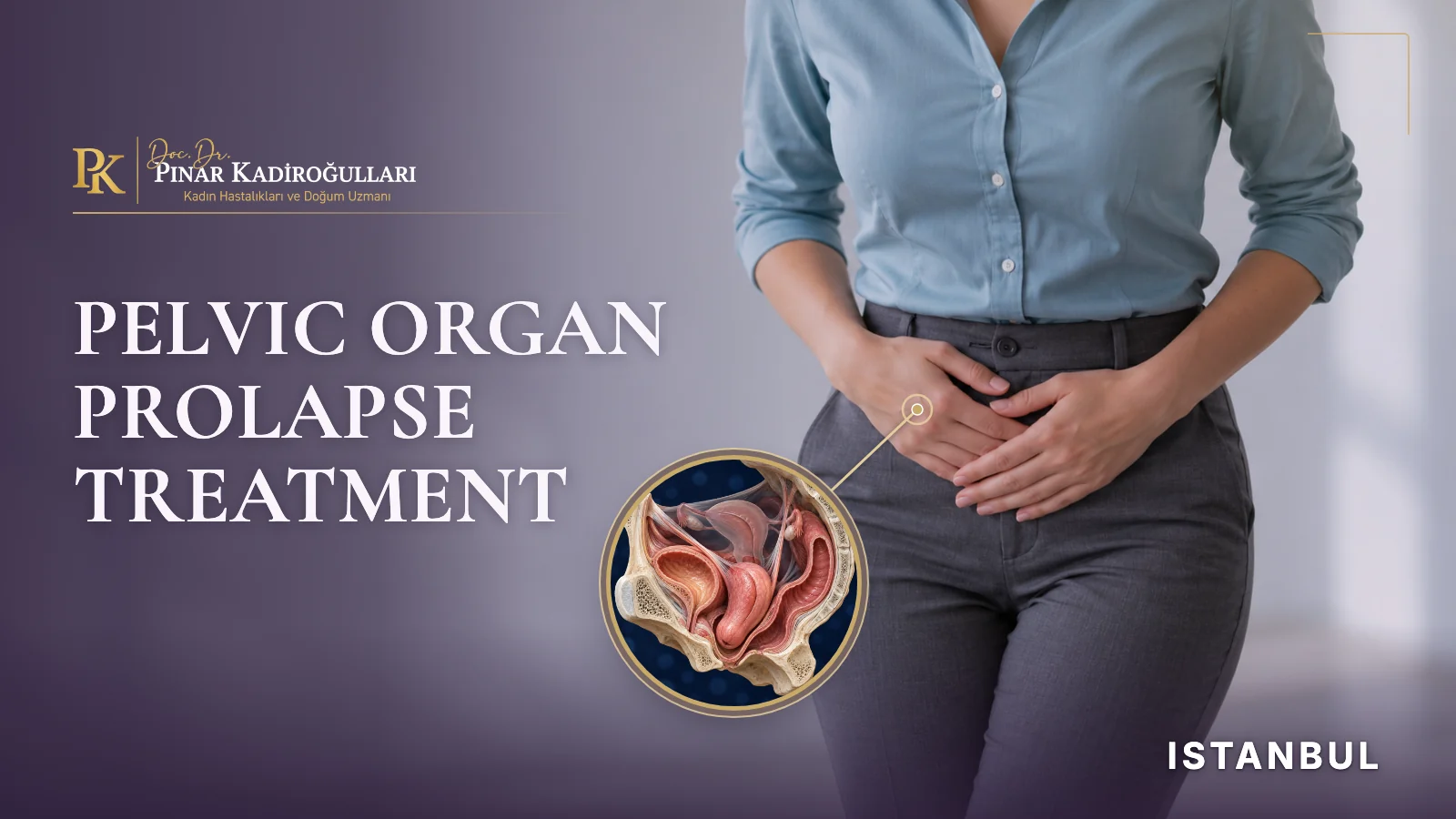
Pelvic organ prolapse treatment requires a personalized approach to address a health issue that significantly affects women’s quality of life yet is often overlooked. Some women develop pelvic organ prolapse, particularly after childbirth and with advancing age; however, many do not consult a physician.
In modern urogynecology practice, a personalized treatment plan is developed in line with the guidelines of the IUGA (International Urogynecological Association) and the EAU (European Association of Urology), taking into account the type and degree of prolapse as well as the patient’s lifestyle. At her practice in Nişantaşı, Istanbul, Assoc. Prof. Dr. Pınar Kadiroğulları evaluates pelvic floor health according to the type and degree of prolapse.
Information Note
Pelvic organ prolapse is not “a natural consequence of aging”; treatment options exist. Non-surgical methods may be sufficient in mild stages. Information on the Urinary Incontinence Treatment page may also be useful.
What Is Pelvic Organ Prolapse?
Pelvic organ prolapse is a condition in which pelvic organs—such as the bladder, uterus, vaginal walls, or rectum—descend from their normal position as a result of weakening of the muscles and connective tissue supporting the pelvic floor. It is a pelvic floor disorder in women, and its frequency increases particularly after childbirth and during menopause.
This condition typically develops due to factors that strain the pelvic floor, such as birth trauma, advanced age, hormonal changes, chronic constipation, or heavy lifting. The main objectives of pelvic organ prolapse treatment are as follows:
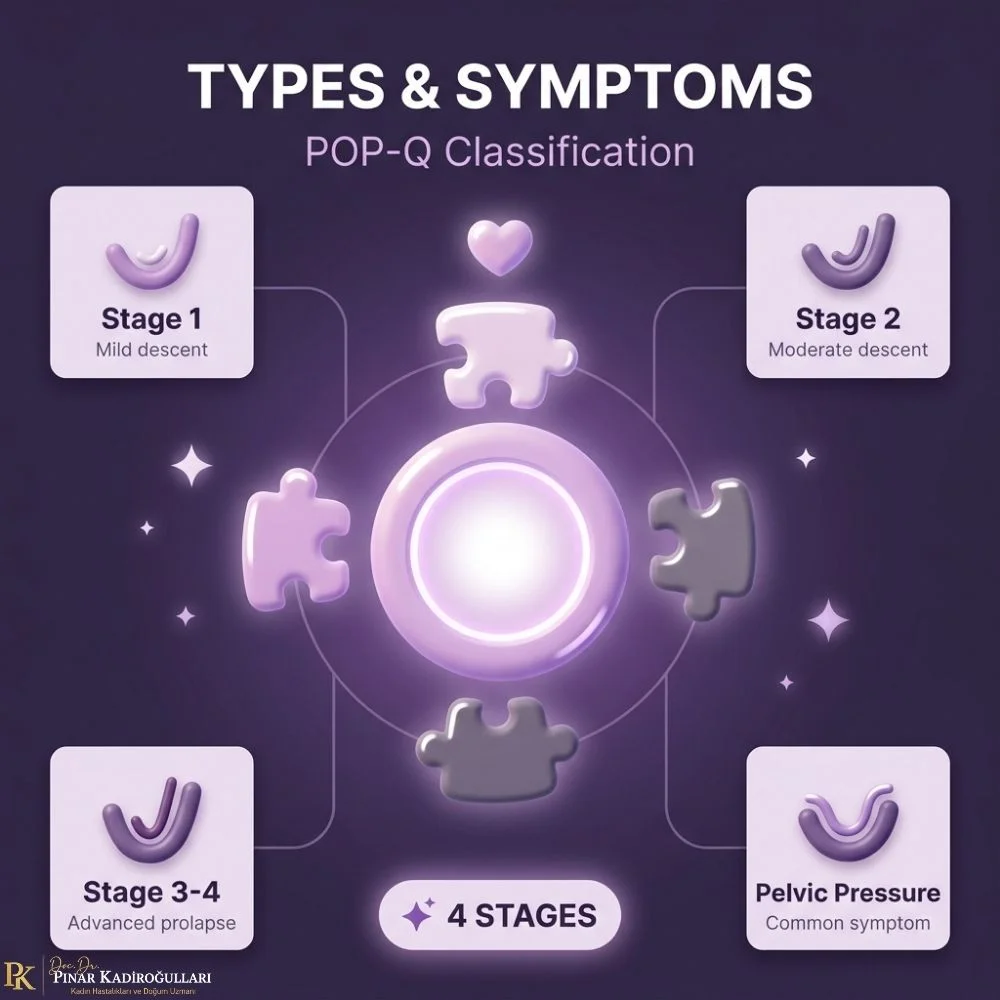
1. Determining the Type and Degree of Prolapse: The type and stage of prolapse are identified through a detailed pelvic examination using the POP-Q classification system.
2. Improving Quality of Life: Restoring sexual life, urinary, and bowel function.
3. Long-Term Management: Strengthening the pelvic floor muscles or, when necessary, surgical treatment.
Important Information
Early diagnosis helps in planning treatment. In mild-stage prolapse, non-surgical methods may be sufficient. In advanced stages, surgical techniques such as laparoscopic sacrocolpopexy may be considered; results vary from person to person.

Types and Symptoms of Pelvic Organ Prolapse
Pelvic organ prolapse treatment is planned according to the type of prolapsed organ and the degree of prolapse. In clinical practice, there are four main types of prolapse, each presenting with different symptoms.
1. Cystocele (Bladder Prolapse)
- The bladder descends onto the anterior vaginal wall
- A frequently seen type
- Difficulty urinating and a sensation of incomplete bladder emptying
- Recurrent urinary tract infections
- Often accompanied by stress urinary incontinence
2. Rectocele (Rectal Prolapse)
- The rectum descends onto the posterior vaginal wall
- Constipation and difficulty with bowel movements
- A sensation of incomplete bowel emptying
- Manual pressure on the vaginal area may sometimes be needed
- Discomfort during sexual intercourse
3. Uterine Prolapse
- The uterus descends into the vaginal canal
- A sensation of pressure and fullness in the pelvic area
- Feeling or seeing a mass in the vagina
- Lower back pain, particularly toward the end of the day
- In advanced stages, the cervix may protrude outside the vagina
4. Vaginal Vault Prolapse
- Occurs in patients who have previously undergone hysterectomy
- Downward descent of the vaginal vault
- Requires surgical treatment
- Generally seen in advanced age
Doctor’s Advice
Prolapse can often occur in more than one area at the same time. For example, a cystocele may coexist with a rectocele or uterine prolapse. For this reason, a detailed pelvic examination and POP-Q staging are important for an accurate treatment plan.
Pelvic Organ Prolapse Treatment Methods
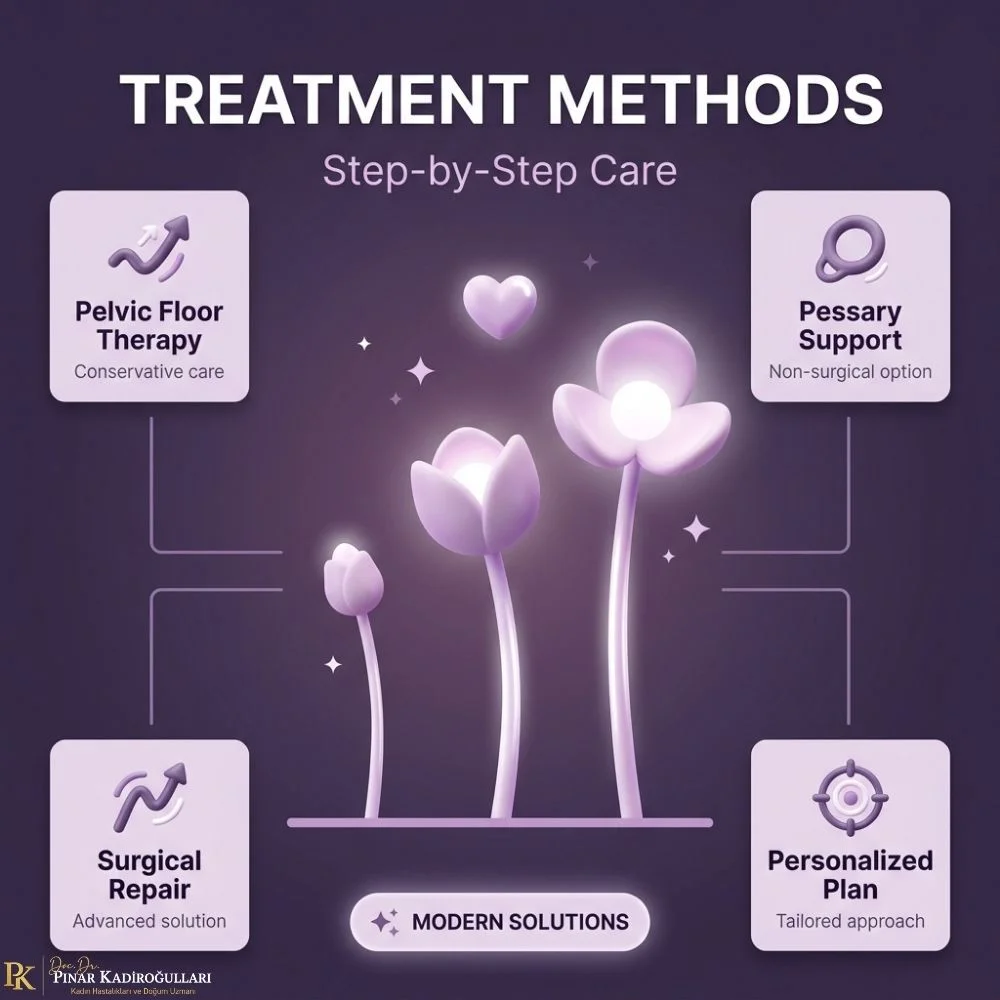
Pelvic organ prolapse treatment is planned through a stepwise approach, based on the degree of prolapse (POP-Q stage), the patient’s age, overall health condition, and future pregnancy plans. For mild-stage prolapse, non-surgical methods are preferred as the first-line treatment.
First-Line Treatment
Conservative (Non-Surgical) Treatment
- Pelvic Floor Exercises (Kegel): Strengthening of the supporting tissues through regular contraction-relaxation training.
- Pessary Use: A silicone support ring placed in the vagina to hold the organs in place.
- Lifestyle Modifications: Weight control, treatment of constipation, and avoidance of heavy lifting.
- Local Estrogen Therapy: Strengthening of the vaginal tissues during the postmenopausal period.
Second-Line Treatment
Vaginal Surgical Treatment
- Anterior Colporrhaphy: Vaginal repair of bladder prolapse for cystocele.
- Posterior Colporrhaphy: Reinforcement of the posterior vaginal wall for rectocele repair.
- Vaginal Hysterectomy: Removal of the uterus through the vaginal route in cases of uterine prolapse.
- Sacrospinous Fixation: Suspension of the vaginal vault or uterus to the pelvic ligaments.
Third-Line Treatment
Laparoscopic Minimally Invasive Surgery
- Laparoscopic Sacrocolpopexy: This procedure involves attaching the vagina to the sacrum using a supporting material.
- Laparoscopic Pectopexy: An alternative technique that may be considered in sexually active women.
- Laparoscopic Hysteropexy: A uterine suspension procedure that preserves the uterus.
- Features: Small incision scars; recovery and outcomes vary from person to person.
Prevention and Lifestyle Recommendations
During the pelvic organ prolapse treatment process, lifestyle adjustments may help in slowing the progression of existing prolapse and supporting the results of treatment. The following recommendations are evidence-based suggestions from the IUGA and ICS.
Recommendations for Daily Life
- Healthy weight control: Aim to keep your BMI below 25.
- Regular Kegel exercises: Perform 3 sets per day, with 10 repetitions in each set.
- Reduce heavy lifting: Avoid carrying loads over 5 kg.
- Proper lifting technique: Lift by bending your knees and keeping your back straight.
- Prevent constipation: Maintain a fiber-rich diet and drink 1.5-2 L of water per day.
- Treat chronic coughing: Quit smoking and keep allergies under control.
Postpartum Prevention
- Begin Kegel exercises 6 weeks after delivery.
- Avoid heavy lifting during the first 3 months.
- Take advantage of pelvic floor physiotherapy.
- Do not neglect regular gynecological check-ups.
⚠️ When to Consult a Physician
- A sensation of pressure or fullness in the pelvic area
- Feeling or seeing a mass in the vagina
- Difficulty urinating or holding urine
- Constipation and difficulty with bowel movements
- Discomfort or pain during sexual intercourse
- Lower back pain (particularly worsening toward the end of the day)
Important Reminder
Pelvic organ prolapse is a treatable condition. With early diagnosis and appropriate treatment, symptoms can be managed; results vary from person to person. Laparoscopic (minimally invasive) surgery is one of the surgical options.

Frequently Asked Questions
What causes pelvic organ prolapse?
Pelvic organ prolapse most commonly develops due to birth trauma, advanced age, and hormonal changes after menopause. The main risk factors include multiple vaginal deliveries, the birth of a large baby, chronic constipation, heavy lifting, obesity, and genetic predisposition. As the muscles and connective tissue supporting the pelvic floor weaken, the pelvic organs descend from their normal position.
Can pelvic organ prolapse be treated without surgery?
In mild to moderate-stage prolapse, non-surgical methods may be sufficient. Regular Kegel exercises, pessary use, local estrogen therapy, and lifestyle modifications may help relieve symptoms; results vary from person to person.
What is laparoscopic sacrocolpopexy?
Laparoscopic sacrocolpopexy is a laparoscopic surgical method that may be considered for advanced-stage pelvic organ prolapse. It is based on attaching the vagina to the sacrum using a supporting material. Recovery and outcomes vary from person to person.
When can I return to normal life after pelvic organ prolapse surgery?
After laparoscopic surgery, patients are typically discharged within 2-3 days. Light activities can be resumed within 1-2 weeks, while a return to normal life is possible 4-6 weeks after surgery. A return to sexual life is recommended after 6 weeks, and heavy lifting and strenuous exercise after 3 months. The recovery process may vary depending on the patient and the technique applied.
Is there a risk of recurrence after pelvic organ prolapse surgery?
Recurrence is possible after prolapse surgery. Weight control, regular Kegel exercises, avoidance of heavy lifting, and the treatment of chronic coughing or constipation are important. Following the follow-up program recommended by your physician is important.
Our Treatments





References
The medical content on this page has been prepared based on the current clinical guidelines and scientific publications of international and national authoritative organizations. An academic article by Assoc. Prof. Dr. Pınar Kadiroğulları on pelvic organ prolapse surgery is also listed among the references.
ACOG/AUGS Joint Practice Bulletin No. 214: Diagnosis and Management of Pelvic Organ Prolapse
Authors: American College of Obstetricians and Gynecologists (ACOG) & American Urogynecologic Society (AUGS) | Publication: Obstet Gynecol 2019;134:e126-e142 | Source Type: International Joint Clinical Practice Guideline (PubMed)
NICE NG123: Urinary Incontinence and Pelvic Organ Prolapse in Women — UK National Clinical Guideline
Author: National Institute for Health and Care Excellence (NICE) | Publication: NICE Guideline NG123 | Source Type: National Clinical Guideline
IUGA/ICS Joint Report: Terminology of Pelvic Floor Disorders & the POP-Q Staging System
Authors: International Urogynecological Association (IUGA) & International Continence Society (ICS) | Publication: International Urogynecology Journal 2022 | Source Type: International Consensus Report
POP Treatment with Vaginal Hysterectomy and Uterosacral Ligament Suspension (USLS): A Turkish Study of 53 Cases
Author Institutions: Bakırköy Dr. Sadi Konuk Training and Research Hospital & Istanbul Aydın University | Publication: Revista da Associação Médica Brasileira 2024 | Study: 53 patients with severe prolapse, mean age 61.7 | Source Type: Turkish Peer-Reviewed Clinical Study (PubMed PMC, Full Text)
Uterosacral Ligament Suspension via the vNOTES Technique: A Pilot Study of 35 Cases in Severe Pelvic Organ Prolapse
Study: POP-Q and PISQ-12 sexual function scores | Publication: BMC Surgery 2021 | Source Type: Peer-Reviewed Clinical Study (PubMed PMC, Full Text)
Open Abdominal vs Laparoscopic Bilateral Uterosacral Ligament Replacement: A Comparison of 145 Cases
Study: 75 CESA + 70 laCESA, 1-year follow-up | Publication: Peer-Reviewed Clinical Study 2025 | Source Type: Comparative Clinical Study (PubMed PMC, Full Text)
Evaluation and Management of Pelvic Organ Prolapse: A Comprehensive Mayo Clinic Clinical Review
Publication: Mayo Clinic Proceedings 2021 | Source Type: Peer-Reviewed Clinical Review — Pessary, Pelvic Floor Exercise, and Surgical Approaches
⭐ Academic Publications by Assoc. Prof. Dr. Pınar Kadiroğulları on Pelvic Organ Prolapse Surgery
Directly related to pelvic organ prolapse (POP) — scientific publications authored by the doctor in the fields of uterosacral ligament suspension and vaginal surgery
Modified Extraperitoneal Uterosacral Ligament Suspension: Prevention of Apical Prolapse After Vaginal Hysterectomy — A 4-Clamp Technique
Authors: Kadiroğulları P, Seçkin KD | Publication: Journal of Investigative Surgery 2019 | Source Type: Peer-Reviewed Pelvic Surgery Clinical Research (PubMed)
📍 This publication is directly focused on the surgical treatment of pelvic organ prolapse — it describes the modified uterosacral ligament suspension technique that provides apical compartment support.
Abdominal Hysterectomy with a Uterine Manipulator: Preservation of Vaginal Length and Anatomical Integrity
Authors: Kıyak H, Karacan T, Özyürek ES, Türkgeldi LS, Kadiroğulları P, Seçkin KD | Publication: Journal of Investigative Surgery 2021;34(10):1052-1058 | Source Type: Randomized Controlled Clinical Trial (PubMed)
Clitoral Hoodoplasty and Sexual Function: Its Effect on Quality of Life After Pelvic Surgery
Authors: Bozkurt Köseoğlu S, Çalışkan E, Kadiroğulları P | Publication: Anatolian Journal of Obstetrics and Gynecology Research 2024 | Source Type: Turkish Peer-Reviewed Review
Important Note
The information on this page is intended for general informational purposes and does not replace individual medical advice. For personal questions regarding the diagnosis of pelvic organ prolapse, treatment planning, and your health, you should always consult your specialist gynecologist. The content of this page has been prepared by Assoc. Prof. Dr. Pınar Kadiroğulları in light of clinical experience and current scientific literature.
“Obstetrics and Gynecology”