Assoc. Prof. Dr. Pınar Kadiroğulları
Assoc. Prof. Dr. Pınar Kadiroğulları is a specialist in obstetrics and gynecology. She works in the areas of pregnancy monitoring, HPV and cervical health, genital aesthetics, and gynecological surgery.
Her approach is based on current scientific guidelines.
Menopause treatment requires a personalized approach to maintain physical and psychological comfort during a crucial period of women’s lives. Menopause is a period of life that every woman goes through, and preserving the quality of life during this period is important.
In modern gynecology practice, in accordance with the guidelines of NAMS (North American Menopause Society) and IMS (International Menopause Society); a personalized treatment plan is created considering the patient’s age, severity of symptoms, and accompanying health conditions. At her practice in Nişantaşı, Istanbul, Assoc. Prof. Dr. Pınar Kadiroğulları plans this process individually, from hormone replacement therapy to supportive approaches, in line with current guidelines.
Information Note
Menopause is not a disease but a natural biological process. However, hot flashes, sleep disorders, osteoporosis, and psychological effects of the hormonal changes experienced during this period can be managed with appropriate medical follow-up. Information on the Menstrual Irregularity Treatment page may also be useful.
What Is Menopause?
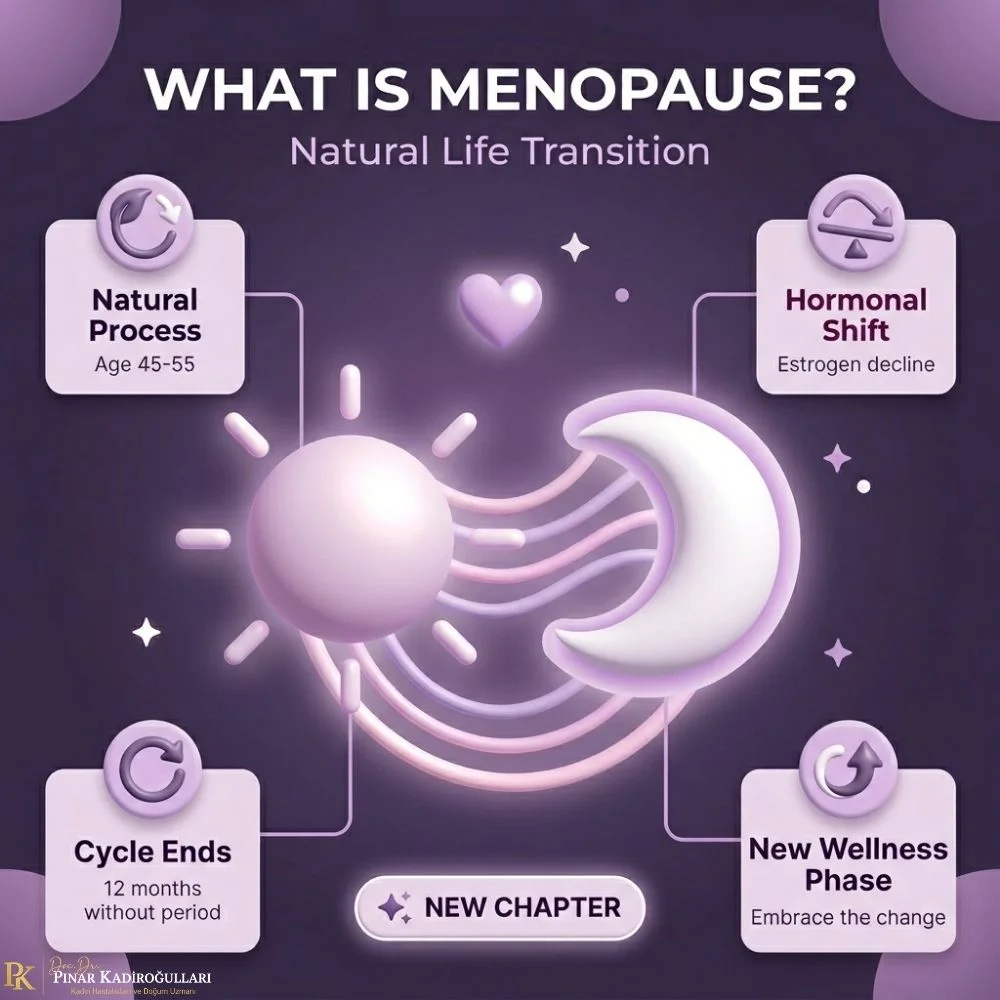
Menopause is the permanent cessation of the menstrual cycle and the completion of a woman’s reproductive period due to the loss of ovarian activity. Medically, the absence of menstrual bleeding for 12 months is considered sufficient for the diagnosis of menopause. The average age of menopause in Turkey is between 47-49; however, it can vary depending on genetics, lifestyle, and health factors.
During this process, the production of estrogen and progesterone hormones in the ovaries gradually decreases and eventually stops. This change in hormones leads to physiological and psychological symptoms that affect many systems in the body. The primary goals within the scope of menopause treatment are as follows:
1. Symptom Control: Alleviating hot flashes, night sweats, sleep disturbances, and emotional fluctuations.
2. Long-Term Health Preservation: Reducing the risk of osteoporosis, cardiovascular diseases, and metabolic problems.
3. Improving Quality of Life: Supporting sexual health, mental health, and overall comfort of living.
Important Information
Entering menopause before the age of 40 is defined as “early menopause” (premature ovarian insufficiency) and requires special monitoring and treatment. Early menopause can develop due to genetics, autoimmune diseases, chemotherapy/radiotherapy, or following ovarian surgery. In this case, long-term hormone replacement therapy is recommended to reduce the risk of osteoporosis and heart disease.
Menopause Symptoms and Stages
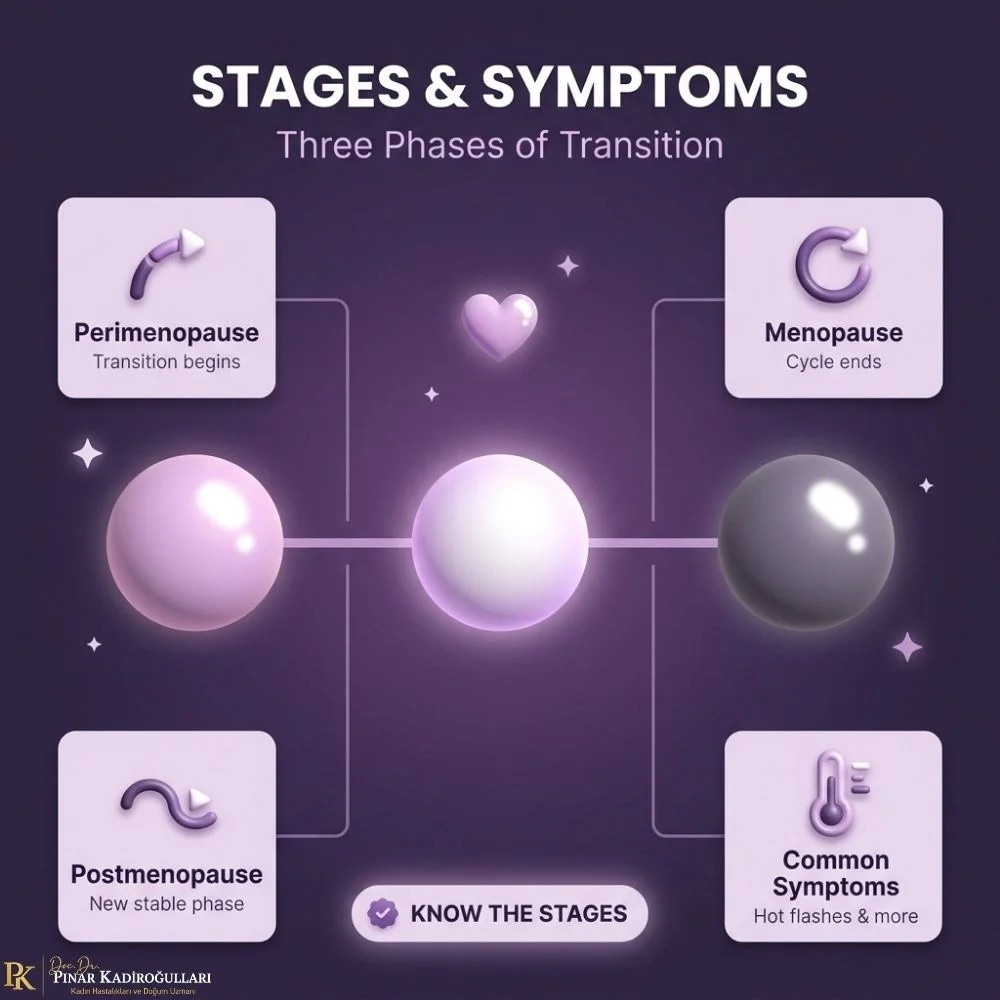
For the success of menopause treatment, it is important to correctly understand the process and know its stages. Menopause is not a single moment but is experienced as a transition process lasting for years and is examined in 3 main stages.
1. Stages of Menopause
- Perimenopause (Transition Period): Begins 4-8 years before menopause. Menstrual irregularities and early symptoms appear.
- Menopause: Diagnosed when 12 months have passed since the last menstrual period. Hormonal changes are most prominent.
- Postmenopause: Covers the entire life period after menopause. Symptoms decrease, but long-term health risks persist.
2. Vasomotor (Temperature) Symptoms
- Hot flashes: A common symptom
- Night sweats: Negatively affect sleep quality
- Palpitations: Can be seen due to hormone fluctuations
- Sudden changes in feeling hot and cold
3. Genitourinary (Vaginal/Urinary) Symptoms
- Vaginal dryness and pain during sexual intercourse
- Decrease in sexual desire (loss of libido)
- Increase in urinary tract infections
- Urinary incontinence complaints
4. Psychological and Cognitive Symptoms
- Emotional fluctuations, irritability, and anxiety
- Symptoms of depression
- Sleep disorders and chronic fatigue
- Forgetfulness and difficulty focusing
5. Long-Term Effects
- Osteoporosis: Decrease in bone density and increased risk of fractures
- Cardiovascular diseases: Increased risk of heart and vascular diseases
- Metabolic syndrome and weight gain
- Loss of skin elasticity, hair thinning
Doctor’s Advice
The severity of symptoms varies greatly from person to person. While some women experience mild symptoms, others may encounter severe complaints that seriously affect their daily lives. Individual evaluation and appropriate treatment are important for a comfortable menopause transition.
Menopause Treatment Options
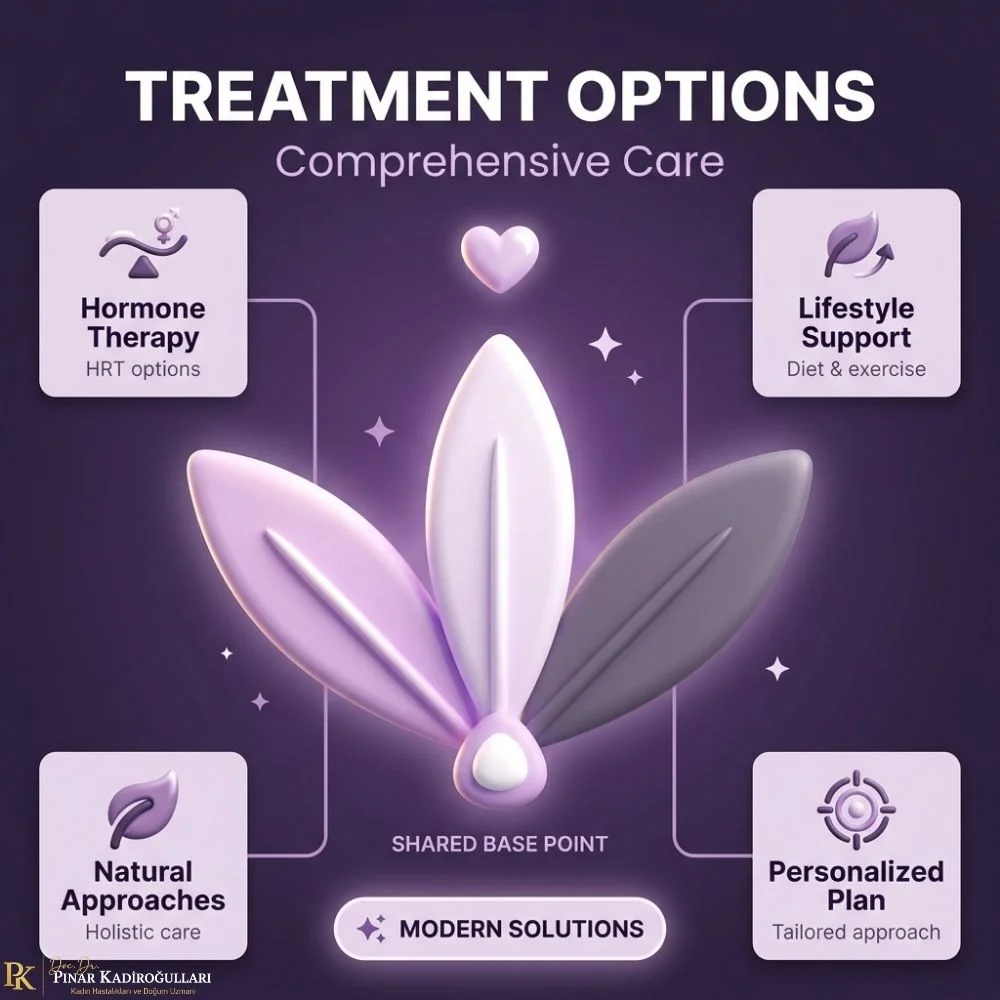
Menopause treatment is planned with a stepped approach based on the patient’s age, severity of symptoms, accompanying health issues, and personal preferences. The treatment plan is created entirely tailored to the individual, and hormone replacement therapy (HRT) is one of the options in controlling menopausal symptoms.
Step 1 Treatment
Hormone Replacement Therapy (HRT)
- Estrogen + Progesterone Combination: Standard treatment for women with a uterus.
- Estrogen-Only Therapy: Suitable for women who have undergone a hysterectomy.
- Methods of Administration: Oral, transdermal (skin patch), gel, or vaginal form.
- Effect: May reduce hot flashes and vaginal complaints; the response varies from person to person.
Step 2 Treatment
Hormone-Free Pharmacological Treatments
- Hormone-free medication options may be considered by the physician in selected cases.
- Vaginal Estrogen Cream: For local vaginal complaints without systemic effects.
Step 3 Treatment
Holistic and Supportive Treatments
- Calcium and vitamin D: Discuss supplement use with your physician.
- Multidisciplinary Approach: Support from cardiology, psychiatry, and physiotherapy.
Lifestyle Recommendations and Prevention
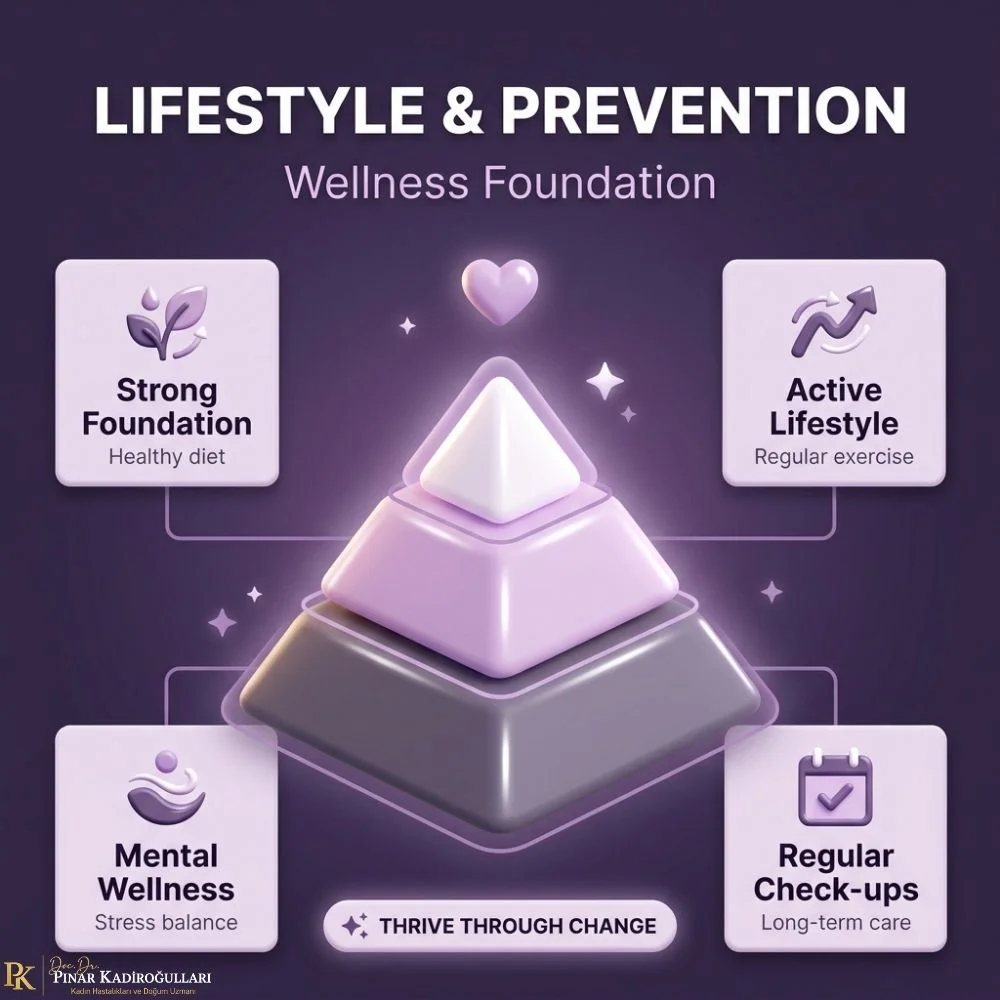
Lifestyle adjustments during the menopause treatment process may help in alleviating current symptoms and reducing long-term health risks. The following recommendations are evidence-based and supported by NAMS and IMS.
Nutritional Recommendations
- Calcium-rich foods: Dairy products, green leafy vegetables, almonds (1200 mg per day).
- Vitamin D: Dietary sources include fatty fish and eggs; discuss supplement use with your physician.
- A balanced, varied diet is recommended.
- High-fiber foods: Helpful for constipation and weight control.
- Avoid caffeine, alcohol, and spicy foods — these trigger hot flashes.
- Reduce salt consumption — excess salt increases bone loss.
Exercise and Activity
- Regular aerobic exercise: 150 minutes of moderate intensity per week (walking, swimming).
- Resistance exercises: Protects bone density when performed twice a week.
- Yoga and pilates: Provides flexibility, balance, and stress management.
- Adequate sleep: 7-9 hours a day supports hormonal balance.
- Quit smoking — it advances the onset of menopause and increases heart risks.
⚠️ Health Checks Requiring Regular Monitoring
- Annual gynecological examination and smear test
- Mammography: Once a year (for those over 40)
- Bone density (DEXA): For those over 65 or if risk factors are present
- Blood pressure, cholesterol, and blood sugar control
- Cardiovascular health assessment
- Postmenopausal bleeding: Requires urgent evaluation
Important Reminder
With appropriate medical support and lifestyle adjustments, the postmenopausal period can be managed in a healthy way. What matters is accepting this period, seeking expert support when necessary, and not neglecting regular follow-ups.
Frequently Asked Questions
Our Treatments
Other treatment topics are listed below:
References
The medical content on this page has been prepared based on current clinical guidelines and scientific publications from international and national authoritative organizations. In addition to clinical research conducted in Turkey, publications by Assoc. Prof. Dr. Pınar Kadiroğulları in the fields of ovarian function and female endocrinology are also listed among the references.
1
NAMS 2022 Hormone Therapy Position Statement
Source Author: The North American Menopause Society (NAMS) Advisory Panel | Publication: Menopause 2022;29(7):767-794 | Source Type: International Hormone Therapy Position Statement (PubMed)
→
2
NAMS 2022 Hormone Therapy Position Statement — Full Text PDF
Source Author: The North American Menopause Society (NAMS) | Source Type: Official Full Text PDF (Vasomotor Symptoms, GSM, Bone Loss Prevention)
→
3
NICE NG23: Menopause: Diagnosis and Management — UK National Clinical Guideline
Source Author: National Institute for Health and Care Excellence (NICE) | Publication: NICE Guideline NG23 | Source Type: UK National Clinical Guideline
→
4
The Menopause Experience of Turkish Women: A Qualitative Research
Study: Turkish Academics — semi-structured in-depth interviews | Publication: BMC Women’s Health 2009 | Source Type: First Qualitative Menopause Study in Turkey (PubMed PMC, Full Text)
→
5
Effect of Physical Activity and BMI on Menopausal Symptoms in Turkish Women: A Study of 305 Patients
Authors: Tan MN, Kartal M, Guldal D — Dokuz Eylül University (Izmir) | Publication: BMC Women’s Health 2014 | Study: 305 Turkish women aged 45-60, MRS scores | Source Type: Peer-reviewed Large-scale Turkish Clinical Study (PubMed PMC, Full Text)
→
6
Menopausal Status and Attitudes in a Population of Middle-Aged Turkish Women: A Large-Scale Epidemiological Study
Study: 1,551 women, multi-stage sampling, Western Turkey | Publication: BMC Women’s Health 2010 | Source Type: Large-scale Peer-reviewed Turkish Clinical Study (Full Text)
→
7
IMS Recommendations: Risk-Benefit Profile in Postmenopausal Hormone Therapy — International Consensus
Source Author: International Menopause Society (IMS) | Publication: Climacteric 2016 | Source Type: International Menopause Consensus Report (PubMed)
→
 Assoc. Prof. Dr. Pınar Kadiroğulları’s Publications on Ovarian Function and Female Endocrinology
The decline of ovarian function lies at the foundation of menopause pathophysiology — scientific publications by the doctor on this subject
8
Relationship Between HbA1c Levels and Ovarian Reserve: A Study in Female Endocrinology
Authors: Kadiroğulları P, Demir E, Bahat PY, Kıyak H, Seçkin KD | Publication: Gynecological Endocrinology 2020;36(5):426-430 | Source Type: International Peer-reviewed Scientific Article (PubMed)

→
9
Modified Extraperitoneal Uterosacral Ligament Suspension: A Vaginal Surgical Technique for Postmenopausal Pelvic Organ Prolapse
Authors: Kadiroğulları P, Seçkin KD | Publication: Journal of Investigative Surgery 2019 | Source Type: Peer-reviewed Clinical Research (PubMed)
→
10
Effect of Dydrogesterone (Progesterone) Use on Female Sexual Function
Authors: Yalçın Bahat P, Yücel B, Yuksel Özgör B, Kadiroğulları P, Topbas Selçuki NF, Çakmak K | Publication: Journal of Obstetrics and Gynaecology 2022;42(5):1276-1279 | Source Type: Peer-reviewed Hormone Therapy Study (PubMed)
→
Important Note
The information on this page is for general informational purposes and does not substitute for individual medical advice. For diagnosis of menopause, evaluation for hormone replacement therapy (HRT), and personal health questions, please consult your specialist gynecologist. The page content has been prepared by Assoc. Prof. Dr. Pınar Kadiroğulları in the light of clinical experience and current scientific literature.