

Assoc. Prof. Dr. Pınar Kadiroğulları
Assoc. Prof. Dr. Pınar Kadiroğulları is a specialist in obstetrics and gynecology. She works in the areas of pregnancy monitoring, HPV and cervical health, genital aesthetics, and gynecological surgery.
Her approach is based on current scientific guidelines.
HPV (Human Papillomavirus) and genital wart treatment is a topic that closely concerns both physical health and significantly affects quality of life. Today, the vast majority of sexually active individuals encounter HPV at some point in their lives; this often leads to panic due to a lack of information and feelings of shame. However, HPV infection and the resulting cellular changes are conditions that can be treated with early diagnosis.
In modern gynecological practice, a personalized treatment plan is developed in line with the Cancer Screening Standards of the Turkish Ministry of Health and the guidelines of the TJOD (Turkish Society of Obstetrics and Gynecology), taking into account the patient’s HPV type, immune status, and the degree of the lesions. At her practice in Nişantaşı, Istanbul, Assoc. Prof. Dr. Pınar Kadiroğulları plans the diagnostic, treatment, and follow-up processes with an approach that respects privacy and is based on scientific guidelines.
Information Note
HPV is not something to be ashamed of, nor is it anyone’s fault; it is an extremely common viral infection. With the right medical interventions (cauterization, cryotherapy, or LEEP), clearing the lesions and preventing progression to cancer is possible. Privacy and patient comfort are paramount throughout the treatment process.
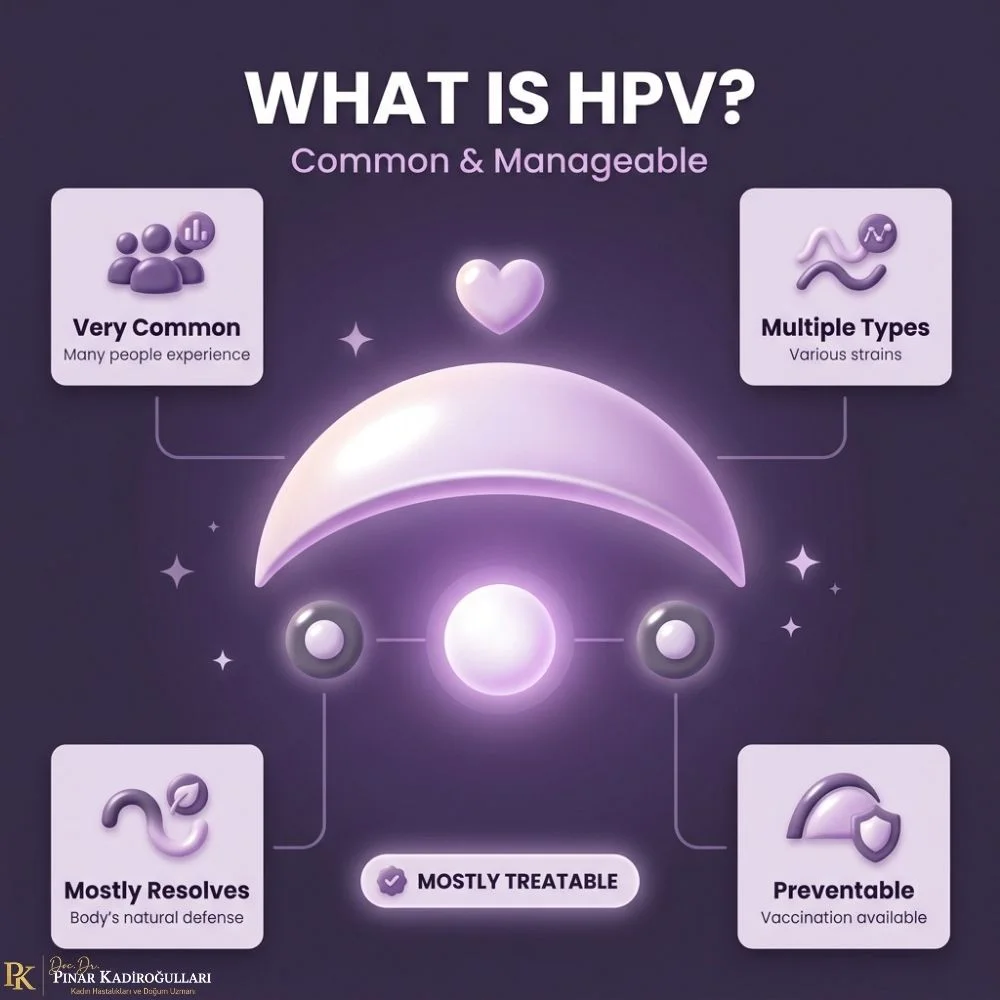
What Is HPV?
HPV (Human Papillomavirus) is a viral infection that is typically transmitted through sexual contact or skin-to-skin contact and is commonly seen in both women and men. Once it enters the body, this virus can lead to genital warts (condyloma), cellular changes, and various serious health problems—most notably cervical cancer—if not properly monitored.
In the modern gynecological approach, HPV management encompasses not only the clearance of warts but also the early diagnosis of cellular changes (precancerous lesions). In line with the Cancer Screening Standards of the Turkish Ministry of Health and the TJOD (Turkish Society of Obstetrics and Gynecology) guidelines, a personalized treatment and follow-up plan is developed based on the patient’s age, immune status, and HPV type.
Assoc. Prof. Dr. Pınar Kadiroğulları applies diagnosis and follow-up based on current scientific guidelines in cervical pathologies and infections. The process extends from regular screenings to genital wart treatment and the clearance of cellular lesions.
Information Note
Receiving an HPV diagnosis or noticing genital warts is nothing to be ashamed of. Through early consultation, regular screenings, and the right interventions, cellular changes can largely be treated before they progress. Privacy is prioritized throughout the diagnostic and treatment processes.
Symptoms of HPV and Modes of Transmission
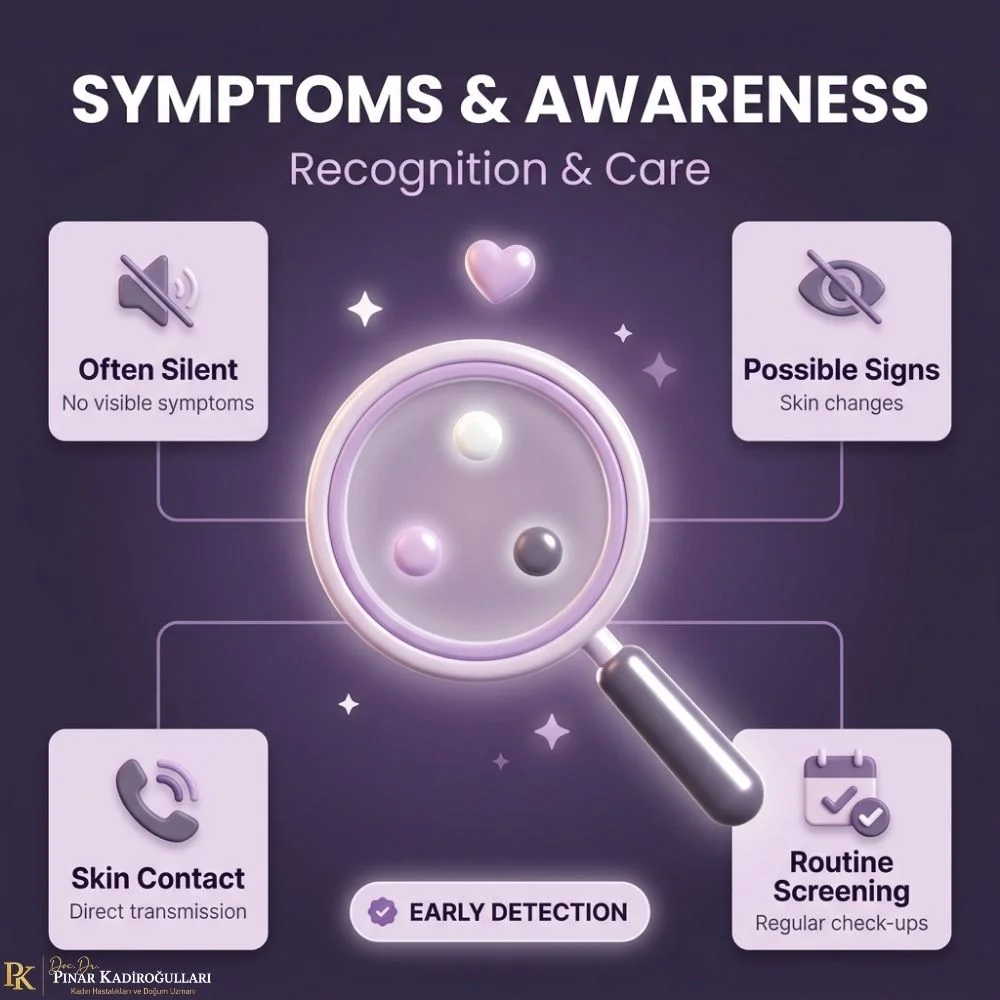
The symptoms and modes of transmission of HPV infection vary depending on the type of virus and the individual’s immune system. In many cases, the virus can silently progress for years without causing any symptoms; for this reason, routine gynecological check-ups are vital.
The most common HPV symptoms and transmission dynamics are as follows:
- Genital Warts (Condyloma): Painless, cauliflower-like growths that appear in the genital area, around the anus, or in the groin.
- Abnormal Smear Test Results: Even when no visible warts are present, cellular changes in the cervix (CIN lesions) can be detected through testing.
- Bleeding or Pain After Intercourse: Cervical lesions caused by high-risk HPV types may, in particular, lead to bleeding after sexual intercourse.
- Transmission Through Sexual Contact: The virus is most commonly transmitted from one partner to another through vaginal, anal, or oral sexual contact.
- Skin-to-Skin Contact and Friction: Even without full sexual intercourse, transmission is possible through skin-to-skin contact with the infected area. Condoms do not provide 100% protection.
- Immune System Factors: A weakened immune system due to stress, smoking, or fatigue may facilitate the virus becoming active in the body.
HPV DNA and Smear Testing
For the definitive diagnosis of HPV and the evaluation of cancer risk, the HPV DNA test and Pap Smear screening are the primary screening methods. Through regular screenings, high-risk types (particularly Type 16 and 18) can be detected and treated years before they progress to cervical cancer.
If a suspicious lesion is noticed in the genital area, if a wart appears, or if a routine check-up is due, a specialist should be consulted for a gynecological examination. Early intervention is important for halting cellular changes and preventing the spread of warts.
HPV Treatment Methods and Process
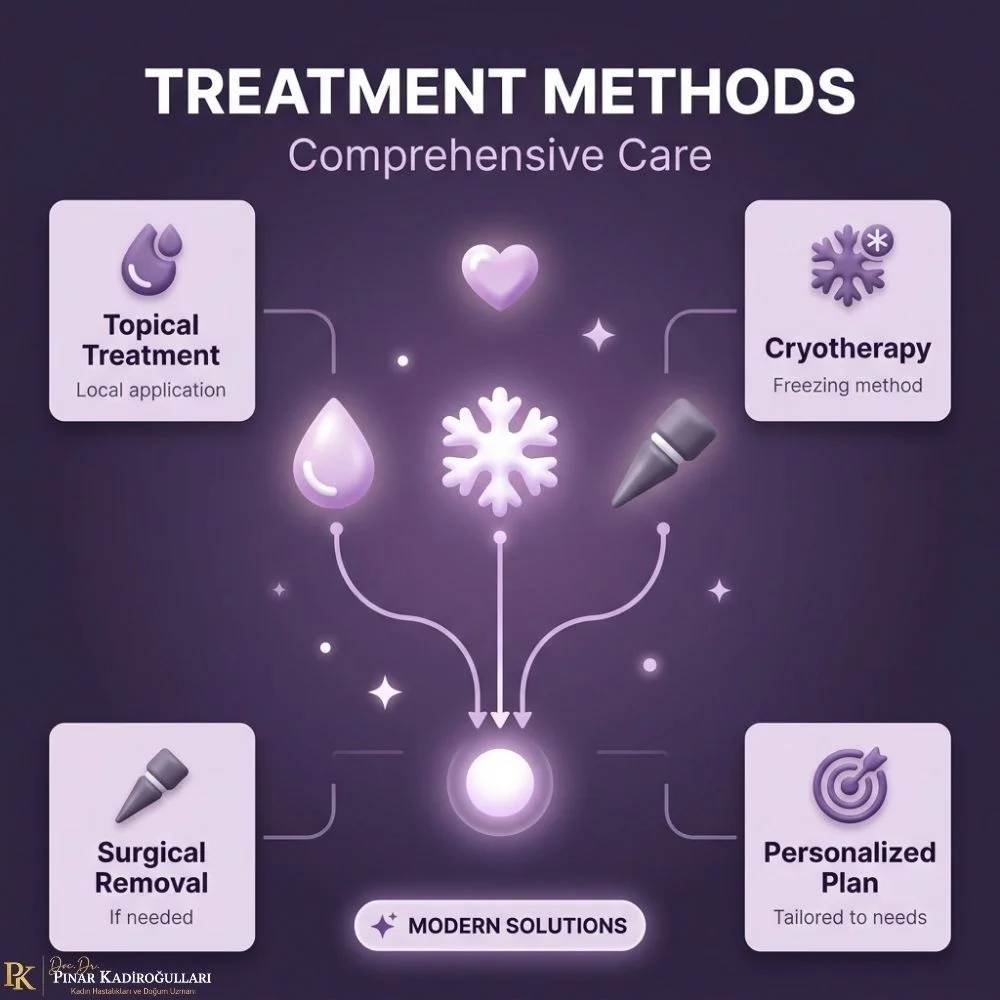
Although there is no specific medication that directly destroys HPV, the treatment of genital warts and cellular changes caused by the virus is carried out with established medical methods. The treatment plan is determined through a stepwise approach, based on the severity of the cellular changes and the extent of wart spread.
According to international and national gynecology guidelines, the treatment process is generally classified into three main stages.
First-Stage Treatment
Medical and Topical Approaches
- Creams and Solutions: Prescription creams that chemically slough off small warts in the external genital area.
- Immunomodulator Medications: They support the body in fighting the warts on its own by stimulating the local immune response.
- Active Surveillance (Watch-and-Wait): In mild cellular abnormalities (ASC-US, LSIL), observation under medical supervision may be performed instead of immediate intervention.
Second-Stage Treatment
Destructive Methods
- Cauterization (Electrocautery): The procedure of cauterizing the warts using an electric current. Depending on the extent of the warts, one or more sessions may be needed.
- Cryotherapy (Freezing): The freezing and shedding of the warts using liquid nitrogen gas. It is a practical procedure that does not require anesthesia.
Third-Stage Treatment
Surgical Removal (Excision) Procedures
- LEEP Procedure: When precancerous cellular changes (CIN 2 or CIN 3) are detected on the cervix, the damaged tissue is removed with a thin wire loop.
- Cold Knife Conization: A surgical procedure in which a cone-shaped piece of tissue is removed for deeper cervical lesions where LEEP may be insufficient.
- Wide Surgical Excision: The surgical removal of giant, cauliflower-type wart masses that have grown to very large sizes, performed with a scalpel.
Important Reminder
The interventions performed (cauterization, LEEP, etc.) eliminate the physical damage caused by the virus. However, the complete clearance of the virus from the body (becoming negative) depends on the strength of your immune system. During this process, quitting smoking, avoiding stress, and getting the HPV vaccine are important for supporting recovery.
Post-Treatment Process and Lifestyle
After HPV treatment (cauterization/freezing of warts or LEEP procedure), the recovery and follow-up period is just as critical as the treatment itself for preventing recurrence and ensuring the complete clearance of the virus from the body.
Recovery Process
The First Weeks After the Procedure
- After Cauterization and Cryotherapy: Mild crusting and redness in the treated area are normal. Full recovery typically occurs within 1-2 weeks.
- After LEEP and Conization: The healing of the cervical wound takes approximately 4-6 weeks. During this period, watery, pink, or brown discharge may occur.
Immune System Management
Recommendations for Clearing the Virus from the Body
- Quitting Smoking: Smoking directly weakens the cellular immunity of the cervix, which is a recognized factor that increases the risk of HPV progressing to cancer.
- Regular Sleep and Stress Management: Chronic stress suppresses the immune system. Quality sleep accelerates cellular regeneration.
- Nutrition: A balanced diet is recommended; any supplement use should be discussed with your physician.
- HPV Vaccination: Even after treatment, vaccination may be recommended by your physician to provide protection against other HPV types.
When to Consult a Physician
After the procedure (especially after LEEP or cauterization), if any of the following symptoms occur, you should consult your doctor without delay:
- Excessive and Unexpected Bleeding: Bleeding heavier than menstrual flow, with clots.
- Foul-Smelling Discharge and Fever: Fever above 38°C and yellow/green discharge that suggests infection.
- Severe Pelvic Pain: Increasing pelvic pain that does not respond to painkillers.
- Appearance of New Lesions: Noticing rapidly multiplying new warts outside the treated area.
Particularly after surgical procedures such as LEEP and conization, sexual intercourse, swimming pools, the sea, and tampon use are not recommended for at least 4 weeks. Bathing should be done as a standing shower. After cellular healing has been confirmed at the first follow-up appointment, normal life can be resumed.
Frequently Asked Questions

Can the HPV virus be completely cleared from the body?
Yes, the HPV virus can be cleared from the body. The human immune system spontaneously clears approximately 80-90% of HPV infections within 1 to 2 years, allowing for a negative result. To accelerate this process, it is highly important to support the immune system by quitting smoking, maintaining a healthy diet, and avoiding stress.
Do Genital Warts Resolve on Their Own, and Is It Harmful to Pick at Them?
When the immune system is strengthened, some very small warts may shrink on their own; however, this is quite unlikely. Squeezing, picking at, or attempting to remove genital warts with a razor causes the virus to bleed and spread rapidly to healthy tissue. Treatment should always be performed under a physician’s supervision using medical methods such as cauterization (burning) or cryotherapy (freezing).
Can HPV Be Transmitted to Virgins (Those Who Have Never Had Sexual Intercourse), and How Is the Test Performed?
The HPV virus can be transmitted through friction or skin-to-skin contact with an infected area, even without full sexual intercourse. For this reason, genital warts may rarely be observed in virgins as well. However, vaginal smear or HPV testing is not routinely performed in those who have never had sexual intercourse, in order to avoid damaging the hymen; instead, the diagnosis is made through observation of the genital area by a specialist physician.
Can a Person with an HPV Infection Become Pregnant?
Yes, an HPV infection does not prevent pregnancy in any way and does not cause infertility. However, due to the changing hormones and immune system during pregnancy, the size of existing warts may increase. Although the risk of transmitting the virus to the baby is low in pregnant women with genital warts, a cesarean delivery may be preferred if the warts are dense enough to obstruct the birth canal. The healthiest approach is to receive treatment before pregnancy.
Do Warts Recur After Being Cauterized or Frozen?
Cauterization or cryotherapy procedures physically destroy existing warts, but they do not completely eliminate the virus inside the cells at that moment. If your immune system weakens after the procedure or if unprotected contact with an infected partner continues, the warts may recur. To prevent recurrence, treating the partner, regular follow-up, and maintaining a strong immune system are essential.
Our Treatments





References
The medical content on our website is prepared based on the current and evidence-based guidelines of national and international health authorities. Below, you can review the main PDF references used.
Human Papillomavirus (HPV) and Cervical Cancer Fact Sheet
Author: World Health Organization (WHO) | Source Type: Official Fact Sheet / PDF Report
HPV Infection and Treatment Guidelines
Author: Centers for Disease Control and Prevention (CDC) | Source Type: Medical Guideline Article / PDF
Management of Cervical Cancer Screening Abnormalities
Author: ACOG (American College of Obstetricians and Gynecologists) | Source Type: Clinical Practice Guideline (PDF)
National Cancer Screening Program: Cervical Cancer Screening Standards
Author: Republic of Türkiye Ministry of Health, General Directorate of Public Health | Source Type: National Screening Guideline (PDF)
Important Note
The information on this page is intended for general informational purposes and does not replace individual medical advice. For HPV diagnosis, wart interventions, and personal health planning, you should always consult your specialist gynecologist. The content of this page has been prepared by Assoc. Prof. Dr. Pınar Kadiroğulları in light of clinical experience and current scientific literature.
“Obstetrics and Gynecology”