

Assoc. Prof. Dr. Pınar Kadiroğulları
Assoc. Prof. Dr. Pınar Kadiroğulları is a specialist in obstetrics and gynecology. She works in the areas of pregnancy monitoring, HPV and cervical health, genital aesthetics, and gynecological surgery.
Her approach is based on current scientific guidelines.
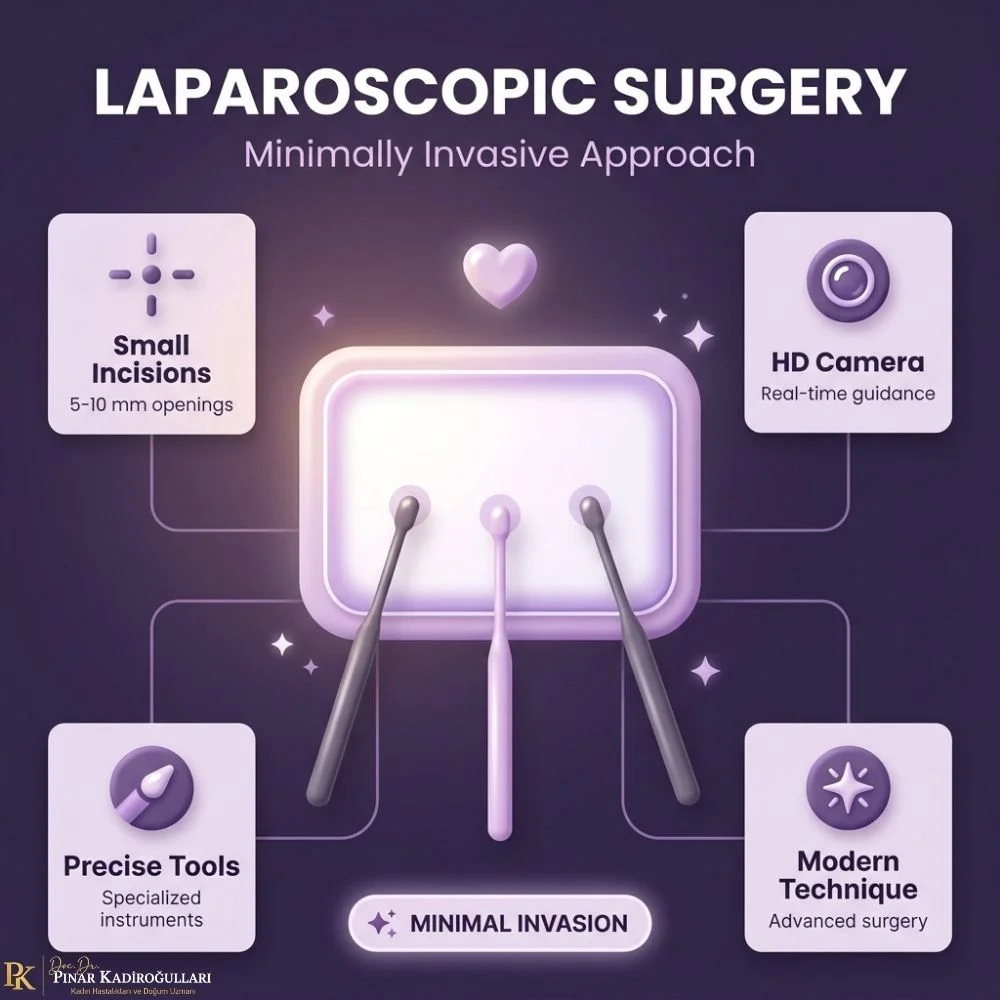
Laparoscopic surgery (closed surgery) is a minimally invasive surgical method used in gynecological surgery. It is performed through 3-4 small incisions in the abdomen using a camera and specialized surgical instruments.
In modern gynecological surgical practice, the laparoscopic approach is preferred in line with the guidelines of the AAGL (American Association of Gynecologic Laparoscopists) and the ESGE (European Society for Gynaecological Endoscopy), taking into account the patient’s clinical condition, the characteristics of the disease, and the surgeon’s experience. At her practice in Nişantaşı, Istanbul, Assoc. Prof. Dr. Pınar Kadiroğulları plans the laparoscopic approach according to the patient’s clinical condition and the characteristics of the disease.
Information Note
Patients are typically discharged within 1-2 days; the time to return to daily life varies from person to person. The incisions are small (5-10 mm). For specific treatments, you can also visit our Myomectomy page.
What Is Laparoscopic Surgery and How Is It Performed?
Laparoscopic surgery (closed surgery) is a minimally invasive surgical method performed by inserting a thin telescopic camera (laparoscope) and specialized surgical instruments through 3-4 small incisions in the abdomen. This technique has been used in many fields of surgery, particularly gynecology, since the 1980s.
During laparoscopic surgery, the abdominal cavity is inflated with safe carbon dioxide gas, allowing the surgeon to view the inside of the abdomen in detail. The high-resolution image from the camera is transmitted to a monitor, and the surgeon operates on a real-time, magnified image.
Stages of the Surgical Process:
1. Anesthesia: The patient is put under general anesthesia.
2. Pneumoperitoneum: The abdominal cavity is inflated with CO2 gas to create the surgical field.
3. Trocar Placement: Trocars (specialized cannulas) with a diameter of 5-10 mm are inserted through the navel and the sides of the abdomen.
4. Visualization and Surgery: The procedure is performed using the laparoscope camera and specialized instruments, while the surgical field is monitored on the screen.
5. Closure: The instruments are removed, the gas is released, and the small incisions are closed with 1-2 sutures or surgical glue.
Important Information
Not every condition is suitable for laparoscopy; therefore, the appropriate method is determined through a detailed evaluation for each patient.
In Which Cases Is Laparoscopy Used?
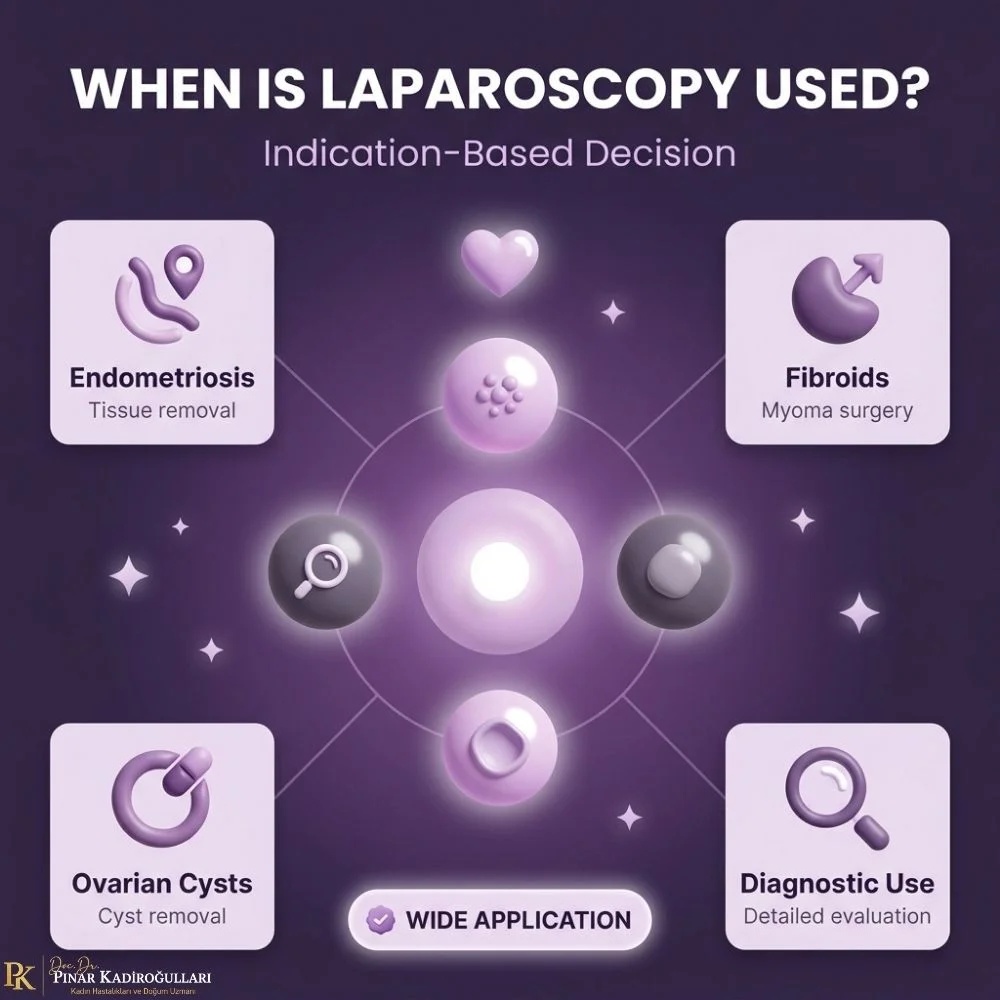
Laparoscopic surgery is used in gynecology for the diagnosis and treatment of many conditions. The method can be applied both for diagnostic purposes (diagnostic laparoscopy) and therapeutic purposes (operative laparoscopy).
1. Gynecological Conditions
- Fibroids: Removal of uterine fibroids (laparoscopic myomectomy). For details, you can visit our Myomectomy page.
- Ovarian cysts: Removal of all types of cysts, including chocolate cysts.
- Endometriosis: Excision of endometriotic foci. For details, you can visit our Chocolate Cyst Treatment page.
- Pelvic adhesions: Release of intra-abdominal adhesions.
- Pelvic organ prolapse: Reconstructive procedures such as sacrocolpopexy. For details, you can visit our Pelvic Organ Prolapse Treatment page.
2. Reproductive Health and Infertility
- Tubal evaluation: Checking the patency of the fallopian tubes
- Ectopic pregnancy: Removal of pregnancy located in the tube
- Ovarian drilling in polycystic ovary syndrome (PCOS)
- Diagnostic laparoscopy for infertility: In cases of unexplained infertility. You can visit our Infertility Treatment page.
3. Oncological (Cancer) Surgery
- Early-stage uterine cancer (endometrial cancer)
- Diagnosis and staging of ovarian tumors
- Lymph node sampling (staging)
- In selected cases of cervical cancer
4. Emergency Surgical Conditions
- Ovarian torsion (twisting of the ovary)
- Ruptured ectopic pregnancy and internal bleeding
- Acute pelvic infections (abscess drainage)
- Intra-abdominal emergency interventions
Important Information
Not every condition is suitable for laparoscopy. In particular, open surgery may be preferred in cases of very large tumors, advanced-stage cancer, extensive intra-abdominal adhesions, or due to the patient’s general condition. The most appropriate method is determined through a personalized evaluation.
Features of Laparoscopic Surgery
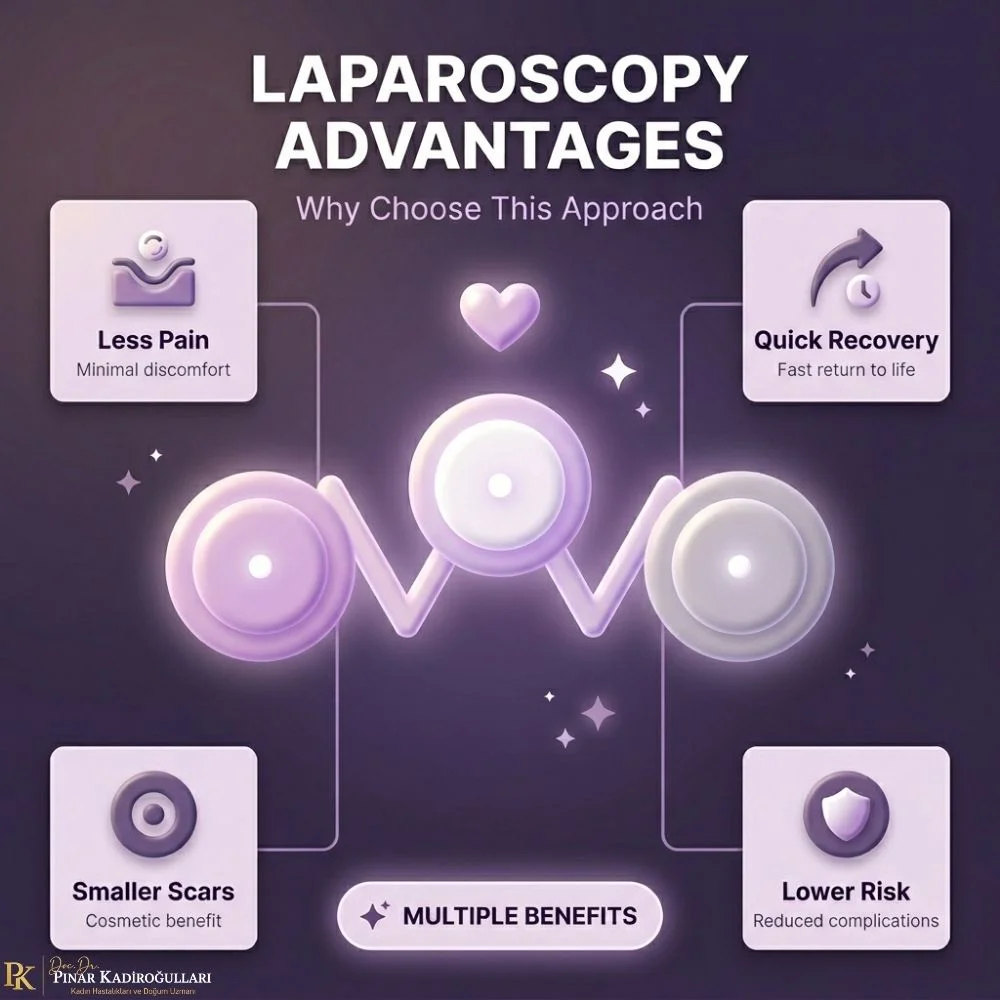
Compared with open surgery, laparoscopic surgery differs in patient comfort, recovery time, and scar appearance. These features are summarized below in three categories; individual outcomes vary.
1. Patient Comfort
Pain and Mobilization
Due to the small incisions, postoperative pain is generally lower than after open surgery; this varies from person to person.
- Small Incisions: 3-4 small incisions of 5-10 mm (compared to 10-20 cm in open surgery).
- Less Need for Painkillers: Patients generally manage with mild pain relievers.
- Early Mobilization: Patients can stand within 6-8 hours after surgery.
- Quick Return to Eating: Normal nutrition can be resumed the next day.
2. Medical Advantages
Medical Features
Laparoscopic surgery involves smaller incisions than open surgery; risks and recovery vary according to the individual case.
- Detailed Visualization: Magnified imaging through a high-resolution camera.
3. Social and Aesthetic
Return to Daily Life and Scars
The return to daily routines varies from person to person. The 5-10 mm incisions leave small scars; their appearance varies.
- Short Hospital Stay: Discharge within 1-2 days (compared to 5-7 days with open surgery).
Recovery and General Risks After Laparoscopy
Recovery after laparoscopic surgery generally takes less time than after open surgery; it varies from person to person. However, like any surgery, laparoscopy also carries certain potential risks.
Typical Recovery Timeline
- First 6 hours: Post-anesthesia observation; fluid intake begins.
- First 24 hours: Standing up, light walking, and soft foods.
- Days 1-2: Discharge and rest at home.
- Week 1: Light activities, light work, and a follow-up examination.
- Weeks 2-3: Return to office work and normal activities.
- Weeks 4-6: Doctor’s approval is required for sexual intercourse and intense exercise.
Temporary Symptoms That May Occur After Surgery
- Shoulder pain: Caused by CO2 gas, resolves within 1-2 days
- Mild abdominal pain and bloating: Resolves within 2-4 days
- Fatigue and weakness (may last up to 1 week)
- Nausea (anesthesia-related, short-lived)
- Mild vaginal bleeding (normal after gynecological laparoscopy)
Possible General Risks and Complications
- Anesthesia-related complications (as in any general surgery)
- Trocar injuries (damage to adjacent organs — 0.5% risk)
- Bleeding: Vascular injury (rare but may be difficult to control)
- Formation of intra-abdominal adhesions (much less than in open surgery)
- Skin infection (at the incision site, treated with antibiotics)
- Conversion to open surgery: Sometimes required for safety reasons (2-5%)
- Risk of thrombosis (blood clots in the leg veins)
⚠️ When to Consult a Physician
- Fever above 38°C or chills
- Redness, discharge, or foul odor at the wound site
- Severe and persistent abdominal pain
- Excessive or increasing vaginal bleeding
- Burning sensation when urinating or inability to urinate
- Swelling or pain in the leg (a sign of thrombosis)
- Sudden shortness of breath or chest pain
Important Reminder
Laparoscopy carries the risks of any surgery, and results vary from person to person. Detailed preoperative evaluation and preparation are important.
Results may vary from person to person in any surgical or interventional procedure. It is recommended that you obtain detailed advice from your physician before the procedure.
Frequently Asked Questions
How long does laparoscopic surgery take?
The duration of laparoscopic surgery varies depending on the type and complexity of the procedure. While diagnostic laparoscopy takes 30-60 minutes, therapeutic laparoscopy for fibroids or cysts can range from 1 to 3 hours. Complex endometriosis or oncological cases may take 3-5 hours. This duration does not include pre-anesthesia preparation and post-anesthesia recovery.
When can I return to work after laparoscopy?
The time required to return to work after laparoscopy depends on the type of work and the extent of the surgical procedure. For desk-based work, 7-10 days are recommended, while 2-3 weeks are advised for jobs involving light physical activity, and 4-6 weeks for heavy work or sports. A faster return is possible after diagnostic laparoscopy. For a detailed assessment, it is best to consult your doctor at your postoperative follow-up.
How does laparoscopy compare with open surgery in terms of risk?
Laparoscopy generally involves smaller incisions and less blood loss than open surgery; the method of choice depends on the patient’s condition. In certain cases (very large tumors, advanced-stage cancer, or extensive adhesions), open surgery may be safer. Your doctor will determine the most appropriate method based on each patient’s clinical condition.
Will scars remain after laparoscopy?
The incision scars after laparoscopy are very small and generally fade over time. Since the trocar entry points are 5-10 mm, they do not leave noticeable scars after healing. The incision in the navel area is concealed within the natural fold of the navel, while incisions in the lower abdomen remain hidden under the bikini line or beneath clothing. With proper wound care, the scars usually fade over time; their appearance varies from person to person.
I have had previous abdominal surgery; can I still undergo laparoscopy?
Laparoscopy can be performed in patients who have had previous abdominal surgery, but special precautions are required. Previous surgeries may have caused intra-abdominal adhesions, which can make trocar placement more difficult. For this reason, alternative entry methods and different techniques may be used, such as starting with an open approach and then transitioning to laparoscopy. Suitability is determined by detailed preoperative evaluation.
Our Treatments
References
The medical content on this page has been prepared based on the current clinical guidelines and scientific publications of international and national authoritative organizations. Scientific publications authored by Assoc. Prof. Dr. Pınar Kadiroğulları in the field of laparoscopic surgery are also listed among the references.
ACOG/AAGL Joint Committee Opinion: Minimally Invasive Gynecological Procedures
Authors: American College of Obstetricians and Gynecologists (ACOG) & American Association of Gynecologic Laparoscopists (AAGL) | Publication: Obstet Gynecol 2020 | Source Type: International Joint Clinical Committee Opinion
AAGL/ESGE Joint Clinical Practice Guideline: Laparoscopic and Hysteroscopic Procedures
Authors: American Association of Gynecologic Laparoscopists (AAGL) & European Society of Gynaecological Endoscopy (ESGE) | Publication: J Minim Invasive Gynecol 2017 | Source Type: Joint Clinical Guideline by Two Organizations (PubMed PMC, Full Text)
RCOG Green-top Guideline No. 62: Laparoscopic Adnexal Surgery in Premenopausal Women
Authors: Royal College of Obstetricians and Gynaecologists (RCOG) & British Society for Gynaecological Endoscopy (BSGE) | Source Type: Green-top Clinical Guideline (PDF)
ESHRE Clinical Practice Guideline: Laparoscopic Endometriosis Surgery and Fertility
Author: European Society of Human Reproduction and Embryology (ESHRE) | Publication: Human Reproduction Open 2022 | Source Type: International Clinical Practice Guideline (Full Text)
The Effects of Laparoscopic Cystectomy on Ovarian Reserve in Endometrioma and Dermoid Cysts
Authors: Karadağ C, Demircan S, Turgut A, Çalışkan E (Turkish academics) | Publication: Turkish Journal of Obstetrics and Gynecology (TJOD Journal) 2020 | Source Type: Turkish Peer-Reviewed Clinical Study (PubMed PMC)
The Role of Laparoscopy in Modern Fertility Practice: A Case-Control Study of 600 Patients
Publication: International Journal of Reproductive BioMedicine 2017 | Study: Effectiveness of laparoscopy/hysteroscopy in 600 infertile women | Source Type: Peer-Reviewed Clinical Study (PubMed PMC)
The Role of Laparoscopic Surgery in Gynecological Congenital Anomalies
Publication: Journal of Clinical Medicine 2025 | Source Type: Peer-Reviewed Systematic Review (PubMed PMC, Full Text)
⭐ Academic Publications by Assoc. Prof. Dr. Pınar Kadiroğulları on Laparoscopic Surgery
Directly related to the topic of this page — three different scientific publications authored by the doctor in the fields of laparoscopic cystectomy, laparoscopic hemi-hysterectomy, and uterine surgery
Dermoid Tumor Coexisting with Endometrioma in a Single Ovary: A Case Report of the Laparoscopic Approach
Authors: Kıyak H, Kadiroğulları P, Karacan T, Seçkin KD, Karataş S | Publication: CRSLS – Journal of the Society of Laparoendoscopic Surgeons, April 2019 | Source Type: Peer-Reviewed Laparoscopic Surgery Case Report
📍 This publication is a case report directly focused on laparoscopic ovarian cyst surgery.
OHVIRA Syndrome and Pyometra: Tips and Tricks for Laparoscopic Hemi-Hysterectomy
Authors: Kıyak H, Türkgeldi LS, Yücel B, Karacan T, Kadiroğulları P, Seçkin KD | Publication: Fertility and Sterility 2019;112(1):177-179 | Source Type: Peer-Reviewed Journal
📍 This publication addresses complex laparoscopic surgical techniques in detail in a rare congenital anomaly.
Abdominal Hysterectomy with a Uterine Manipulator: A Randomized Controlled Clinical Trial
Authors: Kıyak H, Karacan T, Özyürek ES, Türkgeldi LS, Kadiroğulları P, Seçkin KD | Publication: Journal of Investigative Surgery 2021 | Source Type: Randomized Controlled Clinical Trial (PubMed)
Important Note
The information on this page is intended for general informational purposes and does not replace individual medical advice. For personal questions, diagnosis, or surgical planning related to laparoscopic surgery (closed surgery), you should always consult your specialist gynecologist. The content of this page has been prepared by Assoc. Prof. Dr. Pınar Kadiroğulları in light of clinical experience and current scientific literature.
“Obstetrics and Gynecology”