
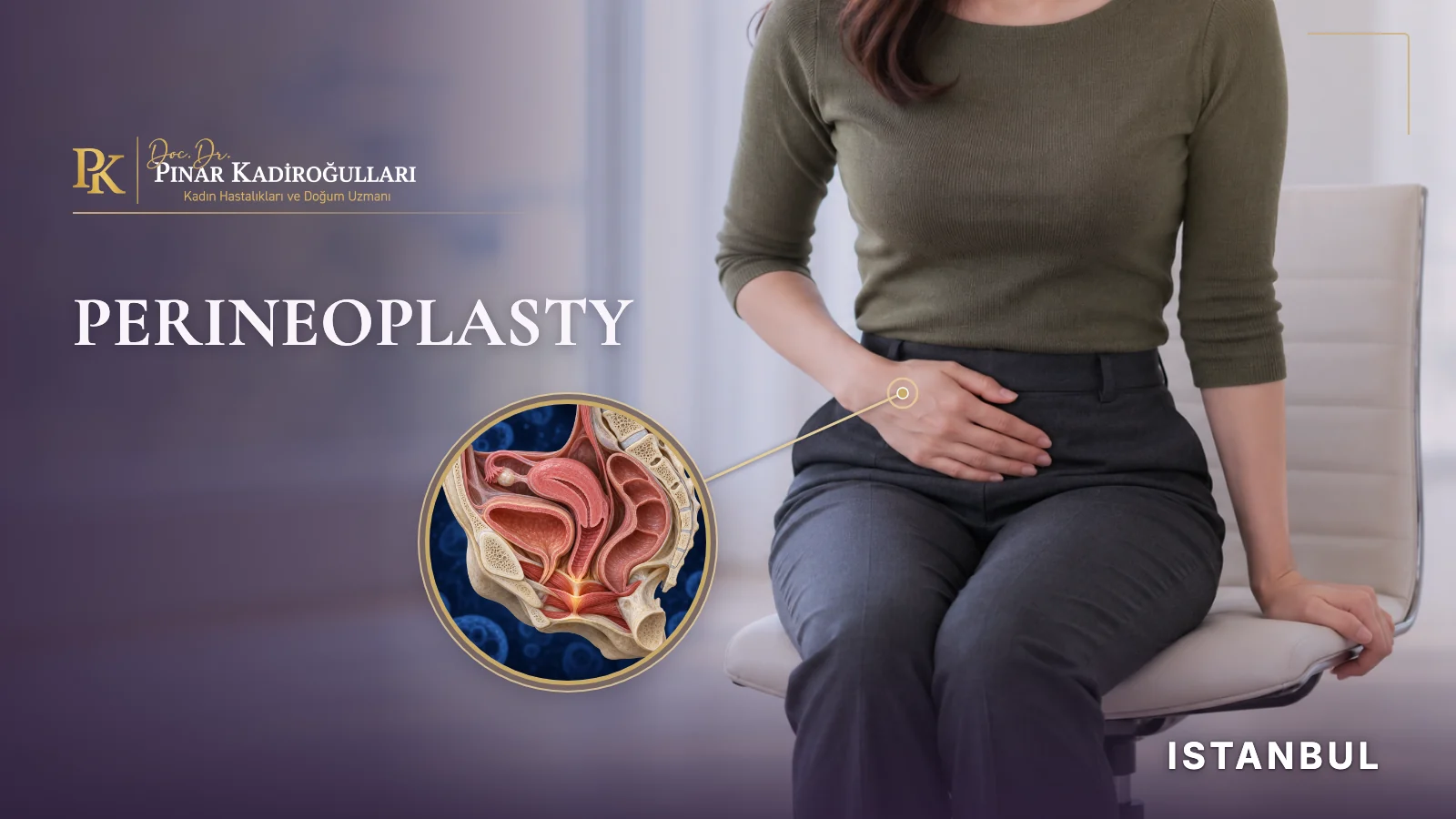

Assoc. Prof. Dr. Pınar Kadiroğulları
Assoc. Prof. Dr. Pınar Kadiroğulları is a specialist in obstetrics and gynecology. She works in the areas of pregnancy monitoring, HPV and cervical health, genital aesthetics, and gynecological surgery.
Her approach is based on current scientific guidelines.
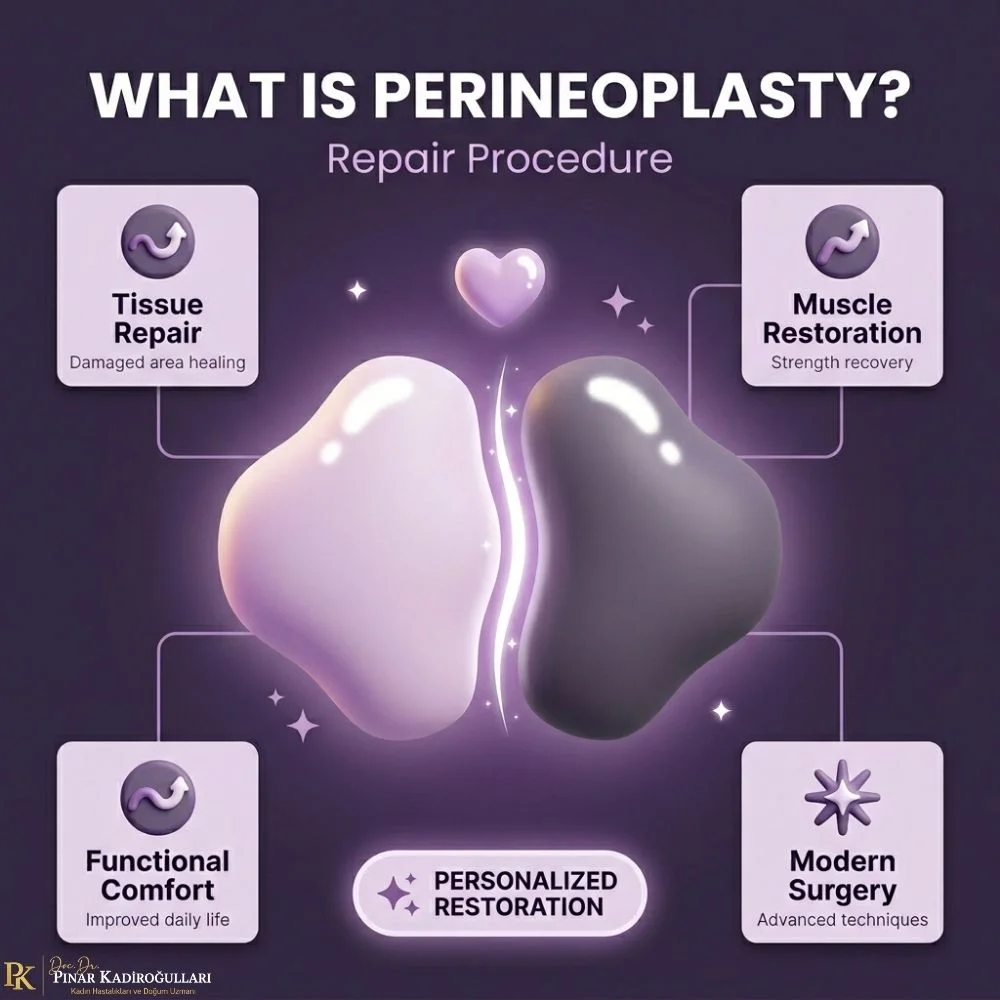
Perineoplasty (perineal repair) is the surgical repair and tightening of the perineal area located between the vagina and the anus. Some women who have given birth experience functional problems due to perineal laxity and tears after childbirth; this can negatively affect both quality of life and sexual health.
In modern gynecological surgical practice, a personalized surgical plan is developed in line with the guidelines of the IUGA and ESAGS, taking into account the degree of perineal damage, accompanying pathologies, and the patient’s expectations. At her practice in Nişantaşı, Istanbul, Assoc. Prof. Dr. Pınar Kadiroğulları plans the surgical approach according to the degree of perineal damage and the patient’s complaints.
Information Note
Perineoplasty is a surgical procedure that addresses both functional and aesthetic concerns. The duration and discharge plan depend on the technique and the individual case. Whether it is combined with vaginoplasty is decided after examination.
What Is Perineoplasty and the Anatomy of the Perineum
Perineoplasty is the surgical procedure of repairing and reshaping the perineal area located between the posterior wall of the vagina and the anus. Also known as “perineorrhaphy” in the medical literature, this procedure is a repair surgery performed to address structural issues that develop after childbirth.
What Is the Anatomy of the Perineum?
The perineum is a 2-4 cm long region of muscle and fibrous tissue located between the vagina and the anus. This area contains the pelvic floor muscles, the perineal nerves, and connective tissue. Although this region stretches to allow the baby to pass during childbirth, it can sustain permanent damage when the vaginal birth is difficult or trauma occurs.
Causes of Perineal Damage
- Birth tears: 1st to 4th-degree perineal lacerations
- Delivery of a large baby (over 4 kg)
- Poorly healed episiotomy (a surgical cut during delivery)
- Rapid or difficult childbirth
- Use of forceps or vacuum assistance
- Multiple childbirths (especially at short intervals)
- Age-related tissue laxity
- Weakening of the pelvic floor muscles
- Genetic disorders affecting connective tissue elasticity
Degrees of Perineal Tears
- 1st degree: Skin laceration only (superficial)
- 2nd degree: Tear of the perineal muscles (the most common type)
- 3rd degree: Damage to the anal sphincter (the constrictor muscle)
- 4th degree: Tear of the anal mucosa (the most severe)
- 3rd and 4th-degree tears require specialized surgical repair
Important Information
Perineoplasty is a personalized surgical procedure. The most appropriate method is selected by considering the patient’s perineal structure, the degree of damage, birth history, and symptoms. Concurrent vaginoplasty or pelvic floor repair may also be performed.
In Which Cases Is Perineoplasty Performed?
The decision for perineoplasty is made based on the patient’s clinical complaints and the degree of perineal damage. The procedure addresses both functional problems and aesthetic concerns. Perineoplasty is recommended in the following situations.
1. Postpartum Issues
- Poorly healed episiotomy and irregular scar tissue
- 2nd to 4th-degree tears sustained during childbirth
- Perineal laxity following multiple childbirths
- Anatomical changes after the delivery of a large baby
- Tear scars extending to the anal area
- Widening of the birth canal
2. Sexual Health Issues
- Pain (dyspareunia) during sexual intercourse
- The vaginal opening feeling wide
- Decreased sexual sensitivity
- A sensation of looseness during sexual intercourse
- Loss of sexual self-confidence
- Perceived incompatibility with the partner
3. Functional Issues
- Mild urinary incontinence (stress incontinence). For details, you can visit our Urinary Incontinence Treatment page.
- Pelvic organ prolapse (rectocele, cystocele)
- Gas or fecal incontinence (especially in 3rd and 4th-degree tears)
- Frequent vaginal infections
- Hygiene difficulties and continuous irritation
- Weakening of the pelvic floor muscles
4. Aesthetic Concerns
- Prominent scar tissue and irregular appearance
- Asymmetrical perineal structure
- The aesthetic appearance of a wide vaginal opening
- Discomfort when wearing bikinis or swimsuits
- Loss of genital self-confidence
- Postpartum anatomical changes
Diagnosis and Evaluation
The decision for perineoplasty is made through a detailed examination. The perineal structure, muscle tone, accompanying pathologies, and birth history are evaluated. Special care is required during application in cases of pregnancy, active infection, or within the first 3 months after the most recent delivery. The procedure is recommended at least 6 months after childbirth.

Perineoplasty Methods
The method of perineoplasty is determined by considering the patient’s degree of perineal damage, expectations, and overall health. The surgical (classical) perineoplasty approach is generally preferred; the plan is made individually after examination.
Surgical Approach
Classical Perineoplasty (Surgical)
A classical method in which scar and lax tissue in the perineal area are surgically excised and the muscles are reapproximated.
- Indications: 2nd to 4th-degree tears and advanced perineal laxity.
- Duration: 45-90 minutes, performed under sedation or general anesthesia.
- Discharge: Same day, with 1 week of rest.
- Dissolvable sutures are used; suitability depends on the degree of damage.
- Limitations: Abstinence from sexual intercourse for 4-6 weeks, with a longer recovery period.
Recovery and Results After Perineoplasty
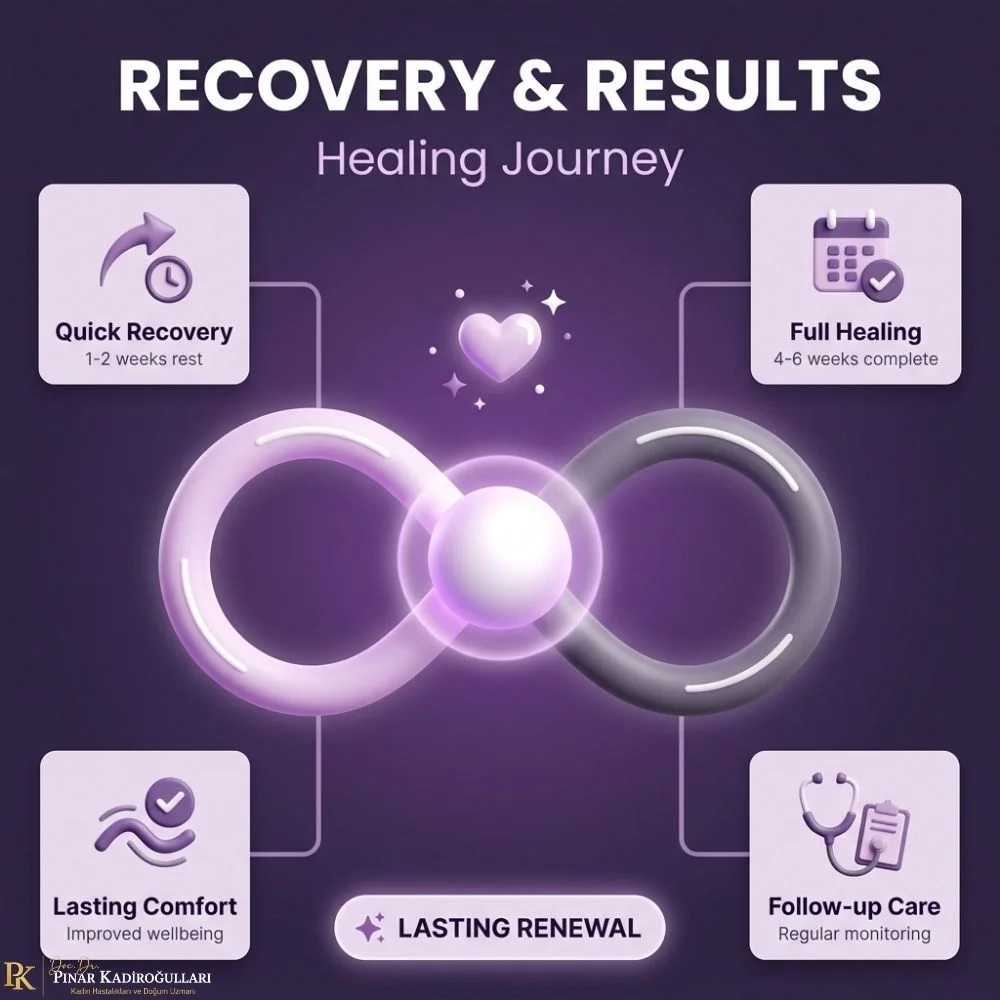
The recovery process after perineoplasty varies from person to person. Patients are typically discharged on the same day and return to their daily lives within 1-2 weeks. A waiting period of 4-6 weeks is recommended for full recovery and the resumption of sexual activity.
Typical Recovery Timeline
- First 24-48 hours: Mild pain, edema, and tenderness (normal)
- 3-5 days: Swelling subsides; light activity is possible
- 1 week: Return to office work
- 2-3 weeks: Light sports and normal walking
- 4-6 weeks: Doctor’s approval for sexual intercourse
- Full recovery: Becomes apparent after 2-3 months
Postoperative Care
- First week: Avoid heavy lifting and prolonged sitting
- Since dissolvable sutures are used, suture removal is not required
- Bathing: Standing showers are allowed; bathtubs, swimming pools, and the sea are prohibited for 4-6 weeks
- Antiseptic care: Cleansing 3-4 times a day
- Loose, cotton underwear that is not tight
- Pay attention to constipation (a high-fiber diet)
- Strenuous sports: Can be resumed after 6 weeks
Functional and Aesthetic Outcomes
- Reduction of pain during sexual intercourse in some patients
- Tightening of the vaginal opening and anatomical correction
- Strengthening of the pelvic floor muscles
- Improvement in mild urinary incontinence
- Changes in the appearance of the perineum
⚠️ When to Consult a Physician
- Fever above 38°C or chills
- Severe and persistent pain
- Excessive or clotted bleeding
- Wound dehiscence, discharge, or foul odor at the suture site
- Severe pain when urinating or defecating
- Excessive swelling, bruising, or redness
Important Reminder
Perineoplasty is a surgical procedure that addresses functional and aesthetic concerns; outcomes vary from person to person. You can consult your doctor about combining the procedure with vaginoplasty or pelvic floor repair.

Frequently Asked Questions
What is the difference between perineoplasty and vaginoplasty?
Perineoplasty and vaginoplasty target different areas. Perineoplasty repairs the perineal region — the area between the vagina and the anus — and is performed to address obstetric tears and perineal laxity. Vaginoplasty, on the other hand, tightens the inner vaginal walls. The two are often performed together in a single session, providing comprehensive functional and aesthetic results. A detailed examination determines which procedure, or combination, is needed.
Can I give birth again after perineoplasty?
Childbirth is possible after perineoplasty; however, vaginal delivery may negatively affect the surgical outcome. The repaired perineal tissues may be strained again during vaginal birth, which can lead to a reduction in the effects of perineoplasty. For this reason, perineoplasty is recommended for patients who are planning to have more children only after childbearing is complete. If a cesarean section is preferred, the surgical results can be preserved.
When Can I Have Perineoplasty Performed After Childbirth?
Perineoplasty is recommended at least 6 months after childbirth. This period is necessary for hormonal balance to be restored, the tissues to heal, and the breastfeeding period to be left behind. Performing perineoplasty too early may both complicate healing and reduce the quality of the outcome. In some cases (3rd and 4th-degree tears), acute repair is performed immediately after childbirth; however, for elective (planned) surgery, a waiting period of 6-12 months is required.
Is Perineoplasty Painful, and What Is the Recovery Time?
Some pain and discomfort are expected after perineoplasty. The procedure is performed under sedation or general anesthesia, so pain is not felt during the surgery. Mild pain and tenderness occur for 2-3 days afterwards, which can be controlled with painkillers. Recovery time: Return to office work within 1 week, light activity within 2-3 weeks, and abstinence from sexual intercourse for 4-6 weeks. Full recovery is completed within 2-3 months.
Does Perineoplasty Resolve Urinary or Fecal Incontinence?
Perineoplasty can improve mild urinary and fecal incontinence. Improvement may be seen, particularly in fecal incontinence resulting from anal sphincter (the constrictor muscle) damage that develops after 3rd and 4th-degree birth tears. Improvement is also seen in mild stress-type urinary incontinence. In severe cases, perineoplasty alone may not be sufficient; pelvic floor repair or sling surgery may be required. The most appropriate treatment is planned through a detailed examination.
Our Treatments




References
The medical content on this page has been prepared based on the current clinical guidelines and scientific publications of international and national authoritative organizations. Below, you can review the main PDF references used and the academic publications of Assoc. Prof. Dr. Pınar Kadiroğulları.
ACOG Practice Bulletin No. 198: Prevention and Management of Obstetric Lacerations at Vaginal Delivery
Author: American College of Obstetricians and Gynecologists (ACOG) | Publication: Obstet Gynecol 2018;132:e87–102 | Source Type: Clinical Practice Guideline (PDF)
The Management of Third- and Fourth-Degree Perineal Tears (Green-top Guideline No. 29)
Author: Royal College of Obstetricians and Gynaecologists (RCOG) | Source Type: Clinical Green-top Guideline / PDF
ICS/IUGA Joint Report on the Terminology for the Assessment and Management of Obstetric Pelvic Floor Disorders
Authors: International Continence Society (ICS) & International Urogynecological Association (IUGA) | Publication: Int Urogynecol J 2022 | Source Type: International Consensus Report
Elective Female Genital Cosmetic Surgery — Committee Opinion No. 795
Author: American College of Obstetricians and Gynecologists (ACOG) | Publication: Obstet Gynecol 2020 | Source Type: Committee Opinion / Standards in Aesthetic Gynecology
Safety, Efficiency, and Outcomes of Perineoplasty: Treatment of the Sensation of a Wide Vagina
Authors: Ulubay M, Keskin U, Fidan U, et al. | Publication: BioMed Research International 2016 | Source Type: Scientific Research Article (PubMed PMC)
Postpartum Care Management Guideline (Ankara, 2018)
Author: Republic of Türkiye Ministry of Health, General Directorate of Public Health, Department of Women and Reproductive Health | Source Type: National Clinical Guideline (PDF)
Repair of Episiotomy and Obstetrical Perineal Lacerations (First–Fourth Degree)
Authors: Schmidt PC, Fenner DE | Publication: American Journal of Obstetrics & Gynecology 2024 | Source Type: Peer-Reviewed Article / Clinical Review
📚 Selected Academic Publications by Assoc. Prof. Dr. Pınar Kadiroğulları
Evaluation of Relationship Between HbA1c Levels and Ovarian Reserve in Patients with Type 1 Diabetes Mellitus
Authors: Kadiroğulları P, Demir E, Bahat PY, Kıyak H, Seçkin KD | Publication: Gynecological Endocrinology 2020;36(5):426-430 | Source Type: Peer-Reviewed Scientific Article (PubMed)
Endometrioma Coexisting with Dermoid Tumor in a Single Ovary Presenting as Atypical Endometrioma
Authors: Kıyak H, Kadiroğulları P, Karacan T, Seçkin KD, Karataş S | Publication: CRSLS – Journal of the Society of Laparoendoscopic Surgeons, April 2019 | Source Type: Peer-Reviewed Case Report
Abdominal Hysterectomy with a Uterine Manipulator Minimizes Vaginal Shortening: A Randomized Controlled Trial
Authors: Kıyak H, Karacan T, Özyürek ES, Türkgeldi LS, Kadiroğulları P, Seçkin KD | Publication: Journal of Investigative Surgery 2021;34(10):1052-1058 | Source Type: Randomized Controlled Clinical Trial (PubMed)
Important Note
The information on this page is intended for general informational purposes and does not replace individual medical advice. For personal questions regarding the diagnosis of perineoplasty, surgical planning, and your health, you should always consult your specialist gynecologist. The content of this page has been prepared by Assoc. Prof. Dr. Pınar Kadiroğulları in light of clinical experience and current scientific literature.
“Obstetrics and Gynecology”