

Assoc. Prof. Dr. Pınar Kadiroğulları
Assoc. Prof. Dr. Pınar Kadiroğulları is a specialist in obstetrics and gynecology. She works in the areas of pregnancy monitoring, HPV and cervical health, genital aesthetics, and gynecological surgery.
Her approach is based on current scientific guidelines.
High-risk pregnancy monitoring involves the close supervision of pregnancies that pose additional health risks to the mother or baby, conducted by a specialist physician within a strict protocol. Some pregnancies fall into the high-risk category and are monitored more closely.
In modern obstetric practice, factors such as advanced maternal age, chronic diseases, multiple pregnancies, or previous pregnancy complications are evaluated in line with the ACOG, RCOG, and TJOD guidelines, and a personalized monitoring plan is developed accordingly. At her practice in Nişantaşı, Istanbul, Assoc. Prof. Dr. Pınar Kadiroğulları plans the monitoring process in line with current guidelines.
Information Note
A high-risk pregnancy does not mean a “dangerous pregnancy.” It simply refers to a condition that requires more frequent and detailed monitoring. Regular follow-up is important. Information on the Standard Pregnancy Monitoring page may also be useful.
What Is a High-Risk Pregnancy?
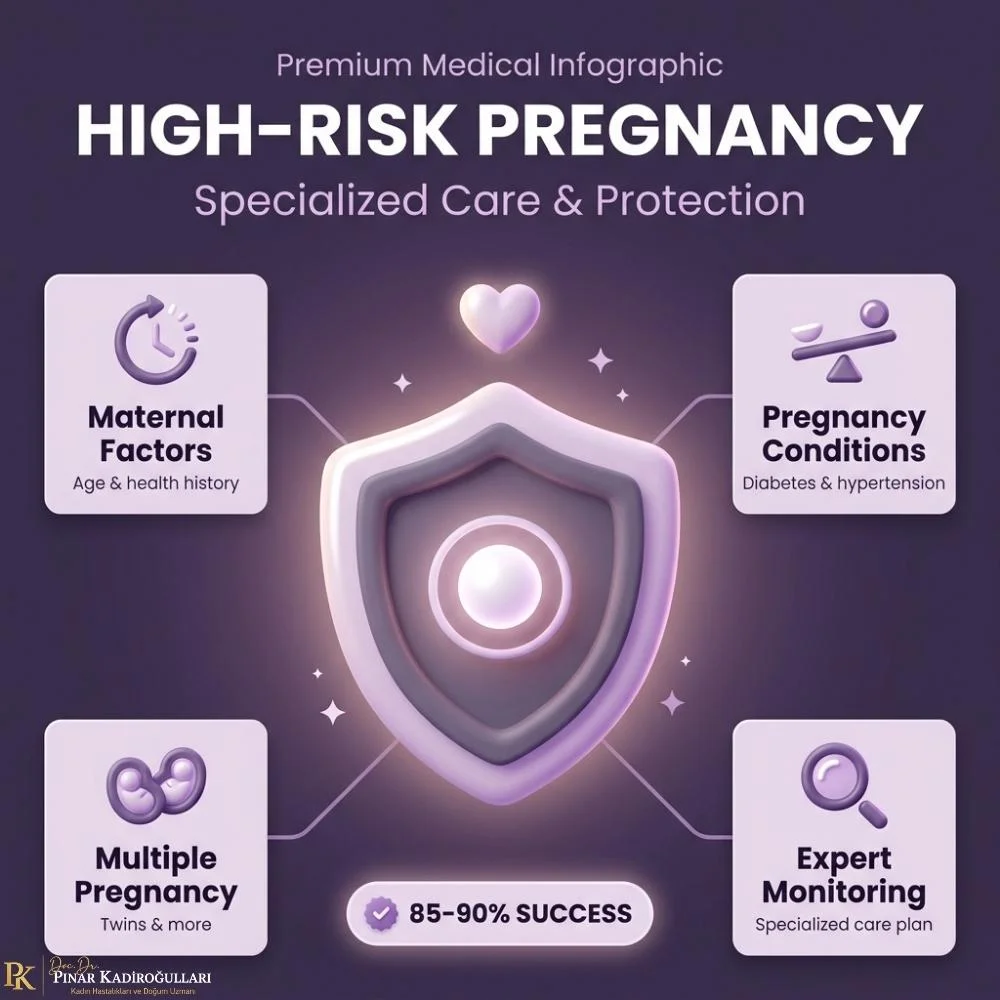
A high-risk pregnancy is one in which medical, obstetric, or genetic factors that may threaten the health of the mother and/or baby are present. This condition may stem from a pre-existing health issue at the onset of pregnancy or may emerge during the course of the pregnancy. The key is to identify these pregnancies early and monitor them with appropriate protocols.
High-risk pregnancy monitoring is carried out with three fundamental objectives:
1. Protecting Maternal Health: Preventing or providing early treatment for pregnancy-related complications such as hypertension, preeclampsia, and gestational diabetes.
2. Monitoring Fetal Development: Closely tracking the baby’s growth and well-being through detailed ultrasonography, Doppler measurements, and biophysical profile.
3. Delivery Planning: Determining the most appropriate mode and timing of delivery based on the condition of the mother and baby.
Important Information
High-risk pregnancy monitoring requires more frequent examinations, additional tests, and, when necessary, multidisciplinary consultation, compared to standard pregnancy monitoring. However, regular follow-up is important in these pregnancies.
Risk Factors and Assessment
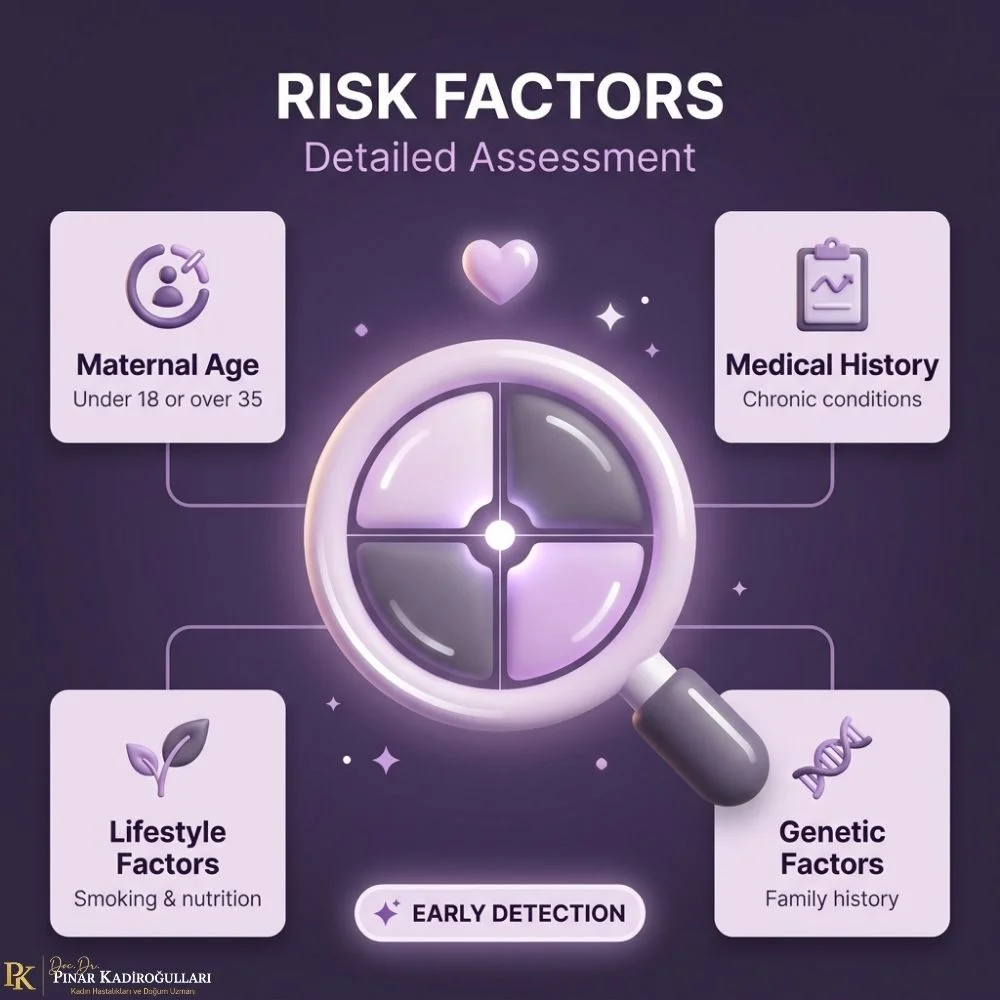
Whether a pregnancy is classified as “high-risk” is determined through the assessment of various factors. The factors that fall within the scope of high-risk pregnancy monitoring are generally examined under four main categories.
1. Maternal Factors
- Age: Pregnancies under the age of 18 or over the age of 35
- Chronic diseases: Diabetes, hypertension, thyroid disorders, cardiovascular diseases
- Body mass index: Obesity (BMI > 30) or significantly underweight
- Autoimmune diseases: Lupus, antiphospholipid syndrome
- Carrier status for genetic disorders
2. Obstetric History
- History of recurrent miscarriage (three or more)
- Preeclampsia or gestational diabetes in a previous pregnancy
- History of preterm birth
- Previous cesarean section or uterine surgery
- History of stillbirth or fetal anomaly
3. Current Pregnancy Factors
- Multiple pregnancy: Twins, triplets, or more
- Placental problems: Placenta previa, placental abruption
- Amniotic fluid abnormalities: Polyhydramnios, oligohydramnios
- Intrauterine growth restriction (IUGR)
- Pregnancy resulting from IVF treatment
4. Lifestyle and Environmental Factors
- Smoking, alcohol, or substance use
- Inadequate nutrition or vitamin deficiencies
- Intense stress and chronic fatigue
- Exposure to environmental toxins
Doctor’s Advice
Having one or more risk factors does not mean you will have a difficult pregnancy. The early detection of these factors and the establishment of a personalized monitoring protocol are important steps in follow-up.
High-Risk Pregnancy Monitoring Process
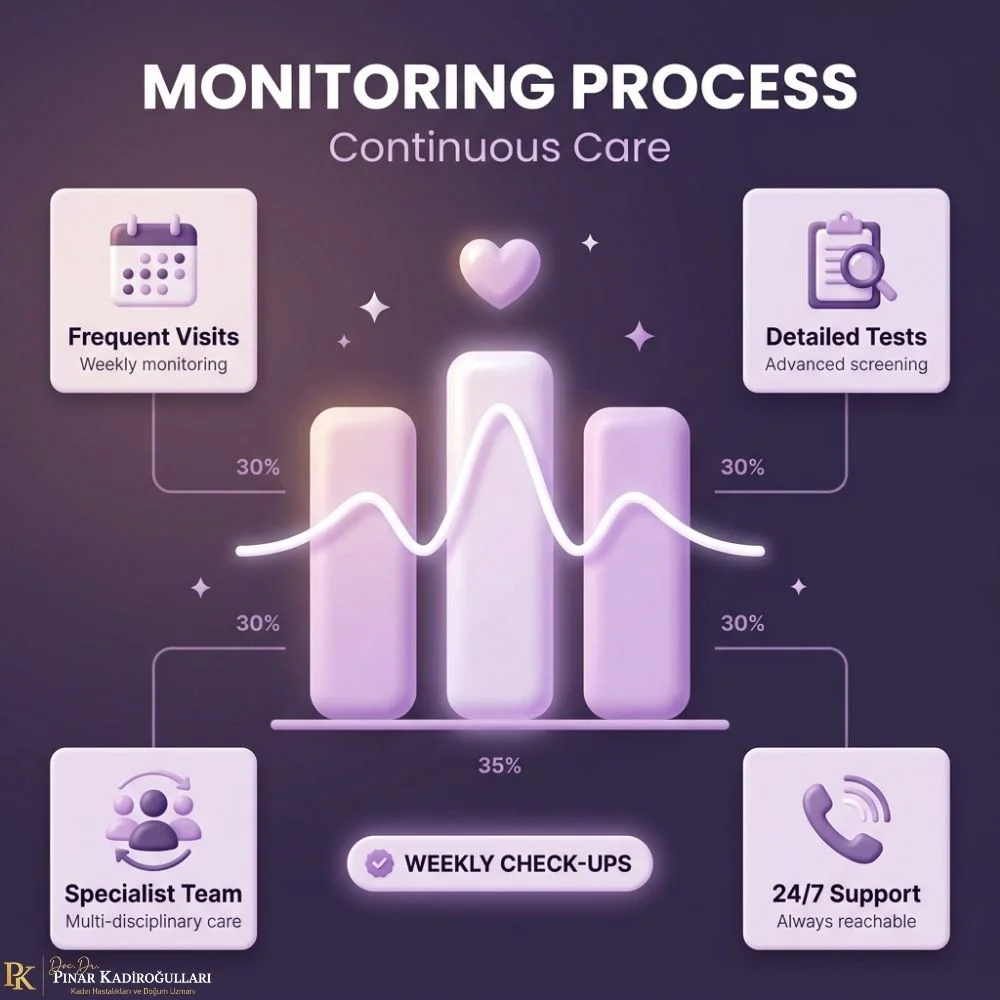
High-risk pregnancy monitoring requires more frequent examinations, additional tests, and a multidisciplinary approach, unlike standard pregnancy follow-up. The process is tailored according to gestational age and the type of risk.
First Trimester
Weeks 1-13: Initial Screening and Risk Identification
- Detailed Medical History: Evaluation of family and obstetric history.
- NT + Combined Screening (weeks 11-14): Assessment of chromosomal anomaly risk.
- NIPT or CVS: Advanced genetic testing in cases of high risk.
Second Trimester
Weeks 14-27: Detailed Monitoring and Doppler Assessment
- Detailed Ultrasound (weeks 20-24): Comprehensive examination of all organs.
- Cervical Length Measurement: Evaluation of preterm birth risk.
- OGTT + Doppler: Diabetes screening and assessment of blood flow.
Third Trimester
Weeks 28-40: Intensive Monitoring and Delivery Planning
- Frequent Check-Ups: Every 2 weeks, then weekly after week 36.
- NST and Biophysical Profile: Assessment of the baby’s well-being.
- Delivery Plan: Determining the most appropriate mode and timing of delivery.
Emergency Symptoms and Important Considerations
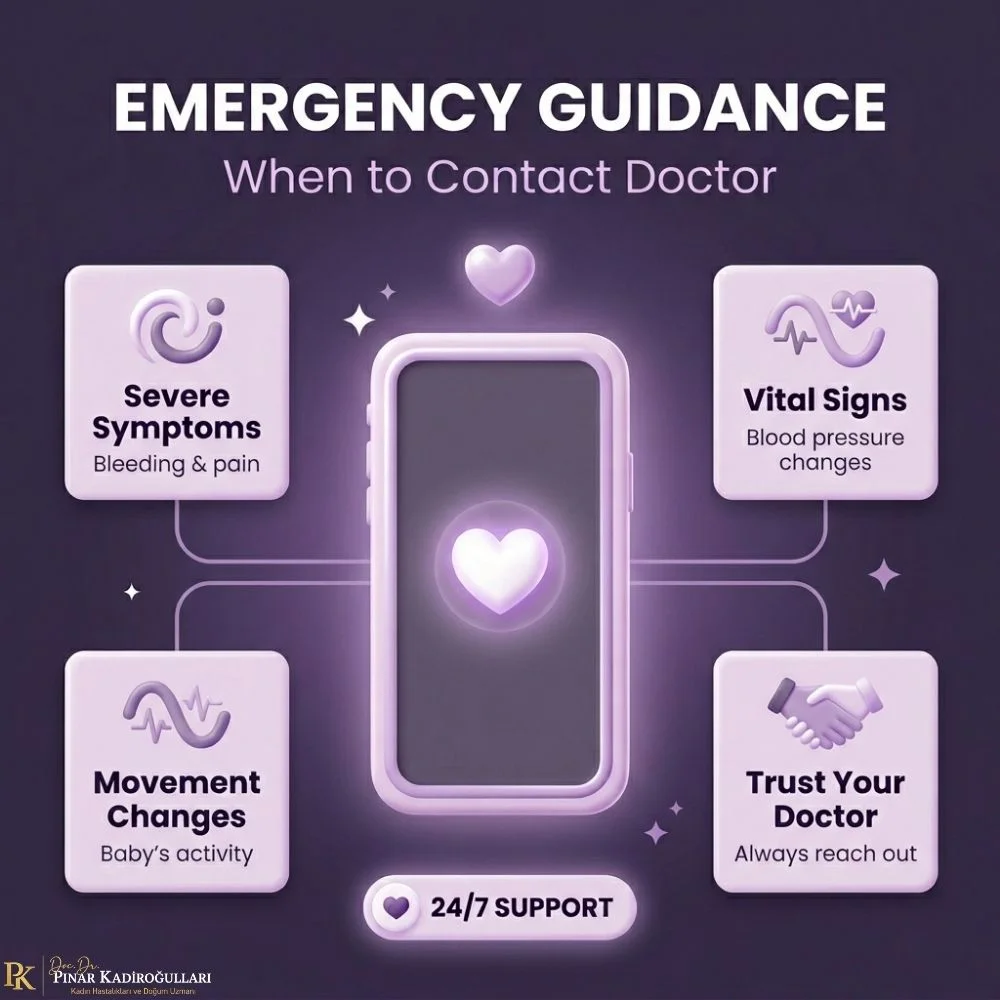
During high-risk pregnancy monitoring, it is important for the expectant mother to remain alert to certain symptoms in order to detect potential complications early. In the following situations, you should consult your specialist without delay.
⚠️ Situations Requiring Emergency Consultation
- Vaginal bleeding or spotting
- Severe abdominal pain or persistent contractions
- High fever (above 38°C)
- Sudden decrease or cessation of fetal movements
- Blurred vision and severe headache
- Sudden swelling in the hands, face, or legs
- Leakage of fluid (premature rupture of the amniotic membranes)
Recommendations for a Healthy Pregnancy
- Do not skip your regular check-ups: In high-risk pregnancies, every examination provides valuable information.
- Use your medications as prescribed by your physician.
- Maintain a balanced diet: Pay close attention to folic acid, iron, and protein intake.
- Adequate rest and stress management are integral parts of the treatment.
- Strictly avoid smoking, alcohol, and unnecessary medications.
- Adhere to the activity restrictions recommended by your physician.
Important Reminder
Communication is critical in high-risk pregnancy monitoring. Do not ignore any symptom that feels abnormal; instead of worrying about “being overly cautious,” choose to consult your physician. Early evaluation is important for both mother and baby.
Frequently Asked Questions
Is a high-risk pregnancy dangerous?
High-risk pregnancy monitoring does not mean “dangerous”; it simply refers to a process that requires more frequent and detailed follow-up. With early diagnosis and an appropriate protocol, these pregnancies are followed safely as far as possible. What matters is maintaining regular follow-up.
In which cases is a pregnancy considered high-risk?
Pregnancy over the age of 35, chronic diseases (diabetes, hypertension, thyroid disorders), previous pregnancy complications, multiple pregnancy, IVF pregnancy, and a history of recurrent miscarriages are among the most common factors that place a pregnancy in the high-risk category.
How often should I attend check-ups in a high-risk pregnancy?
While an average of 8 to 10 examinations are sufficient in a standard pregnancy, the number varies from person to person in high-risk pregnancy monitoring. Typically, monthly check-ups are recommended in the first half, biweekly after week 28, and weekly from week 36 onward.
Can I have a vaginal birth in a high-risk pregnancy?
In most high-risk pregnancies, vaginal birth is possible. The mode of delivery is determined based on the type of risk factor and the current condition of the mother and baby. In specific cases such as placenta previa, advanced preeclampsia, or fetal positioning, a cesarean section may be preferred. This decision is made together with your monitoring physician.
Is bed rest mandatory in a high-risk pregnancy?
No, bed rest is not required in every high-risk pregnancy. Once a common recommendation, strict bed rest is now advised in current guidelines only for specific conditions (cervical insufficiency, placental issues, etc.). For most patients, mild to moderate activity—and even appropriate exercise—may be recommended.
Our Treatments






References
The medical content on this page has been prepared based on the current clinical guidelines and scientific publications of international and national authoritative organizations. In addition to clinical studies conducted in Türkiye, the publications of Assoc. Prof. Dr. Pınar Kadiroğulları on female endocrinology and perinatology are also included as references.
WHO Recommendations on Antenatal Care: A Comprehensive Guide for a Positive Pregnancy Experience
Author: World Health Organization (WHO) | Publication: WHO 2016 (49 recommendations, 8+ ANC visits model) | Source Type: Official Guideline of an International Health Authority
WHO Antenatal Care Recommendations: PubMed Scientific Citation — Nutrition, Maternal-Fetal Assessment, Preventive Measures
Author: WHO Guidelines Approved by the Guidelines Review Committee | Publication: Geneva: WHO 2016 | Source Type: International Clinical Guideline (PubMed)
NICE NG201: Antenatal Care Clinical Guideline — UK National Standard
Author: National Institute for Health and Care Excellence (NICE) | Publication: NICE Guideline NG201 | Source Type: UK National Clinical Guideline
Prevalence of Physical Disorders and High-Risk Conditions in Pregnant Women in Türkiye: A Systematic Review and Meta-Analysis
Study: 159,022 patients, meta-analysis of 19 articles | Publication: Turkish Journal 2024 | Source Type: Turkish Peer-Reviewed Large-Scale Meta-Analysis
Trabzon GDM Study: Prevalence of Gestational Diabetes and Risk Factors in Turkish Pregnant Women
Study: 815 Turkish pregnant women, prospective cross-sectional research, OGTT testing | Publication: Peer-Reviewed Clinical Study | Source Type: Turkish Peer-Reviewed Comprehensive Clinical Study (PubMed PMC, Full Text)
Early Risk Prediction Model for Gestational Diabetes in Turkish Women: A Prospective Study
Author Institution: Karadeniz Technical University Faculty of Medicine, Trabzon | Study: 489 patients, 72 variables, logistic regression and random forest analysis | Publication: Peer-Reviewed Scientific Study 2022 | Source Type: Turkish Peer-Reviewed Clinical Study (PubMed)
ACOG/SMFM Obstetric Care Consensus #9: Levels of Maternal Care and Center Selection for High-Risk Pregnancy
Authors: American College of Obstetricians and Gynecologists (ACOG) & Society for Maternal-Fetal Medicine (SMFM) | Publication: Obstet Gynecol 2019 (reaffirmed) | Source Type: International Consensus Report
⭐ Academic Publications by Assoc. Prof. Dr. Pınar Kadiroğulları Related to High-Risk Pregnancy
Related to topics such as diabetes and the use of hormones during pregnancy — publications authored by the doctor in the fields of female endocrinology and perinatology
HbA1c Levels and Ovarian Reserve in Women with Type 1 Diabetes: The Relationship Between Diabetes and Reproductive Health
Authors: Kadiroğulları P, Demir E, Bahat PY, Kıyak H, Seçkin KD | Publication: Gynecological Endocrinology 2020;36(5):426-430 | Source Type: Peer-Reviewed Scientific Article (PubMed)
The Effect of Dydrogesterone Use in the Treatment of Threatened Miscarriage (High-Risk Pregnancy)
Authors: Yalçın Bahat P, Yücel B, Yuksel Özgör B, Kadiroğulları P, Topbas Selçuki NF, Çakmak K | Publication: Journal of Obstetrics and Gynaecology 2022;42(5):1276-1279 | Source Type: Peer-Reviewed Clinical Research (PubMed)
OHVIRA Syndrome: Uterine Congenital Anomaly and Pregnancy Complications — Laparoscopic Management
Authors: Kıyak H, Türkgeldi LS, Yücel B, Karacan T, Kadiroğulları P, Seçkin KD | Publication: Fertility and Sterility 2019;112(1):177-179 | Source Type: High-Impact Peer-Reviewed Reproductive Medicine Journal
Important Note
The information on this page is intended for general informational purposes and does not replace individual medical advice. For personal questions regarding high-risk pregnancy monitoring, prenatal care, and your health, you should always consult your specialist physician. The content of this page has been prepared by Assoc. Prof. Dr. Pınar Kadiroğulları in light of clinical experience and current scientific literature.
“Obstetrics and Gynecology”