

Assoc. Prof. Dr. Pınar Kadiroğulları
Assoc. Prof. Dr. Pınar Kadiroğulları is a specialist in obstetrics and gynecology. She works in the areas of pregnancy monitoring, HPV and cervical health, genital aesthetics, and gynecological surgery.
Her approach is based on current scientific guidelines.
Polycystic Ovary Syndrome (PCOS) is a hormonal disorder seen in women of reproductive age. Characterized by the formation of multiple small follicles in the ovaries, elevated androgen levels, and ovulatory dysfunction, this syndrome leads to symptoms that directly impact quality of life, including menstrual irregularities, weight gain, hirsutism, and fertility issues.
In modern gynecological practice, personalized PCOS management is essential. In accordance with the guidelines of the ESHRE (European Society of Human Reproduction and Embryology), ACOG (American College of Obstetricians and Gynecologists), and TJOD (Turkish Society of Gynecology and Obstetrics), a tailored treatment plan is developed for each patient based on her age, symptoms, fertility goals, and metabolic status.
At her practice in Nişantaşı, Istanbul, Assoc. Prof. Dr. Pınar Kadiroğulları plans the diagnosis and management of PCOS, from menstrual irregularities to fertility concerns, in line with current guidelines.
Information Note
Early diagnosis and proper management of PCOS are important not only for relieving current symptoms but also for reducing long-term health risks such as type 2 diabetes, cardiovascular diseases, and endometrial cancer.
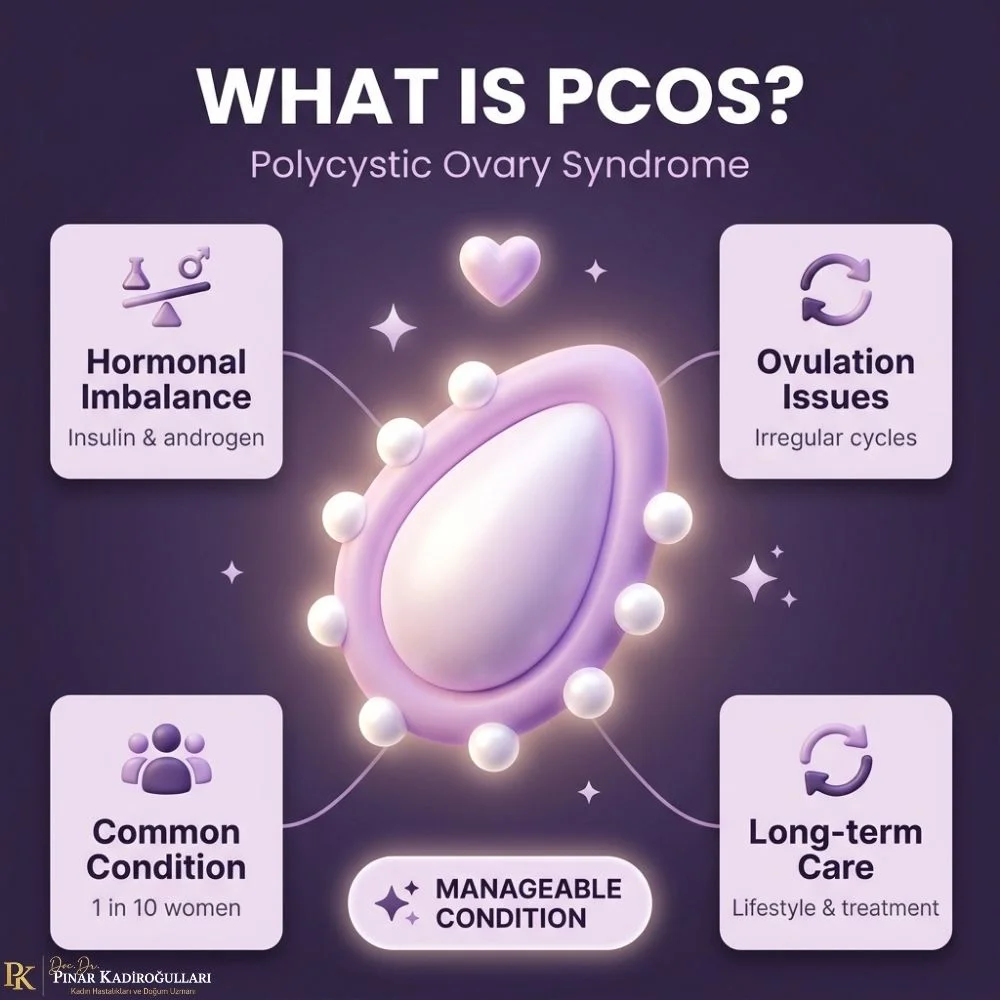
What Is PCOS (Polycystic Ovary Syndrome)?
Polycystic Ovary Syndrome is a complex endocrine disorder characterized by excessive androgen production by the ovaries and disruption of ovulation, affecting both reproductive health and metabolism. The term “polycystic” refers to the multiple small follicles observed on the ovaries during ultrasound; however, this follicular appearance alone is not sufficient for a PCOS diagnosis.
There are three fundamental mechanisms underlying PCOS:
1. Hormonal Imbalances: Disruption of the LH/FSH balance, excessive androgen production, and low progesterone levels are the hallmark features of PCOS. This hormonal imbalance impairs ovulation, leading to irregular menstrual cycles.
2. Insulin Resistance: Insulin resistance, observed in many PCOS patients, is a condition in which cells respond less effectively to insulin. The body compensates by producing more insulin, and these elevated insulin levels further increase androgen production, creating a vicious cycle.
3. Genetic and Environmental Factors: The presence of PCOS in a mother or sister significantly increases the risk of developing the condition. Modifiable factors such as dietary habits, physical activity levels, stress, and environmental toxins also play a decisive role in the course of the disease.
Important Information
PCOS is a lifelong chronic condition with no definitive cure; however, with accurate diagnosis and appropriate management, symptoms can be controlled and long-term complications can be reduced.
PCOS Symptoms and Diagnostic Methods
PCOS symptoms typically become apparent in late adolescence or the early twenties. The severity of symptoms can vary considerably from person to person; while some women experience only mild menstrual irregularities, others may face significant metabolic and aesthetic concerns.
The Most Common PCOS Symptoms
- Menstrual irregularities: Cycles longer than 35 days or absence of menstruation for several months
- Excessive hair growth (hirsutism): Male-pattern hair growth on the face, chin, chest, and abdomen
- Weight gain: Fat accumulation, particularly around the abdomen, and difficulty losing weight
- Skin problems: Acne, oily skin, and male-pattern hair loss
- Fertility issues: Delays in achieving pregnancy and recurrent miscarriages
- Skin changes: Dark patches on the neck and armpits (acanthosis nigricans)
- Mood changes: Depression, anxiety, and sleep disturbances
Rotterdam Diagnostic Criteria
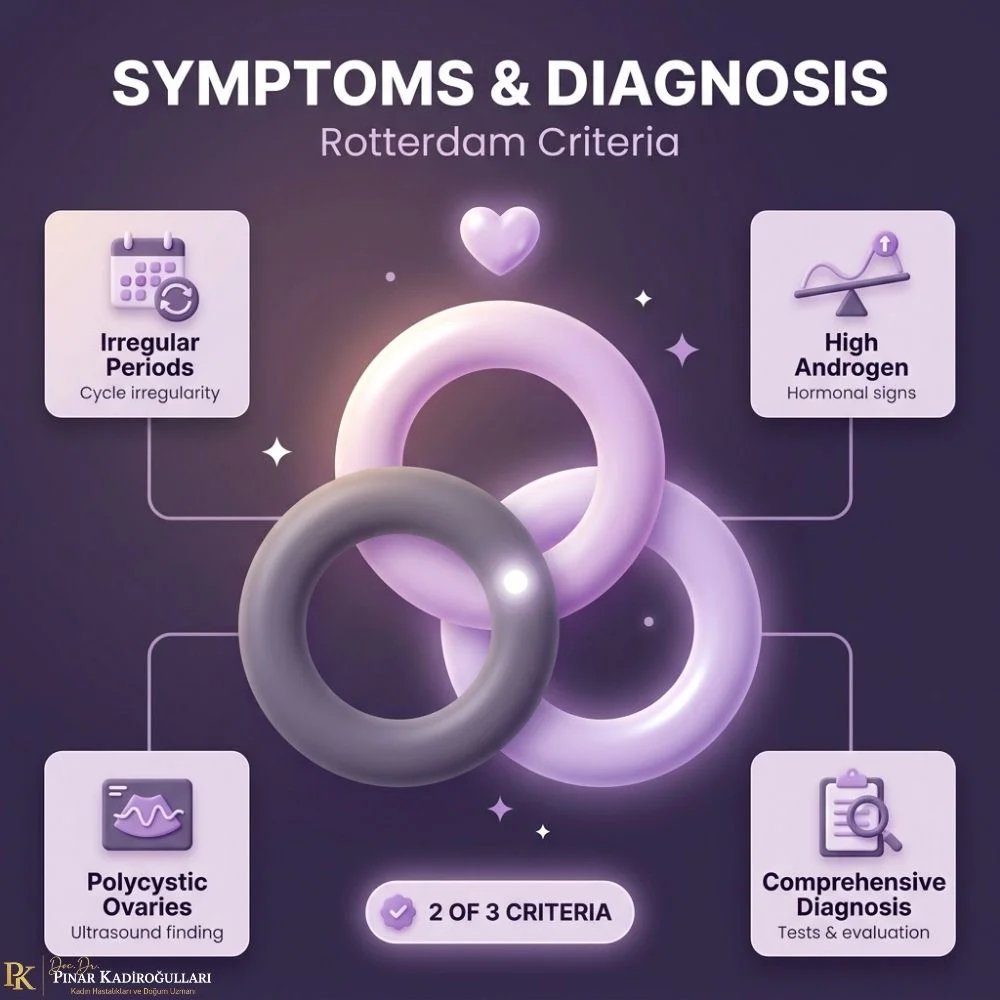
PCOS is diagnosed according to the internationally recognized Rotterdam Criteria. The presence of at least two of the following three criteria, along with the exclusion of other hormonal disorders, is required:
- Ovulatory dysfunction (anovulation or oligo-ovulation)
- Clinically or biochemically confirmed hyperandrogenism
- Polycystic ovarian morphology on ultrasound or elevated AMH levels
In addition to a detailed medical history and physical examination, the diagnostic process includes hormonal panel tests (LH, FSH, total and free testosterone, DHEA-S, prolactin, TSH, AMH), insulin resistance assessment (fasting glucose-to-insulin ratio, OGTT), and pelvic ultrasonography. The presence of 20 or more follicles in total across both ovaries, or an ovarian volume exceeding 10 ml, supports the polycystic ovarian morphology.
Doctor’s Advice
If you are experiencing PCOS symptoms, it is important to consult a physician rather than attempting to self-diagnose. Different hormonal conditions such as thyroid disorders, elevated prolactin levels, or congenital adrenal hyperplasia may present with symptoms similar to PCOS. An accurate diagnosis is the first step toward the right treatment.
PCOS Treatment Process and Approaches
PCOS treatment aims to control symptoms, restore hormonal balance, and reduce long-term health risks, rather than completely eliminate the disease. The treatment plan is developed in a personalized manner, taking into account the patient’s age, symptoms, fertility goals, and metabolic status.
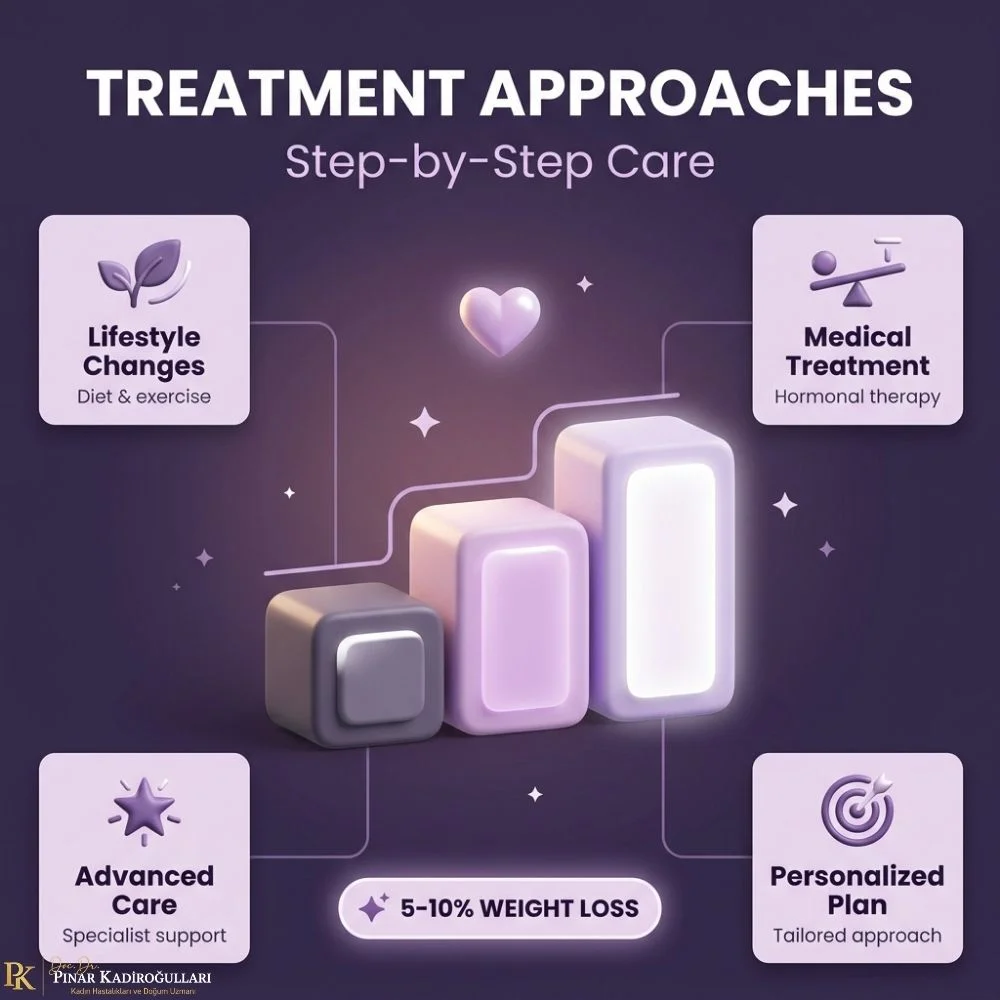
According to the ESHRE and TJOD guidelines, PCOS treatment is approached in three main steps. These steps are complementary in nature and are applied progressively based on the patient’s response.
First Step
Lifestyle Modifications
- Weight Management: Modest weight loss may support hormonal balance in some patients.
- Low Glycemic Index Diet: A diet rich in whole grains, vegetables, and high-quality protein.
- Regular Exercise: At least 150 minutes of moderate-intensity physical activity per week.
- Sleep and Stress Management: Quality sleep and effective stress control support hormonal balance.
Second Step
Pharmacological Treatment for Symptom Control
- Combined Oral Contraceptives: Regulating the menstrual cycle, suppressing androgens, and reducing cancer risk.
- Anti-Androgen Medications: May be considered by the physician for excessive hair growth and acne.
- Insulin-sensitizing medication: May be considered by the physician in patients with insulin resistance.
Third Step
Treatment for Patients Seeking Pregnancy
- Healthy Body Weight: Reaching a healthy body weight is an important goal in patients seeking pregnancy.
- Ovulation induction: Medication-supported ovulation induction may be considered by the physician.
- Surgery & IVF: Laparoscopic ovarian drilling or IVF for cases that do not respond to medical treatment.
Important Reminder
There is no single formula in PCOS treatment; the appropriate approach varies for each patient. Regular follow-up and sustainable lifestyle modifications are important. For patients seeking pregnancy, you can find detailed information on our Infertility Treatment page.
Post-Treatment Follow-Up and Healthy Living
PCOS is not a condition that can be resolved with one-time treatment; it is a chronic condition that requires lifelong management. The success of treatment is measured through ongoing regular check-ups, the long-term sustainability of lifestyle modifications, and close monitoring of associated risks.
PCOS management is maintained along three main axes: regular check-ups, management of long-term health risks, and the improvement of daily lifestyle habits.
First Axis
Frequency of Regular Check-Ups
- First 3-6 Months: Monthly check-ups, evaluation of treatment response, and necessary adjustments.
- Stable Phase: Once symptoms are under control, check-ups every 6 months.
- Hormonal Assessment: Annual measurements of LH, FSH, androgens, and AMH.
- Metabolic Follow-Up: Annual lipid profile, fasting glucose, and OGTT when necessary.
Second Axis
Management of Long-Term Health Risks
- Type 2 Diabetes Risk: Increased compared to the general population; regular blood glucose monitoring is recommended.
- Cardiovascular Health: Risk may be increased; monitoring of blood pressure, cholesterol, and weight is recommended.
- Endometrial Cancer: Ensuring regular menstrual bleeding and providing progesterone support when necessary.
- Mental Health: Regular evaluation for depression, anxiety, and sleep apnea.
Third Axis
Healthy Living Habits
- Mediterranean Diet: A sustainable model rich in vegetables, fish, olive oil, and whole grains.
- Regular Exercise: 30-45 minutes of moderate-intensity physical activity, 3-5 days a week.
- Stress and Sleep: Meditation, yoga, and 7-8 hours of quality sleep per day support hormonal balance.
- Avoiding Smoking and Alcohol: These habits disrupt hormonal balance and metabolic health.
Important Reminder
Ensuring regular menstrual bleeding is an important element of PCOS management. Regular menstrual cycles are important for protecting endometrial health; your physician will advise you on the number of cycles needed per year. As menopause approaches, some PCOS symptoms may naturally subside; however, metabolic follow-up should continue throughout life. You can find detailed information on our Menopause Treatment page →

Frequently Asked Questions
Our Treatments
Is it possible to become pregnant with PCOS?
Many women with PCOS can become pregnant with appropriate treatment. PCOS does not make pregnancy impossible; it can complicate ovulation and may prolong the process.
Lifestyle modifications, ovulation-inducing medications, and, when necessary, IVF treatment may be considered by your physician. Weight loss may help ovulation return in some patients.
Is it possible to be completely cured of PCOS?
PCOS is a lifelong chronic hormonal disorder, and there is no definitive cure. However, with appropriate treatment and lifestyle modifications, it is possible to control symptoms and reduce long-term health risks.
Once menopause is reached, the natural decline in androgen levels may lead to spontaneous improvement in some symptoms; however, metabolic follow-up should continue throughout life.
Do birth control pills cure PCOS?
Birth control pills do not eliminate the underlying cause of PCOS, but they regulate the menstrual cycle, reduce hair growth and acne by lowering androgen levels, and decrease the risk of endometrial cancer.
For this reason, they are one of the treatment options in PCOS management for controlling symptoms. After discontinuation, symptoms typically recur; therefore, long-term use of the treatment is generally planned.
How should women with PCOS eat?
The most suitable dietary model for women with PCOS is a low-glycemic-index, Mediterranean-style diet. Refined carbohydrates (white bread, sugar, processed foods), trans fats, and sugary beverages should be avoided.
A diet centered around whole grains, vegetables, fruits, lean protein sources (fish, poultry, legumes), olive oil, and nuts should be preferred. Paying attention to meal regularity and avoiding excessive calorie intake are important in managing insulin resistance.
Do PCOS symptoms resolve on their own?
If left untreated, PCOS symptoms do not resolve on their own and generally worsen over time. Symptoms that begin during adolescence may become more pronounced in the twenties and thirties, and metabolic complications (diabetes, cardiovascular disease) may develop in later years.
For this reason, early diagnosis and treatment are important. With lifestyle modifications and appropriate medical treatment, symptoms can be improved in many patients and long-term health risks can be reduced.





References
The medical content on this page has been prepared based on the current clinical guidelines and scientific publications of international and national authoritative organizations. In addition to clinical studies conducted in Türkiye, the publications of Assoc. Prof. Dr. Pınar Kadiroğulları in the fields of ovarian reserve, glucose metabolism, and female endocrinology are also included as references.
2023 International Evidence-Based PCOS Guideline: Recommendations for Diagnosis and Management (PubMed)
Authors: Teede HJ, Tay CT, Laven JJE, Dokras A, Moran LJ, et al. — International PCOS Network | Publication: Human Reproduction 2023;38(9):1655-1679 | Source Type: International Guideline (PubMed)
2023 PCOS Guideline: Journal of Clinical Endocrinology & Metabolism — Full Text (Diagnostic and Infertility Algorithms)
Authors: International PCOS Network — Monash University & ASRM, Endocrine Society, ESHRE, ESE | Publication: JCEM 2023;108(10):2447-2469 | Source Type: Official Full-Text Publication of the Endocrine Society
2023 International PCOS Guideline — Monash University Full Official PDF (All Algorithms and Recommendations)
Authors: Helena Teede and team — Monash University NHMRC | Publication: Monash University 2023 | Source Type: Official Full-Text PDF (Endorsed by the Australian National Health Council)
2023 PCOS Guideline Australian Practice Summary: Pragmatic Recommendations for Clinical Practice
Authors: Teede HJ, Mousa A, Tay CT, et al. | Publication: Medical Journal of Australia 2024 | Source Type: Peer-Reviewed Clinical Practice Summary (Full Text)
PCOS Phenotypes in Turkish Women: Clinical and Endocrine Characteristics — A Study of 410 Patients
Author Institution: Bezmialem Vakıf University Faculty of Medicine, Istanbul | Study: 410 PCOS patients, analysis of 4 phenotypes (LH/FSH, HOMA-IR, lipid profile) | Publication: Gynecological Endocrinology 2013 | Source Type: Turkish Peer-Reviewed Comprehensive Clinical Study (PubMed)
Comparison of PCOS Diagnostic Criteria (NIH vs Rotterdam) in Turkish Women in Terms of Metabolic Risk
Authors: Anaforoglu I, Algun E, Incecayir O, Ersoy K | Study: 175 Turkish PCOS patients, analysis of HOMA-IR, BMI, waist circumference, and testosterone | Publication: Metabolic Syndrome and Related Disorders 2011 | Source Type: Turkish Peer-Reviewed Clinical Study (PubMed)
PCOS in Turkish Adolescents: Clinical and Metabolic Characteristics and the Prevalence of Metabolic Syndrome
Author Institution: Istanbul Training and Research Hospital, Department of Obstetrics and Gynecology | Study: 77 Turkish adolescents with PCOS, 33 controls, BMI and insulin resistance | Publication: Peer-Reviewed Scientific Journal 2018 | Source Type: Turkish Peer-Reviewed Clinical Study (PubMed)
⭐ Academic Publications by Assoc. Prof. Dr. Pınar Kadiroğulları on Glucose Metabolism and Ovarian Function
The core pathophysiology of PCOS is insulin resistance and ovarian dysfunction — publications by the doctor in these areas
The Relationship Between HbA1c Levels and Ovarian Reserve: Glucose Metabolism and Reproductive Endocrinology
Authors: Kadiroğulları P, Demir E, Bahat PY, Kıyak H, Seçkin KD | Publication: Gynecological Endocrinology 2020;36(5):426-430 | Source Type: Peer-Reviewed Scientific Article (PubMed)
Atypical Ovarian Pathologies: Endometrioma + Dermoid Tumor — A Surgical Approach to the Ovary
Authors: Kıyak H, Kadiroğulları P, Karacan T, Seçkin KD, Karataş S | Publication: CRSLS – Journal of the Society of Laparoendoscopic Surgeons 2019 | Source Type: Peer-Reviewed Case Report (PubMed)
The Use of Dydrogesterone (Progesterone) and Female Sexual Function: A Hormonal Treatment Study
Authors: Yalçın Bahat P, Yücel B, Yuksel Özgör B, Kadiroğulları P, Topbas Selçuki NF, Çakmak K | Publication: Journal of Obstetrics and Gynaecology 2022;42(5):1276-1279 | Source Type: Peer-Reviewed Hormonal Treatment Study (PubMed)
Important Note
The information on this page is intended for general informational purposes and does not replace individual medical advice. For personal questions regarding the diagnosis of Polycystic Ovary Syndrome (PCOS), treatment planning, and your health, you should always consult your specialist gynecologist. The content of this page has been prepared by Assoc. Prof. Dr. Pınar Kadiroğulları in light of clinical experience and current scientific literature.
“Obstetrics and Gynecology”