


Assoc. Prof. Dr. Pınar Kadiroğulları
Assoc. Prof. Dr. Pınar Kadiroğulları is a specialist in obstetrics and gynecology. She specializes particularly in HPV treatment and cervical cancer prevention, providing holistic healthcare to her patients in the areas of pregnancy monitoring, genital aesthetics, and gynecological surgery.
By combining her academic background with clinical experience, she offers every patient an evidence-based, personalized treatment approach.

Vaginoplasty (vaginal tightening) is a modern genital aesthetic surgery in which vaginal tissue that has loosened or widened due to natural life processes is reshaped and tightened. In Türkiye, a significant portion of women who have given birth experience vaginal widening; this condition can negatively affect both sexual quality of life and psychological well-being.
In modern gynecological aesthetic surgical practice, a personalized treatment plan is developed in line with the guidelines of the ISSWSH and ISAPS, taking into account the degree of vaginal widening, the patient’s expectations, and her lifestyle. With her expertise in advanced gynecological aesthetic surgery at her clinic in Nişantaşı, Istanbul, Assoc. Prof. Dr. Pınar Kadiroğulları offers her patients both surgical and laser-based modern treatment options.
Information Note
Vaginoplasty is both a functional and aesthetic surgery. With modern surgical techniques, same-day discharge is possible, and patients return to daily life within 3-7 days. Repair of the mons pubis and episiotomy scars can also be performed in the same session.
What Is Vaginoplasty and Why Is It Performed?
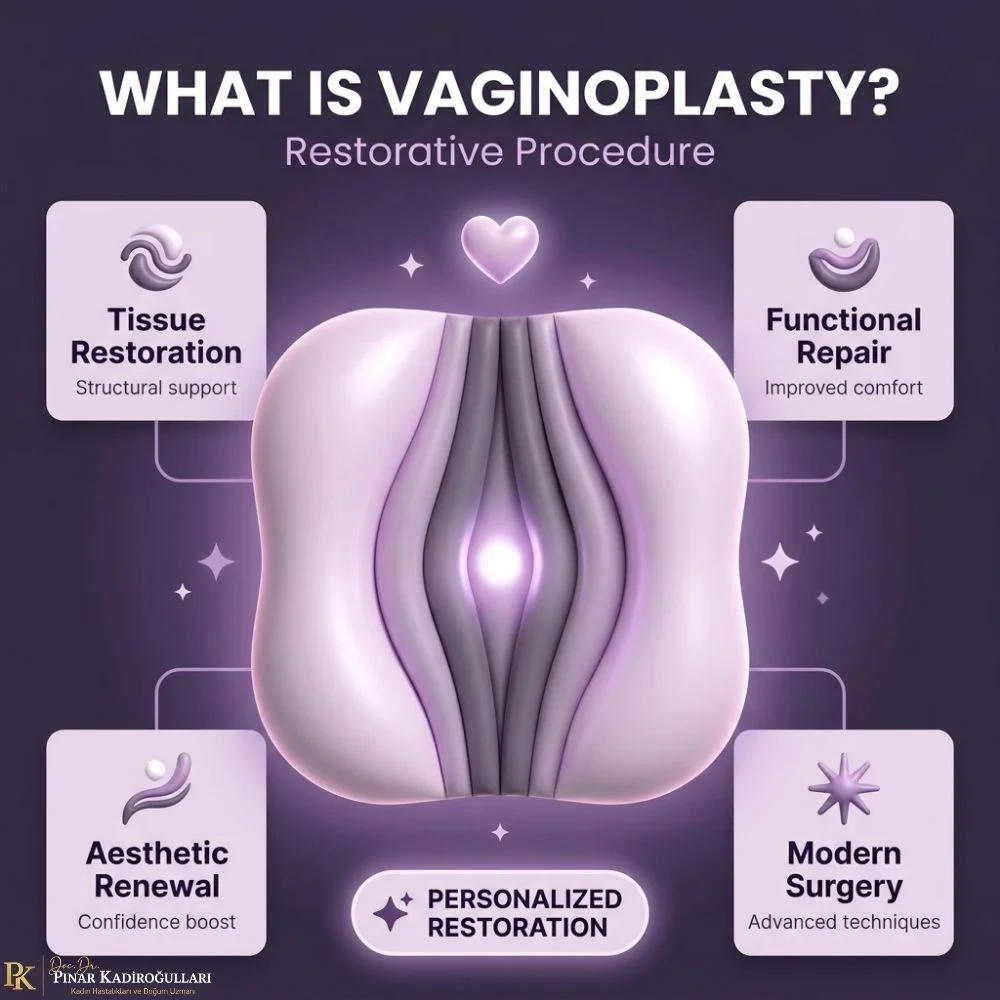
Vaginoplasty (vaginal tightening) is a surgical procedure in which vaginal tissue that has loosened or widened due to various reasons is reshaped and tightened. Also medically known as “posterior colporrhaphy”, this surgery aims to both improve sexual quality of life and address functional issues.
An ideal vaginal width is between 2.5-3.5 cm. For widening between 4-6 cm, laser or surgical treatment is recommended, and for widening greater than 6 cm, surgical vaginoplasty is essential. During the procedure, excess mucosal tissue is removed, the muscles are brought together, and the vagina regains a firmer structure.
Causes of Vaginal Widening
- Repeated vaginal births: Especially with the delivery of large babies
- Episiotomy (incision) during childbirth and poorly repaired post-birth scars
- Age-related loss of elasticity and tissue laxity
- Hormonal changes (especially during menopause)
- Chronic constipation and heavy lifting
- Weakening of the pelvic floor muscles
- Genetic predisposition (connective tissue elasticity)
- A history of traumatic childbirth
Vaginoplasty is not solely an aesthetic procedure. It also addresses functional problems: urinary incontinence, recurrent vaginal infections, and discomfort during sexual intercourse can be improved with this surgery.
Important Information
Vaginoplasty is a personalized surgical procedure. The most appropriate method is selected based on the patient’s vaginal anatomy, degree of laxity, birth history, and personal expectations. Concurrent labiaplasty or pelvic organ prolapse repair may also be performed.
In Which Cases Is Vaginoplasty Performed?
The decision for vaginoplasty is made based on the patient’s clinical condition and symptoms. While vaginal widening may not cause complaints in some women, it can lead to sexual and functional problems in others. Vaginoplasty is recommended in the following situations.
1. Sexual Health Issues
- A sensation of looseness and vaginal sounds during intercourse
- Loss of vaginal sensitivity and difficulty reaching orgasm
- Reduced sexual satisfaction between partners
- Loss of sexual self-confidence
2. Postpartum Complaints
- Laxity and anatomical changes following repeated vaginal births or the delivery of large babies
- Poor healing of the episiotomy scar
- Weakening of the pelvic floor muscles
3. Functional Problems
- Mild urinary incontinence (stress incontinence). For details, you can visit our Urinary Incontinence Treatment page.
- Recurrent vaginal infections and hygiene difficulties
- Mild pelvic organ prolapse and inability to retain a tampon
4. Aesthetic Concerns
- A widened appearance of the vaginal opening and anatomical changes after childbirth
- Sagging of the mons pubis
- Loss of genital self-confidence
Diagnosis and Evaluation
The decision is made through a detailed examination; vaginal width, muscle tone, and tissue elasticity are assessed. The procedure is not performed during pregnancy or active infection. The ideal time is within the first 1-2 weeks following the end of the menstrual period.

Vaginoplasty Methods
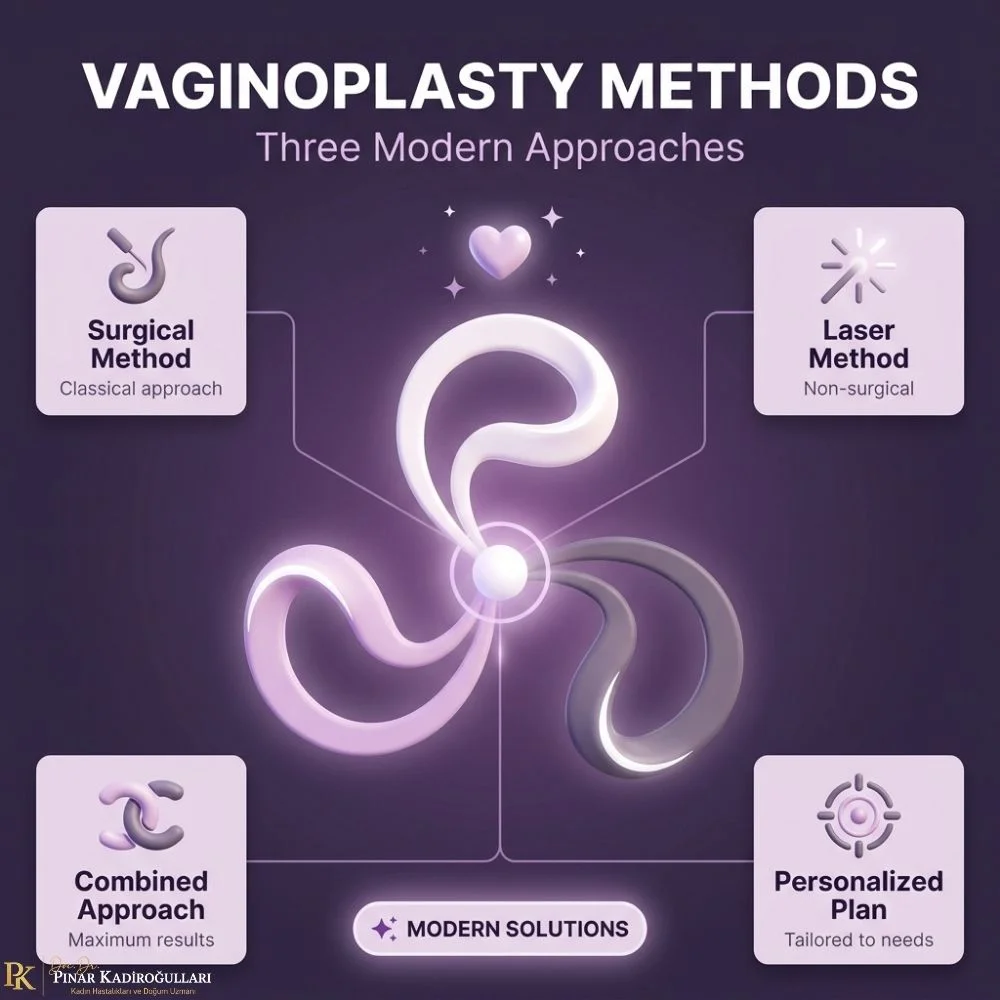
The method of vaginoplasty is determined based on the patient’s degree of vaginal widening and personal expectations. In modern gynecological aesthetic surgery, there are three main approaches: surgical, laser, and hybrid (fat injection) methods.
Method 1 – The Gold Standard
Surgical Vaginoplasty (Posterior Colporrhaphy)
A classical method in which excess mucosal tissue is removed from the posterior vaginal wall and the muscles are brought together.
- Indications: Moderate to advanced vaginal widening (greater than 4 cm).
- Duration & Anesthesia: 1-2 hours, performed under general or spinal anesthesia.
- Advantages: Permanent results, dissolvable sutures, and no external scarring.
- Limitations: 1 week of rest and abstinence from sexual intercourse for 6 weeks.
Method 2 – Non-Surgical
Laser Vaginoplasty (Non-Surgical)
A modern method in which the vaginal mucosa is tightened by stimulating collagen production with fractional CO2 laser.
- Indications: Mild to moderate vaginal widening (less than 4 cm).
- Duration & Sessions: 15-30 minutes per session, with 3-4 sessions one month apart, no anesthesia required.
- Advantages: Non-surgical, painless, and an immediate return to normal life.
- Limitations: Annual repeat sessions are required; not sufficient for advanced cases.
Method 3 – Hybrid Approach
Fat Injection Vaginoplasty
Tightening is achieved by injecting fat tissue harvested from the patient’s own body into the vaginal walls.
- Indications: Vaginal opening narrowing combined with mons pubis augmentation.
- Duration & Anesthesia: 45-60 minutes, performed under local anesthesia or sedation.
- Advantages: Use of natural material; mons pubis aesthetics can be addressed simultaneously.
- Limitations: Some of the fat is reabsorbed; requires 3-5 days of rest and may need repeat sessions.
Recovery and Sexual Life After Vaginoplasty
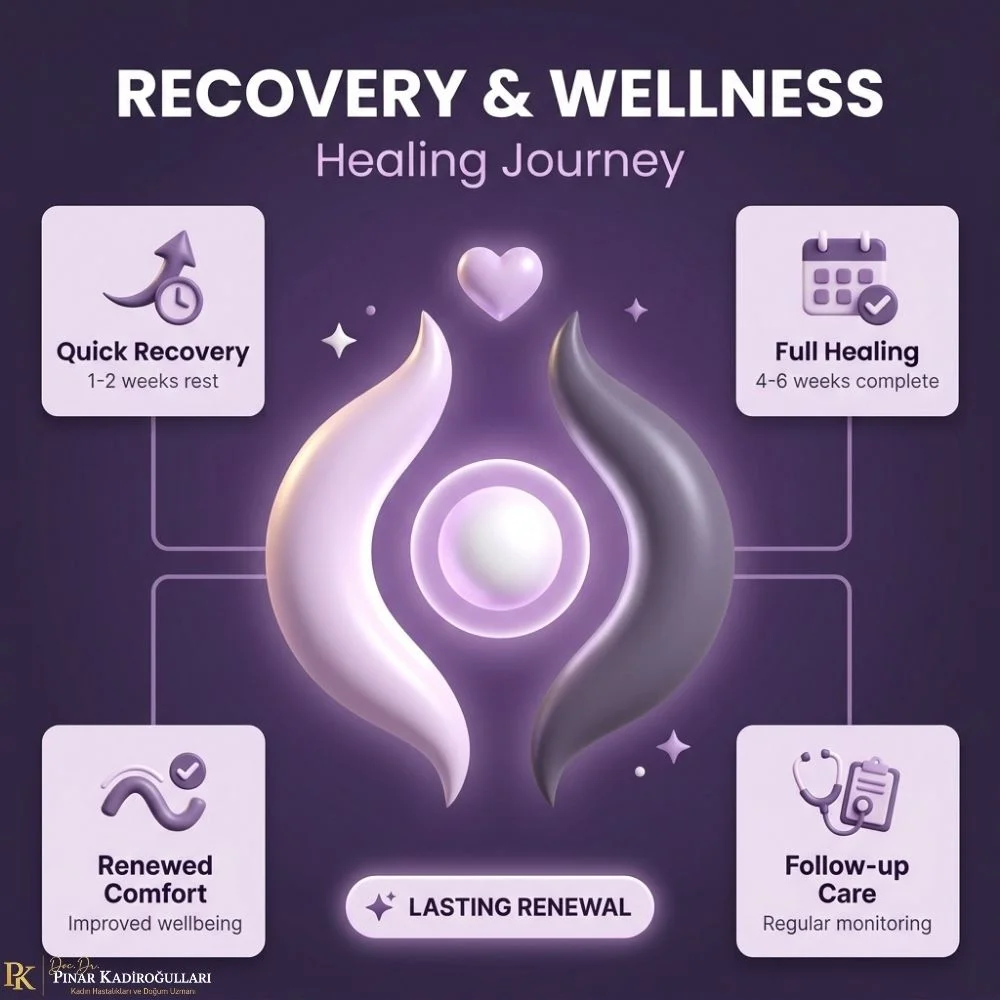
The recovery process after vaginoplasty varies depending on the method used. With modern techniques, patients are typically discharged on the same day; the doctor’s recommendations should be followed carefully to ensure long-lasting results.
Recovery Timelines (By Method)
- Surgical vaginoplasty: 1 week of rest, with abstinence from sexual intercourse for 4-6 weeks.
- Laser vaginoplasty: 1-2 days of light activity, with abstinence from sexual intercourse for 1 week.
- Fat injection: 3-5 days of rest, with abstinence from sexual intercourse for 4 weeks.
Postoperative Considerations
- First week: Avoid heavy lifting, prolonged sitting, and tight clothing; light walking is recommended.
- Bathing: Take a standing shower; bathtubs, swimming pools, the sea, and saunas are prohibited for 4-6 weeks.
- Antiseptic care: Cleansing 3-4 times a day is recommended.
- Since dissolvable sutures are used, suture removal is not required; sports activities can be resumed after 6 weeks.
Sexual Life After Vaginoplasty
- Sexual intercourse: May be resumed 4-6 weeks after surgery, with the doctor’s approval.
- The adaptation period to the new anatomy may take 2-3 months; natural lubrication also returns within this time.
- An increase in sexual pleasure becomes noticeable after the first 1-2 months; stimulation of the G-spot and clitoris is enhanced.
- Compatibility with the partner is important; a rushed approach should be avoided.
⚠️ When to Consult a Physician
- Fever above 38°C, chills, or severe and persistent pain
- Excessive or clotted vaginal bleeding
- Wound dehiscence, discharge, foul odor or excessive swelling/redness at the suture site
- Burning sensation when urinating or inability to urinate
Important Reminder
Vaginoplasty is a permanent surgical procedure that enhances both function and aesthetics. The vast majority of patients are satisfied with the results, and sexual quality of life improves significantly.
Frequently Asked Questions
Are the results of vaginoplasty permanent?
Surgical vaginoplasty provides long-lasting and permanent results. Since anatomical correction is performed at both the tissue and muscle level, the noticeable effect can last for 10-15 years. However, mild laxity may develop following new births, significant weight changes, or natural aging. Laser vaginoplasty is a more temporary method that requires repeat sessions every 1-2 years. The surgical method is recommended for patients seeking permanent results.
When can sexual intercourse be resumed after vaginoplasty?
A waiting period of 4-6 weeks is required before resuming sexual intercourse after vaginoplasty. This period is critically important for the complete healing of the sutures and the regeneration of the vaginal tissue. Resuming sexual intercourse early may lead to wound dehiscence and an increased risk of infection. Approval after a follow-up examination is essential. This waiting period is 1 week for laser vaginoplasty and 4 weeks for fat injection vaginoplasty.
Is vaginoplasty performed only on women who have given birth?
Vaginoplasty is not a procedure performed exclusively on women who have given birth. Vaginal widening can also occur in women who have not given birth due to genetic connective tissue elasticity, aging, or hormonal changes. The decision for surgery is made based on vaginal anatomy, the degree of laxity, and symptoms; birth history is not the sole determining factor. Suitability for the procedure is assessed through a detailed examination.
Can I give birth again after vaginoplasty?
Childbirth is possible after vaginoplasty; however, vaginal delivery may negatively affect the surgical outcome. The tightened tissues may loosen again during vaginal birth, which can lead to a reduction in the effects of vaginoplasty. For this reason, vaginoplasty is recommended for patients who are planning to have more children only after childbearing is complete. If a cesarean section is preferred, the surgical results can be preserved.
Can vaginoplasty and labiaplasty be performed at the same time?
Yes, vaginoplasty and labiaplasty can be safely performed in the same session. In fact, combining these two procedures is advantageous as it provides a single anesthesia and a single recovery period, which is both cost-effective and easier in terms of the healing process. Additionally, mons pubis aesthetics, hoodoplasty (clitoral aesthetics), and perineoplasty can also be planned simultaneously. Detailed planning is determined through the doctor’s evaluation.
Our Treatments


References
The medical content on this page has been prepared based on the current clinical guidelines and scientific publications of national and international authoritative organizations. The references include clinical research from Türkiye, as well as the academic publications of Assoc. Prof. Dr. Pınar Kadiroğulları.
Improvement of Sexual Function with Vaginoplasty: A Pre- and Post-Operative Study from Türkiye
Author: Erdogan G | Study: 250 patients, evaluated using the GRISS score | Publication: Cureus 2021 | Source Type: Turkish Peer-Reviewed Clinical Study (PubMed PMC, Full Text)
The Effect of Vaginoplasty on Stress Coping, Self-Confidence, and Sexual Satisfaction in Turkish Women: A Controlled Study
Authors: Erdogan G, Genis B, Bingol TY, et al. (Turkish academics) | Study: 106 patients + 106 control group | Publication: European Journal of Plastic Surgery 2022;45(6):951-957 | Source Type: Case-Control Study
Elective Female Genital Cosmetic Surgery — Committee Opinion No. 795
Author: American College of Obstetricians and Gynecologists (ACOG) | Publication: Obstet Gynecol 2020 | Source Type: Committee Opinion / Standards for Female Genital Aesthetic Surgery
The Impact of Vaginoplasty on Female and Male Sexual Function and Satisfaction
Study: 50 women + 50 male partners, evaluated with FSFI and IIEF-5 | Publication: Aesthetic Surgery Journal 2024 | Source Type: Peer-Reviewed Clinical Study (PubMed)
ICS/IUGA Joint Report: Terminology and Management of Pelvic Floor Disorders
Authors: International Continence Society (ICS) & International Urogynecological Association (IUGA) | Publication: Int Urogynecol J 2022 | Source Type: International Consensus Report
ICS/ISSVD Best Practice Consensus: Clinical Vulvar and Vaginal Laser Applications
Authors: Preti M, Vieira-Baptista P, Digesu GA, et al. | Publication: Neurourol Urodyn 2019 | Source Type: International Consensus Document
Perineoplasty and Vaginal Tightening Surgery: Safety, Efficacy, and Outcomes
Authors: Ulubay M, Keskin U, Fidan U, et al. (Turkish academics) | Publication: BioMed Research International 2016 | Source Type: Scientific Research Article (PubMed PMC)
⭐ Academic Publications by Assoc. Prof. Dr. Pınar Kadiroğulları on Vaginal Surgery
Vaginal surgery publications authored by the doctor that are directly related to vaginoplasty
Modified Extraperitoneal Uterosacral Ligament Suspension: Preventing Vaginal Cuff Prolapse After Vaginal Surgery — A 4-Clamp Technique
Authors: Kadiroğulları P, Seçkin KD | Publication: Journal of Investigative Surgery 2019 | Source Type: Peer-Reviewed Clinical Research (PubMed)
📍 This publication directly addresses the preservation of vaginal structure after vaginal surgery and its evaluation through the PISQ-12 sexual function score, making it a critical reference in vaginoplasty planning.
Abdominal Hysterectomy with a Uterine Manipulator Minimizes Vaginal Shortening: A Randomized Controlled Trial
Authors: Kıyak H, Karacan T, Özyürek ES, Türkgeldi LS, Kadiroğulları P, Seçkin KD | Publication: Journal of Investigative Surgery 2021;34(10):1052-1058 | Source Type: Randomized Controlled Clinical Trial (PubMed)
Clitoral Hoodoplasty Techniques: Patient Selection and the Impact on Sexual Function
Authors: Bozkurt Köseoğlu S, Çalışkan E, Kadiroğulları P | Publication: Anatolian Journal of Obstetrics and Gynecology Research 2024 | Source Type: Turkish Peer-Reviewed Review
Important Note
The information on this page is intended for general informational purposes and does not replace individual medical advice. For personal questions regarding the diagnosis of vaginoplasty (vaginal tightening), surgical planning, and your health, you should always consult your specialist gynecologist. The content of this page has been prepared by Assoc. Prof. Dr. Pınar Kadiroğulları in light of clinical experience and current scientific literature.
“Cutting-Edge Technology & Expert Experience”