


Assoc. Prof. Dr. Pınar Kadiroğulları
Assoc. Prof. Dr. Pınar Kadiroğulları is a specialist in obstetrics and gynecology. She specializes particularly in HPV treatment and cervical cancer prevention, providing holistic healthcare to her patients in the areas of pregnancy monitoring, genital aesthetics, and gynecological surgery.
By combining her academic background with clinical experience, she offers every patient an evidence-based, personalized treatment approach.

Vaginismus treatment is a matter that closely concerns women’s sexual health and significantly impacts quality of life. Approximately 5-10% of women in Turkey experience vaginismus at some point in their lives; due to feelings of shame, this condition often remains without specialist support. However, vaginismus is a successfully treatable condition.
In modern gynecology practice, in line with ISSWSH (International Society for the Study of Women’s Sexual Health) and DSM-5 diagnostic criteria; a personalized treatment plan is created by taking into account the individual’s medical history, the onset of symptoms, and their severity. Assoc. Prof. Dr. Pınar Kadiroğulları provides guidance through this process with an empathetic, privacy-oriented, and science-based approach at her clinic in Nişantaşı, Istanbul.
Information Note
Vaginismus is not the individual’s fault; it is an involuntary muscle contraction. With the right treatment approach, success rates are over 90%. Great importance is given to confidentiality and patient comfort during the treatment process; surgical intervention is mostly not required. You can also review our Infertility (Sterility) Treatment page →
What is Vaginismus?
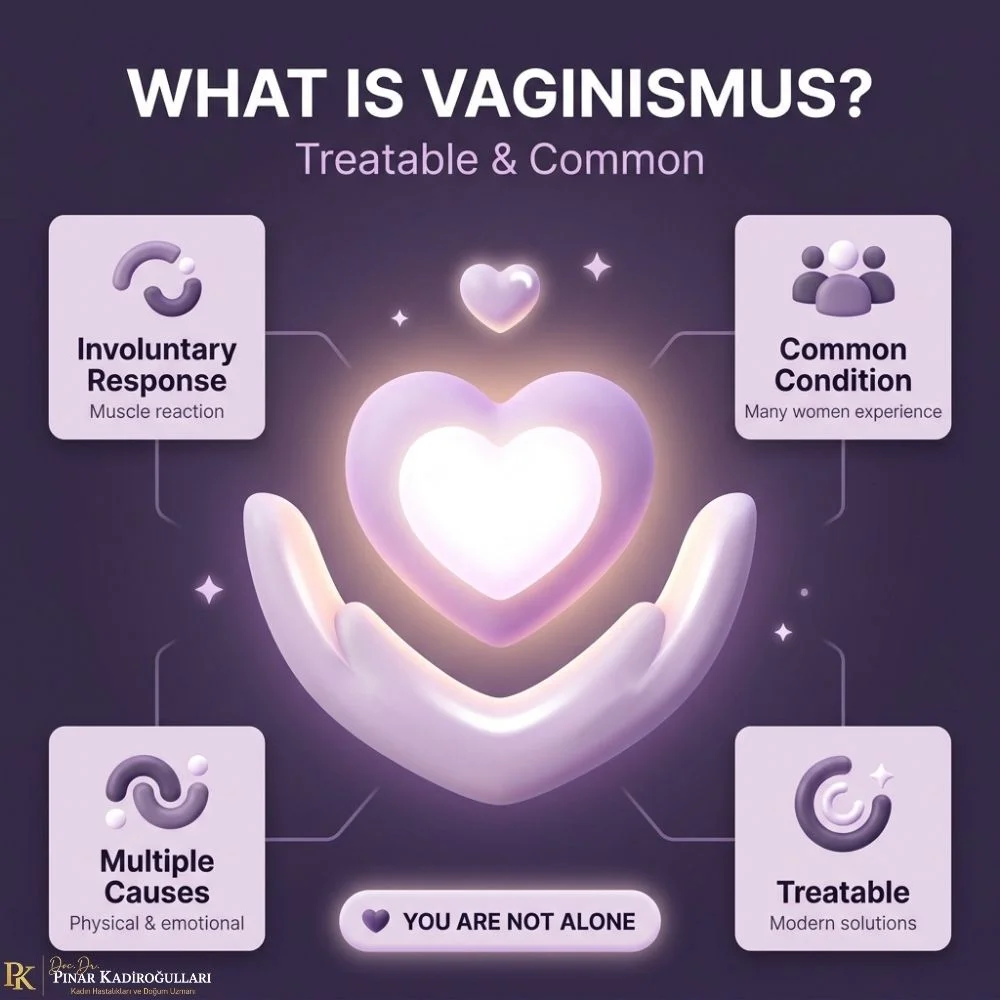
Vaginismus is a condition among female sexual dysfunctions characterized by the involuntary contraction of the pelvic floor muscles surrounding the vagina. This contraction leads to pain, fear, and avoidance behavior in situations such as sexual intercourse, gynecological examinations, or tampon insertion. It occurs beyond the conscious control of the individual.
Although vaginismus is often rooted in psychological factors and false sexual beliefs, physical causes can also be influential in rare cases. If left untreated, it can negatively impact marital relationships, fertility, and overall quality of life. The primary goals within the scope of vaginismus treatment are as follows:
1. Overcoming Fear: Resolving fears and false beliefs regarding sexual intercourse and vaginal penetration.
2. Regaining Muscle Control: Learning techniques to relax the pelvic floor muscles.
3. Restoration of Sexual Life: Re-establishing a healthy sexual life that is pain-free, anxiety-free, and fulfilling.
Types of Vaginismus
Primary Vaginismus: Present from the person’s very first sexual experience. Pain-free penetration has never occurred. The majority of vaginismus cases in Turkey are of this type.
Secondary Vaginismus: Vaginismus that develops in a woman who has previously experienced pain-free sexual intercourse. It can be triggered by trauma, childbirth, infection, or psychological factors.
Vaginismus Symptoms and Causes
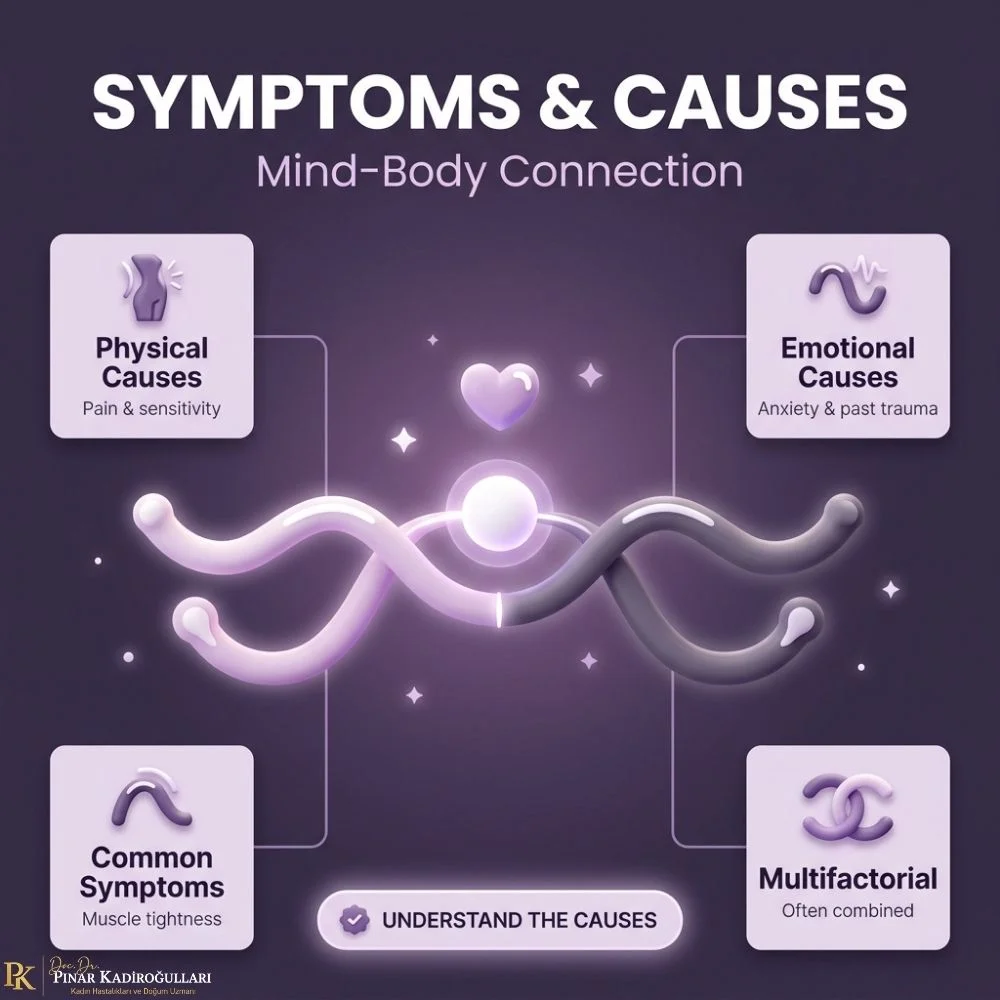
The success of vaginismus treatment depends on an accurate diagnosis and determining the underlying cause. Symptoms can vary from person to person; while some women only experience issues during sexual intercourse, others experience involuntary contractions during all vaginal penetration attempts.
1. Typical Symptoms
- Pain during sexual intercourse or the inability to achieve penetration
- Fear of vaginal penetration and avoidance behavior
- Inability to use tampons or using them with great difficulty
- Inability to undergo a gynecological examination
- Feelings of “burning, stinging, or hitting a wall” during attempted intercourse
- Anxiety, panic attacks, sweating, or heart palpitations
- Sexual desire and arousal may remain normal
- Love and intimacy with the partner outside of intercourse are not problematic
2. Psychological Causes (Majority)
- Fears regarding sexuality and false beliefs
- Past **sexual trauma** or history of abuse
- Cultural and religious influences (sexual taboos)
- Upbringing style and lack of sexual education
- First-night anxiety and “hymen” myths
- General anxiety disorder or depression
- Relationship issues with the partner
- Traumatic experiences following childbirth, miscarriage, or surgery
3. Physical Causes (Less Common)
- Vaginal infections (yeast, bacterial)
- Endometriosis and pelvic inflammatory disease (PID)
- Vulvodynia (vulvar pain syndrome)
- Vaginal dryness (estrogen deficiency)
- Anatomical structural issues (such as a thick hymen)
- Painful scar tissue appearing after childbirth
4. Diagnostic Methods
- Detailed interview conducted with empathy: It is essential for the patient to feel safe
- Evaluation of medical and sexual history
- Sensitive gynecological examination (only with explicit permission)
- Evaluation of accompanying anxiety and depression
- Additional tests to exclude physical causes when necessary
Important Reminder
Vaginismus is not a condition to be ashamed of or hidden. It is a treatable sexual health issue experienced by many women. Seeking help early shortens the treatment duration and ensures that psychological effects are minimized. In our clinic, confidentiality, understanding, and empathy are fundamental.
Vaginismus Treatment Methods
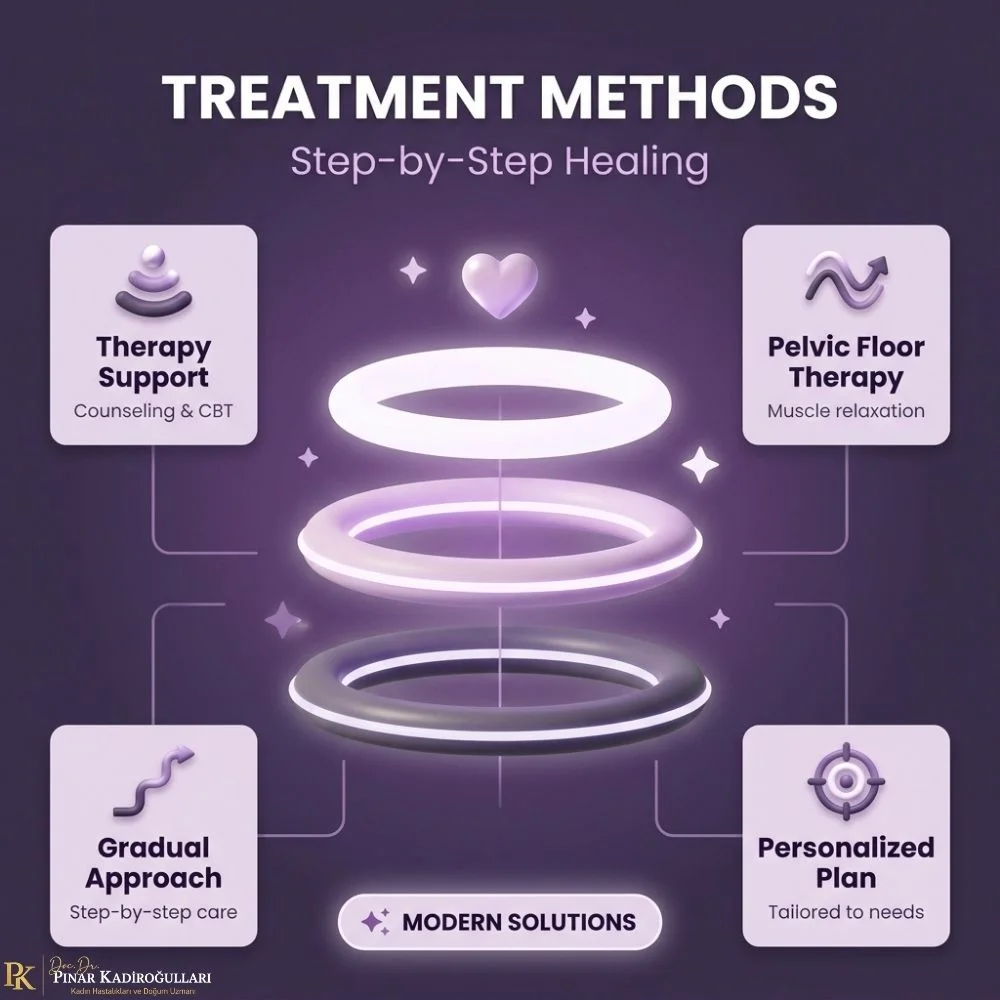
Vaginismus treatment is planned with a stepped approach based on the patient’s age, type of vaginismus (primary/secondary), and severity. The treatment plan is created entirely for the individual, and non-surgical, evidence-based methods are prioritized. Success rates range between 85% and 95%.
Step 1 Treatment
Cognitive Behavioral Therapy (CBT) and Sexual Education
- Sexual Information: Providing accurate anatomical and physiological information.
- Resolving Fears: Dealing with “first night” myths and false beliefs.
- Relaxation Techniques: Breathing exercises and mindfulness practices.
- Couple Therapy: Inclusion of the partner in the process.
Step 2 Treatment
Pelvic Floor Exercises and Dilator Therapy
- Kegel Exercises: Identifying and controlling the pelvic floor muscles.
- Pelvic Floor Physiotherapy: Muscle training with a specialist physiotherapist.
- Vaginal Dilator Therapy: Desensitization with incremental and gradual sizes.
- Finger Exercises (in-vivo desensitization): Applied in the home environment.
Step 3 Treatment
Advanced Treatment Options
- Botox Application: Botulinum toxin injection into the pelvic floor muscles (67-80% success rate).
- Hypnotherapy: Resolving subconscious fears.
- Medication Support: Short-term use for accompanying anxiety or depression.
- Surgical Correction: Only if an anatomical problem is present (hymenectomy, very rare).
Lifestyle Recommendations and Supportive Approaches
In addition to professional support during the vaginismus treatment process, lifestyle adjustments and partner-individual approaches significantly increase treatment success. The following recommendations are suggested as supportive measures within the scope of sexual therapy guidelines.
Individual Strategies
- Stress management: Yoga, meditation, and breathing exercises support pelvic floor relaxation.
- Regular sleep: 7-9 hours per day is critical for balancing the nervous system.
- Mindfulness practice: Identifying the body and developing awareness.
- Pelvic floor awareness: Examining the genital area with a mirror (getting to know one’s own body).
- Kegel exercises: Regularly 2-3 times a day.
- Professional support: Individual psychotherapy, and anxiety treatment when necessary.
Approaches with the Partner
- Open communication: Sharing fears and feelings with your partner.
- Patience and understanding: Planning the treatment process together.
- Postponing sexual intercourse: Avoiding penetration attempts until doctor’s approval.
- Diversifying intimacy: Loving, pressure-free intimacy activities.
- Couple therapy: Participating in specialist sessions together.
- Partner education: Understanding that vaginismus is not a form of sexual rejection.
⚠️ Situations Requiring Specialist Support
- Persistent pain during sexual intercourse or the inability to achieve penetration
- Inability to tolerate a gynecological examination
- Difficulty using tampons
- Emergence or deepening of relationship problems with the partner
- Panic attacks or intense anxiety at the thought of sexual intercourse
- Fertility concerns (desire for pregnancy that does not occur)
- Depression, isolation, or loss of self-esteem
Important Reminder
Vaginismus is a treatable condition. With the right treatment approach and a committed process, the vast majority of patients achieve a healthy, pain-free, and happy sexual life. Often, natural pregnancy is achieved after treatment. The important things are to be patient in this process, not to hesitate in seeking professional support, and to be able to establish open communication with your partner.

Frequently Asked Questions
Is Vaginismus Completely Treatable?
Yes, vaginismus is a highly treatable condition. With the right treatment approach, the success rate is around 85-95%. Although the treatment duration varies by individual, most patients show significant improvement within 3 weeks to 3 months. Early consultation shortens the treatment period and ensures that psychological effects are minimized. Treatment does not require surgery at all.
The Role of the Partner in Vaginismus Treatment
Partner support significantly increases the success of treatment. Vaginismus is not a form of sexual rejection or unwillingness; it is an involuntary contraction issue. It is essential for the partner to maintain a patient, understanding, and pressure-free attitude. Couple therapy sessions are very beneficial for understanding vaginismus together and sharing the treatment process. Postponing sexual intercourse is only a temporary step; the ultimate result is a much happier sexual life.
Can a woman with vaginismus get pregnant?
Vaginismus is not an obstacle to pregnancy on its own, but natural conception can become difficult because sexual intercourse cannot occur. Following treatment, many women conceive naturally. If pregnancy is urgently desired while treatment is still ongoing, options such as insemination (IUI) or IVF can be considered. Once vaginismus is treated, most women can comfortably make the decision to get pregnant.
How is Vaginismus Treatment with Botox Applied?
Botox (botulinum toxin) treatment is applied in advanced cases or for patients who do not respond to other methods. The procedure is performed under local anesthesia via a low-dose injection of botulinum toxin into the pelvic floor muscles. The session takes approximately 15-20 minutes and temporarily relaxes the muscles. During this period, the patient continues with dilator therapy and psychotherapy. The success rate is around 67-80%.
Is Vaginismus Treatment Kept Confidential?
Yes, like all medical processes, vaginismus treatment is covered by physician-patient confidentiality. Empathy, understanding, and patient comfort are essential at the clinic. Unless the patient wishes, their spouse or relatives are not included in the process. During the treatment process, a gynecological examination is not mandatory; it is only performed with the patient’s consent and when the patient is ready. Online sexual therapy options are also available.
Our Treatments


References
The medical content on this page has been prepared based on current clinical guidelines and scientific publications from international and national authoritative organizations. Particularly focusing on clinical research conducted in Turkey, academic publications by Assoc. Prof. Dr. Pınar Kadiroğulları on women’s sexual health are also included as references.
Female Genito-Pelvic Pain/Penetration Disorder (GPPPD): DSM-5 Diagnostic Criteria and General Approach
Authors: Dias-Amaral A, Marques-Pinto A | Publication: Revista Brasileira de Ginecologia e Obstetrícia 2018 | Source Type: Diagnosis and Treatment Review Based on DSM-5 (American Psychiatric Association) (PubMed PMC, Full Text)
Effectiveness of Cognitive Behavioral Therapy in Vaginismus: A Turkish Patient Study
Study: Hacettepe University Hospital Psychiatry Clinic — Treatment of 28 Turkish couples with vaginismus | Publication: Sexual and Relationship Therapy 2003 | Source Type: Peer-reviewed Turkish Clinical Study (PubMed)
Comparison of Treatment Outcomes and Sexual Functions in Vaginismus Patients: Before and During COVID-19
Author: Zulfikaroglu EE (Turkish Academic, Ankara Eva Women’s Health Clinic) | Publication: Cureus 2024 | Study: 2018-2022 retrospective analysis, GRISS and FSFI scores | Source Type: Peer-reviewed Turkish Clinical Study
Botulinum Toxin Treatment in Refractory Vaginismus: A Large-Scale Study of 143 Patients
Study: 143 married Turkish women, 2018-2024 prospective study, 81.13% success rate | Publication: Peer-reviewed Clinical Study 2024 | Source Type: Large-scale Peer-reviewed Clinical Study (PubMed PMC, Full Text)
Obstetric, Perineal, and Psychosocial Outcomes After Successful Vaginismus Treatment: Retrospective Cohort Based on Lamont Classification
Author Institution: Ankara Bilkent City Hospital, Turkey | Publication: Peer-reviewed Study 2025 | Source Type: Large-scale Turkish Clinical Study (PubMed)
DSM-5 GPPPD: Prevalence, Comorbidity, and Associated Factors — A Study of University Students
Publication: International Journal of Clinical and Health Psychology 2024 | Source Type: Peer-reviewed Scientific Research (ScienceDirect, Full Text)
2015 ISSVD/ISSWSH/IPPS Joint Consensus Terminology: Classification of Vulvar Pain and Vulvodynia
Source Author: Bornstein J, Goldstein AT, Stockdale CK, et al. — International Society for the Study of Vulvovaginal Disease (ISSVD), International Society for the Study of Women’s Sexual Health (ISSWSH) & International Pelvic Pain Society (IPPS) | Publication: J Low Genit Tract Dis 2016 | Source Type: Joint Consensus of Three International Organizations
⭐ Academic Publications by Assoc. Prof. Dr. Pınar Kadiroğulları on Women’s Sexual Health
Directly related to vaginismus — scientific publications authored by the doctor in the fields of female sexual dysfunctions, sexual pain, and genital surgery
The Effect of Dydrogesterone Use in Threatened Miscarriage on Female Sexual Function
Authors: Yalçın Bahat P, Yücel B, Yuksel Özgör B, Kadiroğulları P, Topbas Selçuki NF, Çakmak K | Publication: Journal of Obstetrics and Gynaecology 2022;42(5):1276-1279 | Source Type: Peer-reviewed Clinical Research (PubMed)
📍 This publication is directly on the evaluation of female sexual function — a scientific publication by the doctor in the field of women’s sexual health, which is an integral part of vaginismus diagnosis.
Clitoral Hoodoplasty Techniques and Their Effect on Sexual Function: A Comprehensive Review
Authors: Bozkurt Köseoğlu S, Çalışkan E, Kadiroğulları P | Publication: Anatolian Journal of Obstetrics and Gynecology Research 2024 | Source Type: Peer-reviewed Turkish Review
Modified Extraperitoneal Uterosacral Ligament Suspension: Evaluation with PISQ-12 Sexual Function Scores After Vaginal Surgery
Authors: Kadiroğulları P, Seçkin KD | Publication: Journal of Investigative Surgery 2019 | Source Type: Peer-reviewed Clinical Research (PubMed)
Important Note
The information on this page is for general informational purposes and does not substitute for individual medical advice. For vaginismus diagnosis, treatment planning, and personal health questions, please consult your specialist gynecologist. The page content has been prepared by Assoc. Prof. Dr. Pınar Kadiroğulları in the light of clinical experience and current scientific literature, adhering to the principle of absolute confidentiality.
“Cutting-Edge Technology & Expert Experience”