
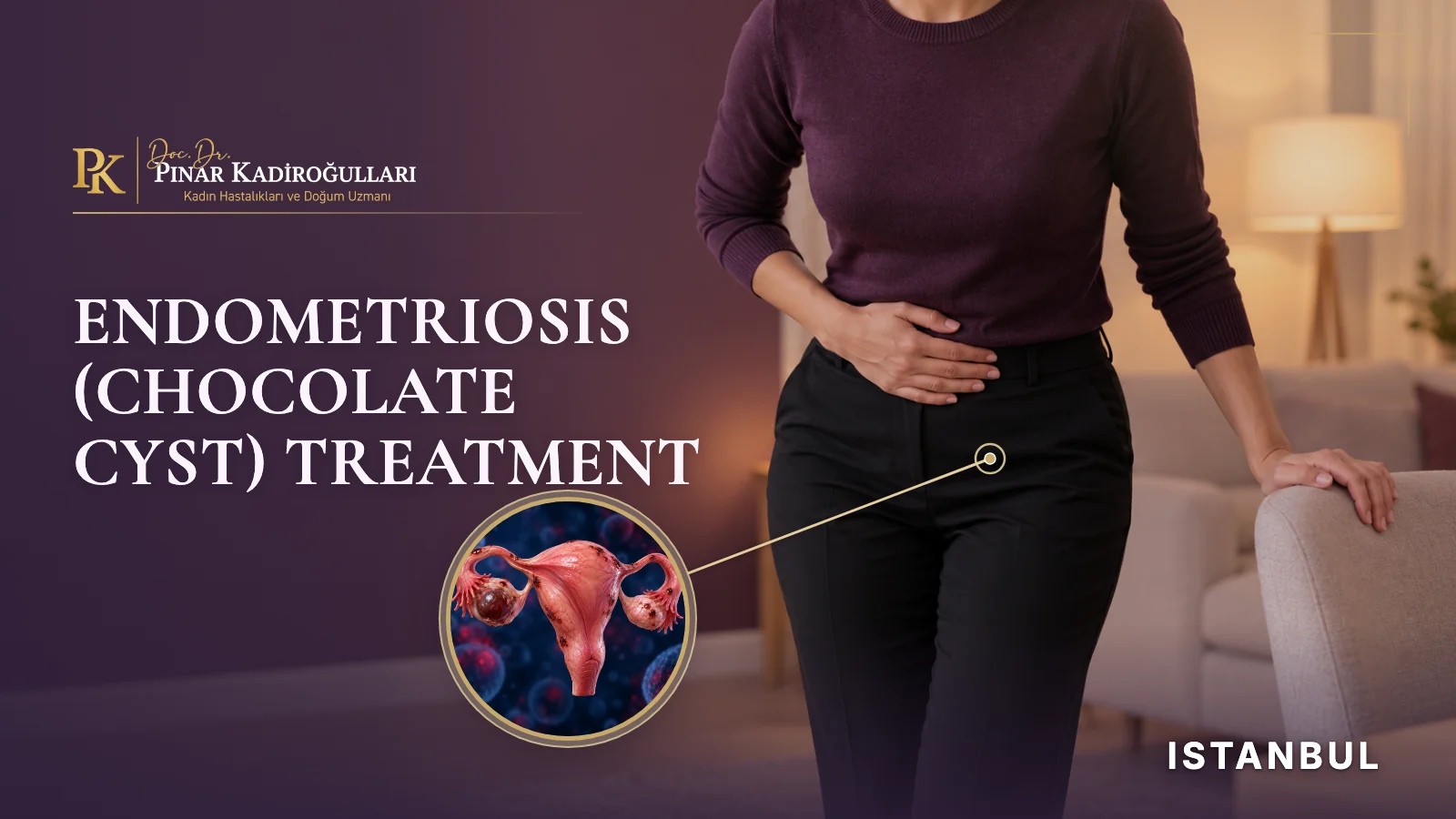

Assoc. Prof. Dr. Pınar Kadiroğulları
Assoc. Prof. Dr. Pınar Kadiroğulları is a specialist in obstetrics and gynecology. She works in the areas of pregnancy monitoring, HPV and cervical health, genital aesthetics, and gynecological surgery.
Her approach is based on current scientific guidelines.
Endometriosis treatment, particularly for managing chocolate cysts (endometriomas), requires a personalized approach to protect a woman’s quality of life and fertility. Endometriosis affects some women of reproductive age, and some of them develop these ovarian cysts.
At her practice in Nişantaşı, Istanbul, Assoc. Prof. Dr. Pınar Kadiroğulları plans individualized treatment in line with ESHRE (European Society of Human Reproduction and Embryology) and ACOG guidelines, evaluating cyst size, patient age, fertility goals, and pain severity.
Information Note
A chocolate cyst (endometrioma) forms when endometriosis tissue bleeds within the ovary, accumulating a dark brown, chocolate-colored fluid. It can be a cause of chronic pelvic pain and infertility, so timely evaluation is important. Information on the Infertility Treatment page may also be useful.
What Is Endometriosis? | Endometriosis Treatment
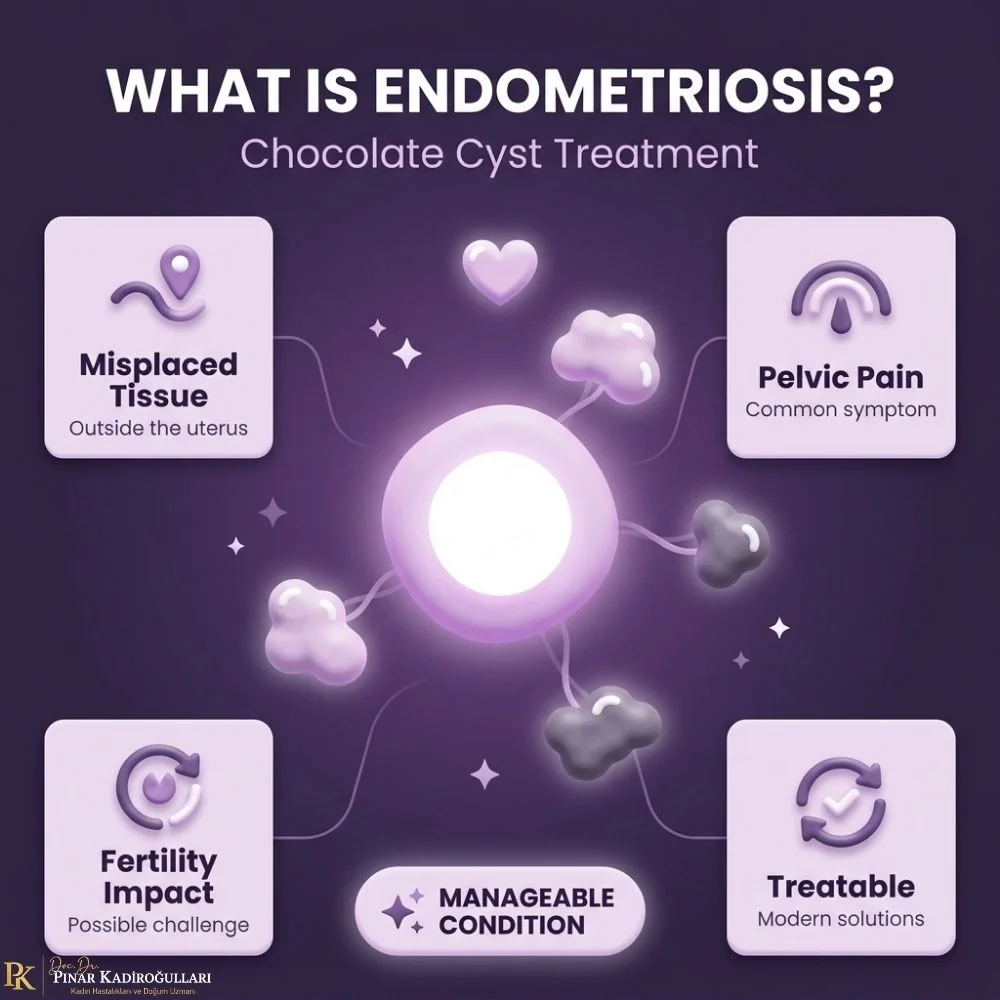
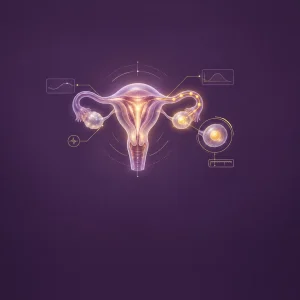
A chocolate cyst (endometrioma) is a cystic formation on the ovaries caused by endometriosis, filled with a dark brown fluid. Endometriosis is a condition in which tissue that should normally be present only in the inner lining of the uterus (the endometrium) grows outside the uterus—particularly on the ovaries, fallopian tubes, and within the pelvic region.
With each menstrual cycle, this tissue thickens, sheds, and bleeds in the same way as the normal endometrium; however, since it is located outside the uterus, the blood cannot be expelled. Over time, this leads to inflammation, adhesions, and pain. The main objectives of chocolate cyst treatment are as follows:
1. Pain Control: Reducing chronic pelvic pain and severe menstrual pain.
2. Preserving Fertility: Protecting ovarian reserve where possible.
3. Cyst Management: Controlling the cyst through laparoscopic surgery or hormonal therapy, depending on its size, the patient’s age, and her symptoms.
Important Information
Not every patient with a chocolate cyst requires surgery. While observation and hormonal therapy may be preferred for small, asymptomatic cysts, laparoscopic cystectomy may be preferred for cysts that are large, growing rapidly, or affecting fertility. The treatment decision should be made on an individualized basis.
Symptoms and Diagnosis of Chocolate Cysts
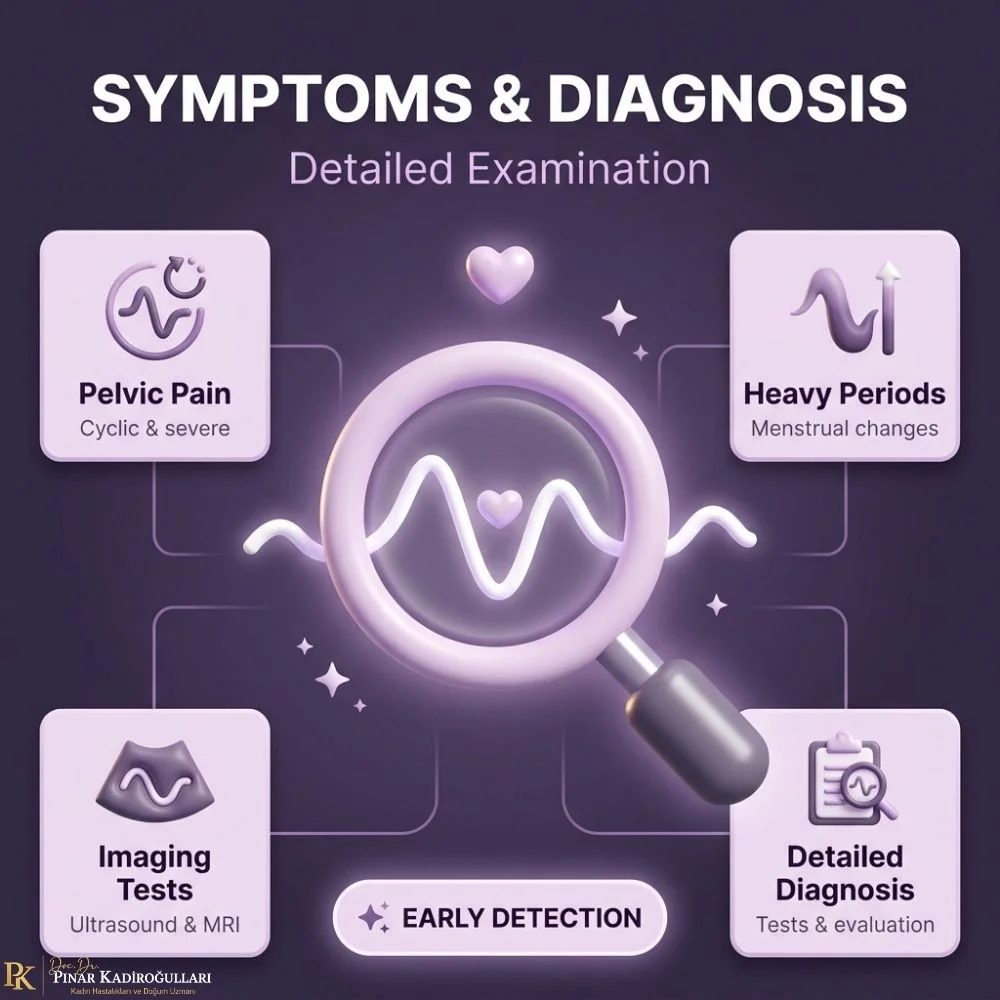
The success of chocolate cyst treatment begins with an accurate and early diagnosis. Symptoms can vary considerably from person to person; while some women present with severe pain, in others the condition may be discovered incidentally during an infertility evaluation.
The Most Common Symptoms
- Severe menstrual pain (dysmenorrhea): Pain that intensifies before and during menstruation
- Chronic pelvic pain: Lower abdominal pain that persists outside the menstrual period
- Pain during sexual intercourse (dyspareunia): Particularly during deep penetration
- Infertility: Pregnancy difficulties may be seen in some patients with endometriosis
- Menstrual irregularities: Irregular or excessive bleeding
- Chronic fatigue and weakness
Less Common Symptoms
- Pain during urination or bowel movements (especially during menstruation)
- Blood in the urine or stool during menstruation
- Digestive issues and bloating
- Lower back and leg pain
Diagnostic Methods
- Detailed Medical History: Inquiry into pain patterns, menstrual history, and pregnancy status
- Pelvic Examination: Assessment of tenderness and masses in the ovaries and pelvic organs
- Transvaginal Ultrasound: The first-line method in the diagnosis of chocolate cysts
- MRI Imaging: Evaluation of deep endometriotic foci
- CA-125 Tumor Marker: Provides additional information in endometriosis follow-up
- Laparoscopy: Allows both diagnosis and treatment
Doctor’s Advice
Severe menstrual pain is not normal. If your menstrual pain is affecting your work or daily life, does not respond to painkillers, or is increasing over time, you should seek a specialist evaluation. Diagnostic delay is common in endometriosis, and early diagnosis is important.
Chocolate Cyst Treatment Methods
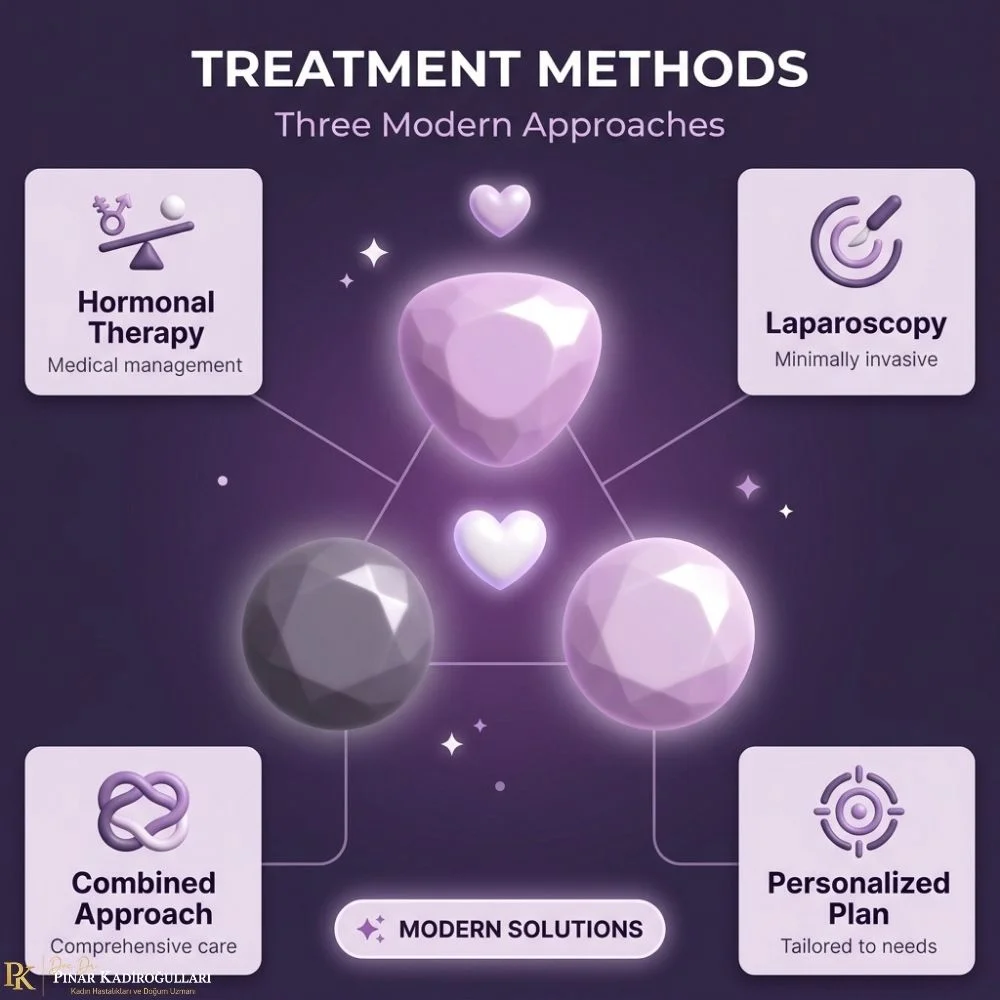
Chocolate cyst treatment is planned through a stepwise approach, based on the size of the cyst, the patient’s age, fertility goals, and severity of pain. The treatment plan is individualized to preserve ovarian reserve while taking the patient’s quality of life into account.
First-Line Treatment
Pharmacological Therapy and Hormonal Approaches
- Painkillers: May be used for mild to moderate pain as advised by the physician.
- Oral Contraceptives: Control menstrual pain and the growth of the cyst.
- Progesterone Therapy: Hormonal progestin treatment may be considered by the physician.
- GnRH Analogues: May be considered by the physician in selected cases.
Second-Line Treatment
Laparoscopic Surgery
- Laparoscopic Cystectomy: Removal of the chocolate cyst while preserving the ovarian tissue.
- Excision of Endometriotic Foci: Ablation or excision of all foci within the pelvis.
- Adhesiolysis: Release of tubal and pelvic adhesions.
- Features: Small incision scars; recovery and pain relief vary from person to person.
Third-Line Treatment
Assisted Reproductive Techniques for Infertility
- Intrauterine Insemination (IUI): For infertility cases with mild endometriosis.
- In Vitro Fertilization (IVF): In cases of moderate to advanced endometriosis and other infertility factors.
- Individualized Planning: A tailored approach based on the patient’s age, the condition of the cyst, and partner-related factors.
Lifestyle Recommendations and Prevention
During and after the chocolate cyst treatment process, lifestyle adjustments play a supportive role both in alleviating current symptoms and in slowing the progression of the disease. The following recommendations are evidence-based supportive treatments suggested by the ESHRE.
Nutritional Recommendations
- Anti-inflammatory diet: Omega-3 fatty acids (salmon, walnuts, flaxseed).
- High-fiber foods: Vegetables, fruits, and whole grains support estrogen balance.
- Antioxidant-rich foods: Leafy green vegetables and berries.
- A balanced, varied diet is recommended.
- Avoid trans fats: Processed foods and fast food.
- Limit caffeine and alcohol.
Exercise and Stress Management
- Regular moderate-intensity exercise: 30-45 minutes, 3-4 days a week.
- Yoga and Pilates: Recommended for pelvic relaxation and flexibility.
- Stress management: Meditation and breathing exercises help relieve pain.
- Adequate sleep: 7-8 hours per day supports hormonal balance.
⚠️ When to Consult a Physician
- Menstrual pain that interferes with daily life
- Severe pain that does not respond to painkillers
- Inability to conceive despite regular intercourse for one year
- Deep pelvic pain during sexual intercourse
- Blood in the urine or stool during menstruation
- Rapid growth of a previously diagnosed cyst
Important Reminder
Chocolate cysts and endometriosis are chronic conditions; with an accurate diagnosis, personalized treatment, and regular follow-up, symptoms can be managed. Results vary from person to person.

Frequently Asked Questions
Are chocolate cysts and endometriosis the same thing?
A chocolate cyst is the form of endometriosis seen on the ovaries. Endometriosis is a condition in which tissue from the inner lining of the uterus grows outside the uterus. When this tissue grows on the ovaries, it fills with blood and forms cysts containing chocolate-colored fluid (endometriomas). In other words, a chocolate cyst is a subtype of endometriosis.
Does a chocolate cyst always require surgery?
No, surgery is not required for every chocolate cyst. The treatment decision is based on the size of the cyst (generally over 4 cm), its growth rate, the severity of the patient’s pain, and her fertility goals. Small and asymptomatic cysts can be managed with hormonal therapy and follow-up; however, laparoscopic surgery is preferred for cysts that are large, growing rapidly, or affecting fertility.
Can I become pregnant after chocolate cyst surgery?
Pregnancy is possible after laparoscopic cystectomy; the effect on fertility varies from person to person and is evaluated by your physician. Techniques that preserve ovarian tissue aim to protect ovarian reserve.
Can chocolate cysts recur?
Since endometriosis is a chronic condition, there is a risk of recurrence with chocolate cysts . To reduce the risk of recurrence, postoperative hormonal suppression therapy may be considered by the physician. Regular follow-up is important for early intervention.
Does endometriosis pose a cancer risk?
Endometriosis is largely a benign condition, with a low likelihood of posing a cancer risk. In long-standing and untreated chocolate cysts, particularly in women over the age of 50, the risk may be slightly elevated. For this reason, regular follow-up and appropriate treatment are important.
Our Treatments





References
The medical content on this page has been prepared based on the current clinical guidelines and scientific publications of international and national authoritative organizations. An academic article by Assoc. Prof. Dr. Pınar Kadiroğulları on endometrioma (chocolate cysts) and laparoscopic cystectomy is also listed among the references.
ESHRE Endometriosis Clinical Practice Guideline (2022): 109 Evidence-Based Recommendations
Authors: Becker CM, Bokor A, Heikinheimo O, et al. — ESHRE Endometriosis Guideline Group | Publication: Human Reproduction Open 2022;2022(2):hoac009 | Source Type: International Endometriosis Clinical Guideline (PubMed)
ESHRE Endometriosis Guideline 2022 — Full Text (Diagnosis, Surgery, Infertility & Adolescent Management)
Author: ESHRE Endometriosis Guideline Group | Publication: Oxford Academic | Source Type: International Clinical Guideline Full Text (Open Access)
NICE NG73: Diagnosis and Management of Endometriosis — UK National Clinical Guideline (2024 Update)
Author: National Institute for Health and Care Excellence (NICE) | Publication: NICE Guideline NG73 | Source Type: UK National Clinical Guideline
The Effect of Surgical Removal of Endometriomas on Pelvic Pain: A Turkish Clinical Study
Author Institution: Turkish academics — Adana, Türkiye | Study: 23 patients, pre- and post-operative pain assessment of laparoscopic endometrioma cystectomy | Source Type: Turkish Peer-Reviewed Clinical Study (PubMed PMC, Full Text)
The Effects of Laparoscopic Cystectomy on Ovarian Reserve in Endometrioma and Dermoid Cysts
Authors: Karadağ C, Demircan S, Turgut A, Çalışkan E (Turkish academics) | Publication: Turkish Journal of Obstetrics and Gynecology (TJOD Journal) 2020 | Source Type: Turkish Peer-Reviewed Clinical Study (PubMed PMC)
Atypical Endometrioma Associated with a High Recurrence Rate: A Comprehensive Study of 2,681 Patients
Study: Retrospective analysis of 2,681 patients with endometriomas | Publication: Peer-Reviewed Scientific Journal 2020 | Source Type: Comprehensive Peer-Reviewed Clinical Study (PubMed PMC, Full Text)
Atypical Endometriosis: A Systematic Review of Pathological Patterns and Diagnostic Challenges
Publication: Biomedicines 2024 | Source Type: Peer-Reviewed Systematic Review (PubMed PMC, Full Text)
⭐ Academic Publications by Assoc. Prof. Dr. Pınar Kadiroğulları on Endometrioma
Scientific publications authored by the doctor in the field of chocolate cysts (endometriomas) and fertility preservation
Dermoid Tumor Coexisting with Endometrioma (Chocolate Cyst) in a Single Ovary: A Case of Atypical Endometrioma
Authors: Kıyak H, Kadiroğulları P, Karacan T, Seçkin KD, Karataş S | Publication: CRSLS – Journal of the Society of Laparoendoscopic Surgeons, April 2019 | Source Type: Peer-Reviewed Endometrioma Case Report
📍 This publication is a case report directly focused on endometrioma (chocolate cyst).
The Relationship Between HbA1c Levels and Ovarian Reserve: Fertility After Endometrioma Surgery
Authors: Kadiroğulları P, Demir E, Bahat PY, Kıyak H, Seçkin KD | Publication: Gynecological Endocrinology 2020;36(5):426-430 | Source Type: Peer-Reviewed Scientific Article — Assessment of Ovarian Reserve After Endometrioma (PubMed)
OHVIRA Syndrome: The Connection Between Congenital Anomalies and Endometriosis — Laparoscopic Hemi-Hysterectomy
Authors: Kıyak H, Türkgeldi LS, Yücel B, Karacan T, Kadiroğulları P, Seçkin KD | Publication: Fertility and Sterility 2019;112(1):177-179 | Source Type: High-Impact Peer-Reviewed Reproductive Medicine Journal
Important Note
The information on this page is intended for general informational purposes and does not replace individual medical advice. For personal questions regarding the diagnosis of chocolate cysts (endometriomas) or endometriosis, laparoscopic surgical planning, and your health, you should always consult your specialist gynecologist. The content of this page has been prepared by Assoc. Prof. Dr. Pınar Kadiroğulları in light of clinical experience and current scientific literature.
“Obstetrics and Gynecology”