


Assoc. Prof. Dr. Pınar Kadiroğulları
Assoc. Prof. Dr. Pınar Kadiroğulları is a specialist in obstetrics and gynecology. She specializes particularly in HPV treatment and cervical cancer prevention, providing holistic healthcare to her patients in the areas of pregnancy monitoring, genital aesthetics, and gynecological surgery.
By combining her academic background with clinical experience, she offers every patient an evidence-based, personalized treatment approach.
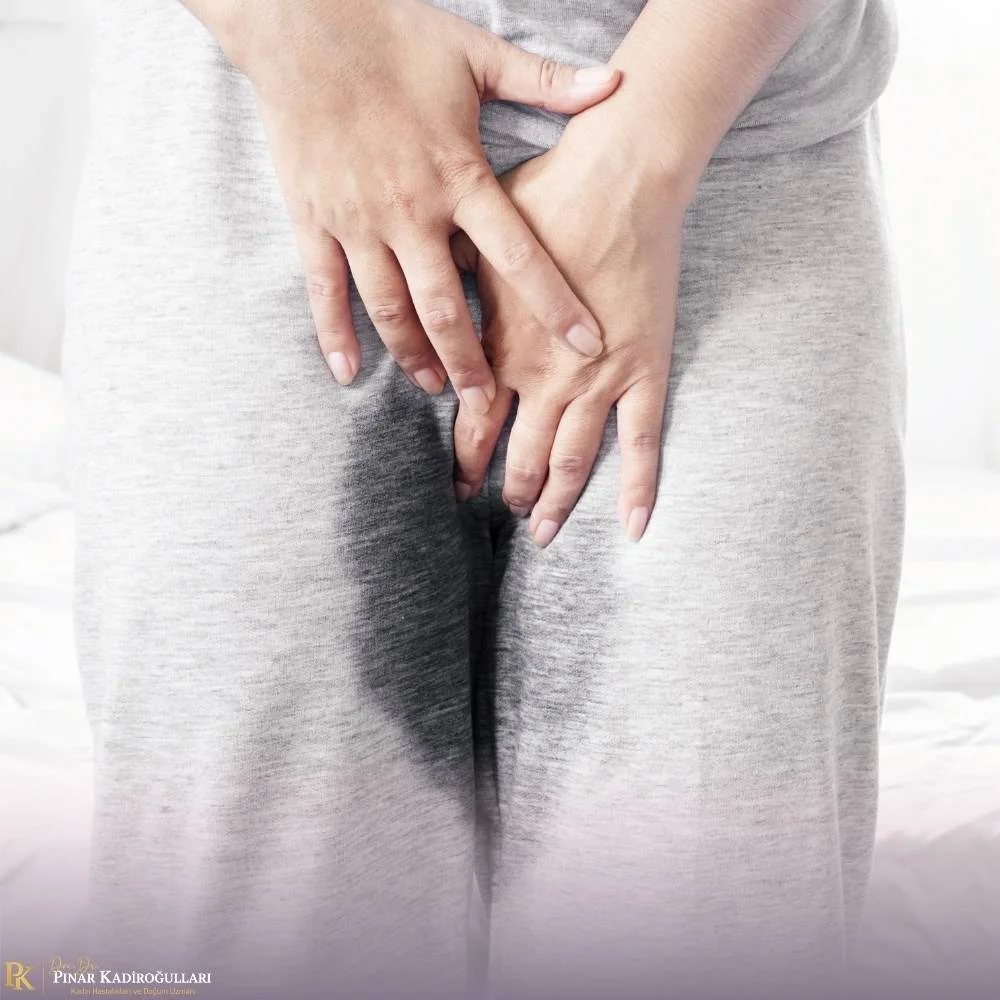
Urinary incontinence treatment requires a personalized approach to address a health issue that is common among women yet often kept hidden. In Türkiye, approximately 30-40% of adult women experience urinary incontinence at some point in their lives; however, only one-third of these patients consult a physician.
In modern urogynecology practice, a personalized treatment plan is developed in line with the guidelines of the ICS (International Continence Society) and the EAU (European Association of Urology), taking into account the type and severity of the symptoms as well as the patient’s lifestyle. With her experience in urogynecology at her clinic in Nişantaşı, Istanbul, Assoc. Prof. Dr. Pınar Kadiroğulları offers both surgical and non-surgical methods for pelvic floor health through a holistic approach.
Information Note
Urinary incontinence is not “a natural part of aging” and is a health issue that can definitely be treated. With early intervention, successful results can be achieved in most patients through non-surgical methods. You can also visit our Pelvic Organ Prolapse Treatment page →
What Is Urinary Incontinence?
Urinary incontinence is a health issue characterized by the involuntary leakage of urine, which negatively affects quality of life from both social and hygienic perspectives. It occurs twice as frequently in women as in men, and its prevalence increases particularly after childbirth, during menopause, and in advanced age.
This condition often develops due to the weakening of the pelvic floor muscles, impaired bladder control, or hormonal changes. The main objectives of urinary incontinence treatment are as follows:
1. Identifying the Underlying Cause: The type and severity of incontinence are determined through a detailed medical history, urodynamic testing, and pelvic examination.
2. Improving Quality of Life: Restoring participation in social activities, sexual life, and daily routines.
3. Long-Term Solution: Strengthening the pelvic floor muscles and, when necessary, achieving lasting results through minimally invasive surgery.
Important Information
Urinary incontinence is not something to be ashamed of; it is a treatable health condition. The vast majority of patients achieve significant improvement through non-surgical methods. What matters is acknowledging the problem and consulting a specialist.
Types and Symptoms of Urinary Incontinence
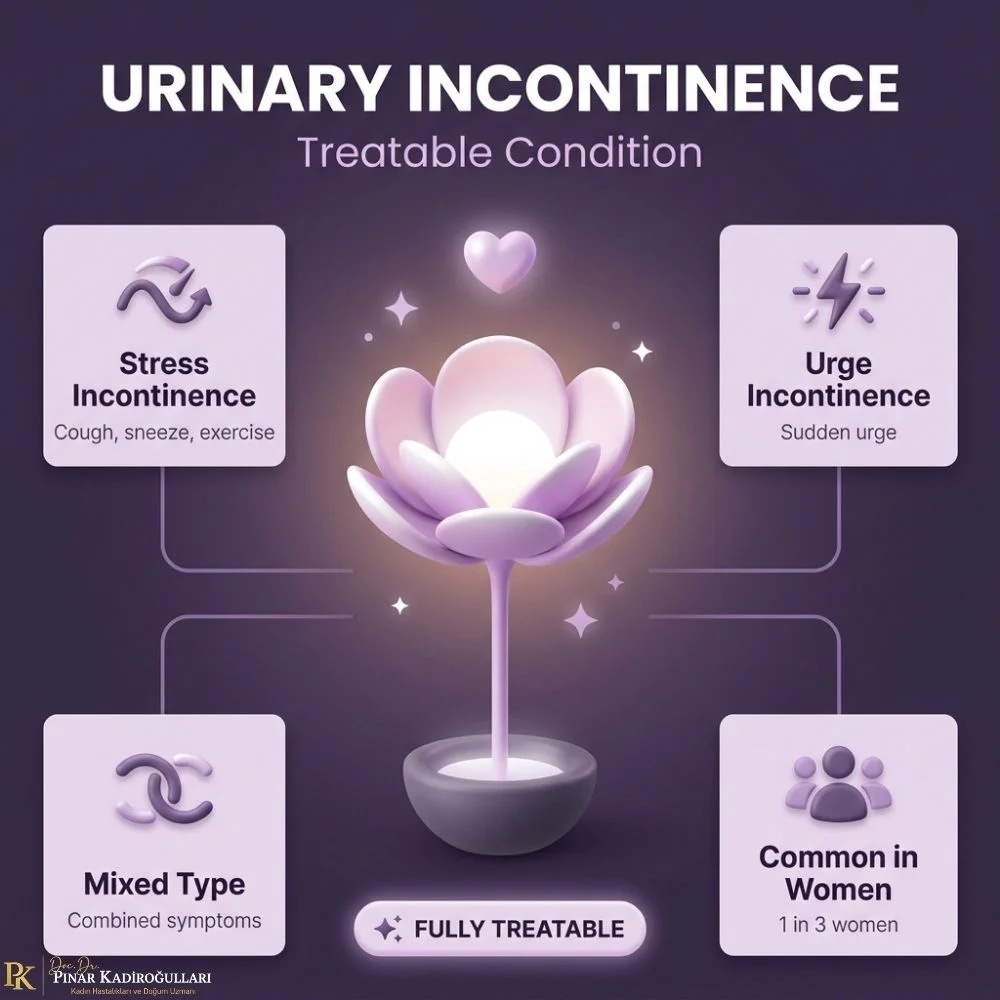
For urinary incontinence treatment to be successful with the right approach, the correct identification of the type of incontinence is essential. In clinical practice, there are four main types of incontinence, each requiring a different treatment approach.
1. Stress Incontinence (Leakage Without Urgency)
- Leakage during coughing, sneezing, laughing, or lifting heavy objects
- Develops due to weakening of the pelvic floor muscles
- The most common type — present in 50% of women
- Associated with childbirth, menopause, and obesity
2. Urge Incontinence (Overactive Bladder)
- A sudden and uncontrollable urge to urinate
- Leakage before reaching the toilet
- Frequent urination (more than 8 times a day)
- Waking up two or more times at night to use the toilet
3. Mixed Incontinence
- The presence of both stress and urge incontinence
- Generally more common in older age
- Treatment requires a combined approach addressing both types
4. Overflow Incontinence
- Continuous leakage caused by incomplete emptying of the bladder
- Complaints of constant dripping leakage
- May be due to diabetes, nerve damage, or obstruction
- Less common but requires advanced evaluation
Doctor’s Advice
Identifying which type matches your symptoms on your own can be difficult. For this reason, a detailed examination and, if necessary, urodynamic testing are critically important for an accurate treatment plan. Treatment based on an incorrect diagnosis may fail.

Urinary Incontinence Treatment Methods
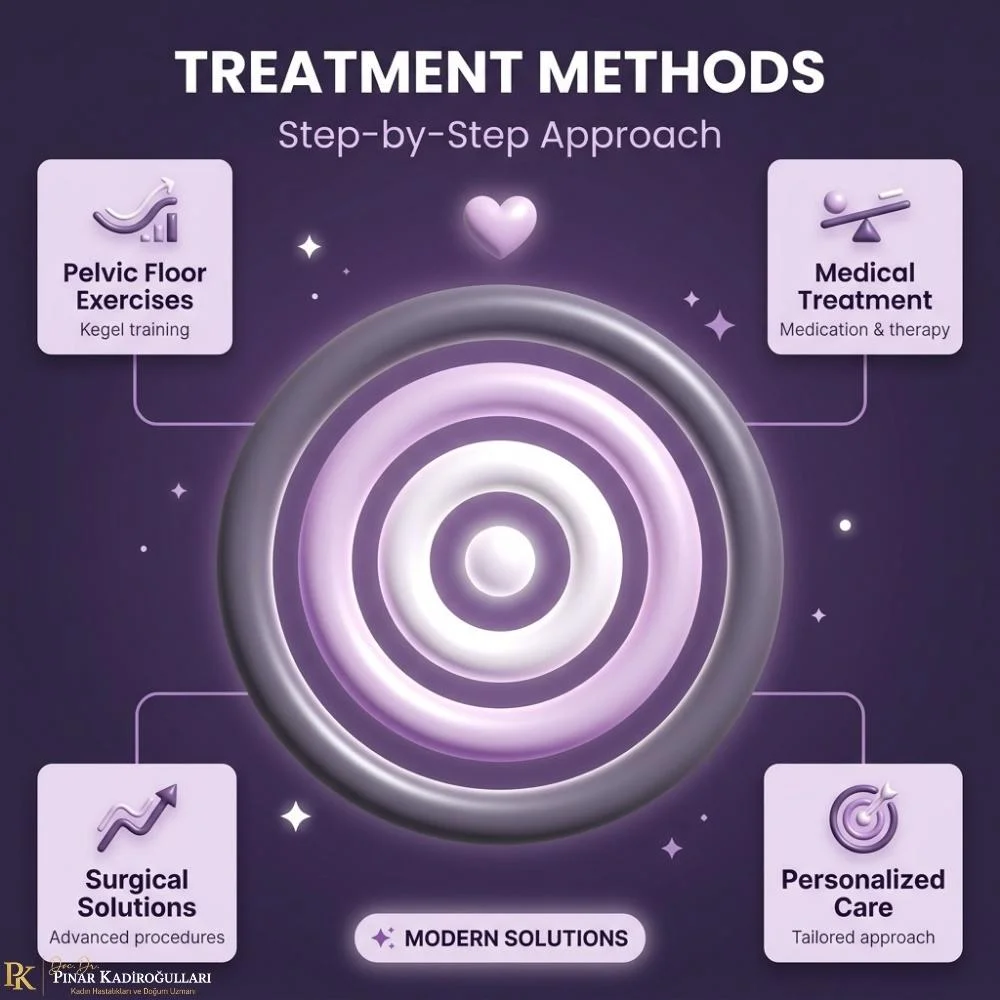
Urinary incontinence treatment is planned through a stepwise approach, based on the type and severity of incontinence and the patient’s lifestyle. Generally, non-surgical methods are preferred as the first-line treatment.
First-Line Treatment
Behavioral Therapy and Pelvic Floor Exercises
- Kegel Exercises: Regular contraction-relaxation training of the pelvic floor muscles.
- Bladder Training: Gradually increasing the intervals between urinations.
- Fluid Management: Regulating the intake of caffeine, alcohol, and excessive fluids.
- Weight Control: Reducing the pressure of excess weight on the pelvic floor.
Second-Line Treatment
Pharmacological Treatment and Local Estrogen
- Antimuscarinic Medications: Reduce bladder contractions in urge incontinence.
- Beta-3 Agonists: A modern class of medications that increase bladder capacity.
- Vaginal Estrogen: Local hormone therapy for the postmenopausal period.
- Biofeedback: Device-assisted training of the pelvic floor muscles.
Third-Line Treatment
Surgical and Advanced Methods
- TOT/TVT Sling Surgery: The gold-standard minimally invasive surgery for stress incontinence.
- Botox Injection: For drug-resistant cases of overactive bladder.
- Sacral Neuromodulation: Restoring bladder control through nerve stimulation.
- Laser Therapy: A non-surgical regenerative method.
Lifestyle Recommendations and Prevention
During the urinary incontinence treatment process, lifestyle adjustments play a critical role both in alleviating current symptoms and in maintaining lasting results after treatment. The following recommendations are evidence-based suggestions from the ICS (International Continence Society).
Recommendations for Daily Life
- Healthy weight control: Aim to keep your BMI below 25.
- Prevent constipation: Maintain a fiber-rich diet and drink 1.5-2 L of water per day.
- Quit smoking: Chronic coughing weakens the pelvic floor.
- Reduce heavy lifting: Learn proper lifting techniques.
- Regular Kegel exercises: 3 sets per day, with 10 repetitions each.
Nutrition and Fluid Intake
- Reduce caffeine and alcohol consumption (they irritate the bladder).
- Acidic beverages and artificial sweeteners may worsen symptoms.
- Limit fluid intake after 6:00 PM.
- Spicy foods may trigger urgency in some individuals.
⚠️ When to Consult a Physician
- Leakage frequent enough to affect your quality of daily life
- Blood in the urine or a burning sensation
- Recurrent urinary tract infections
- Pain or pressure in the pelvic region
- Symptoms affecting your sexual life
Important Reminder
Urinary incontinence is not a permanent fate but a treatable condition. With an accurate diagnosis and an appropriate treatment protocol, the vast majority of patients are either freed from their symptoms or experience significant improvement. Early consultation enhances the effectiveness of treatment.

Frequently Asked Questions
Can urinary incontinence be treated?
Yes, urinary incontinence treatment is highly successful. Approximately 80% of patients experience complete relief or significant improvement with appropriate treatment. Treatment options are tailored to each individual, and non-surgical methods are preferred as the first-line approach.
How long does it take for Kegel exercises to take effect?
When performed regularly and correctly, Kegel exercises typically show their first positive effects within 4-6 weeks. For maximum results, regular practice for at least 3-6 months is recommended. The ideal regimen is 3 sets per day, with 10 repetitions in each set.
In which cases is surgical treatment required?
Within the scope of urinary incontinence treatment, surgical options are recommended for moderate to advanced stress incontinence that does not respond to behavioral therapy or medication and significantly affects quality of life. The TOT/TVT sling procedure is a minimally invasive method and is considered the gold standard, with a success rate of 85-95%.
Is urinary incontinence after childbirth normal?
In the first weeks following childbirth, temporary urinary incontinence is common and typically resolves on its own within 6-8 weeks. However, symptoms persisting beyond 3 months are not considered normal and should definitely be evaluated. Kegel exercises started in the early postpartum period are effective in preventing persistent symptoms.
Is urinary incontinence a natural part of aging?
No, it is definitely not a natural part of aging. Although its frequency increases with age, urinary incontinence is a medical condition that can be treated at any age. Avoiding consultation with the thought “it’s just because of my age” both reduces quality of life and may lead to overlooking an underlying treatable condition.
Our Treatments


References
The medical content on this page has been prepared based on the current clinical guidelines and scientific publications of international and national authoritative organizations. In addition to clinical studies conducted in Türkiye, the publications of Assoc. Prof. Dr. Pınar Kadiroğulları in the field of pelvic floor surgery are also included as references.
EAU Clinical Guideline: Management of Non-Neurogenic Female Lower Urinary Tract Symptoms (LUTS) 2024
Author: European Association of Urology (EAU) Working Panel | Publication: EAU 2024 Annual Update | Source Type: European Clinical Guideline (Official Website)
EAU Guideline on Female Non-Neurogenic LUTS: Diagnosis and Management of OAB, SUI, and MUI (Part 1)
Authors: Nambiar AK, et al. — EAU Working Panel | Publication: European Urology 2022;82(1):49-59 | Source Type: International Clinical Guideline (PubMed)
NICE NG123: Urinary Incontinence and Pelvic Organ Prolapse in Women — UK National Clinical Guideline
Author: National Institute for Health and Care Excellence (NICE) | Publication: NICE Guideline NG123 | Source Type: National Clinical Guideline
Prevalence of Lower Urinary Tract Symptoms, Overactive Bladder, and Urinary Incontinence in Western Türkiye: The First Population-Based Study in Türkiye
Study: 1,555 Turkish individuals; 21.2% stress UI and 12.8% OAB in women | Publication: Peer-Reviewed Scientific Study 2014 | Source Type: Türkiye’s Largest Population-Based UI Study (PubMed)
Prevalence, Risk Factors, and Quality of Life Impact of Urinary Incontinence in Turkish Women
Study: 1,012 Turkish women, cross-sectional research in those over 18, ICIQ-SF score | Publication: European Journal of Obstetrics & Gynecology 2005 | Findings: UI prevalence of 23.9% | Source Type: Turkish Peer-Reviewed Clinical Study (PubMed)
Comparison of TVT (Tension-Free Vaginal Tape) and TOT (Transobturator Tape): A 10-Year Turkish Study
Author Institution: Istanbul Kanuni Sultan Süleyman Training and Research Hospital | Study: 117 Turkish women, 28 TVT + 89 TOT, average follow-up of 10 years | Publication: Peer-Reviewed Clinical Study 2024 | Source Type: Turkish Peer-Reviewed Comprehensive Clinical Study (PubMed PMC, Full Text)
ACOG/AUGS Joint Practice Bulletin 214: The Relationship Between Pelvic Organ Prolapse and Urinary Incontinence
Authors: American College of Obstetricians and Gynecologists (ACOG) & American Urogynecologic Society (AUGS) | Publication: Obstet Gynecol 2019;134:e126-e142 | Source Type: International Clinical Guideline (PubMed)
⭐ Academic Publications by Assoc. Prof. Dr. Pınar Kadiroğulları on Pelvic Floor Surgery
Related to urinary incontinence — publications authored by the doctor in the fields of pelvic floor surgery, uterosacral ligament suspension, and the preservation of sexual/urinary function
Modified Extraperitoneal Uterosacral Ligament Suspension: A 4-Clamp Technique in Pelvic Floor Surgery
Authors: Kadiroğulları P, Seçkin KD | Publication: Journal of Investigative Surgery 2019 | Source Type: Peer-Reviewed Pelvic Surgery Clinical Research (PubMed)
📍 This publication is directly related to pelvic floor surgery — it describes uterosacral ligament suspension, a fundamental technique in the surgical management of urinary incontinence, which is frequently associated with apical prolapse.
Abdominal Hysterectomy with a Uterine Manipulator: An RCT on the Preservation of Vaginal Structure and Pelvic Anatomy
Authors: Kıyak H, Karacan T, Özyürek ES, Türkgeldi LS, Kadiroğulları P, Seçkin KD | Publication: Journal of Investigative Surgery 2021;34(10):1052-1058 | Source Type: Randomized Controlled Clinical Trial (PubMed)
The Effect of Dydrogesterone Use on Female Sexual Function: The Urinary-Sexual Connection
Authors: Yalçın Bahat P, Yücel B, Yuksel Özgör B, Kadiroğulları P, Topbas Selçuki NF, Çakmak K | Publication: Journal of Obstetrics and Gynaecology 2022;42(5):1276-1279 | Source Type: Peer-Reviewed Clinical Research (PubMed)
Important Note
The information on this page is intended for general informational purposes and does not replace individual medical advice. For personal questions regarding the diagnosis of urinary incontinence, treatment planning, and your health, you should always consult your specialist gynecologist. The content of this page has been prepared by Assoc. Prof. Dr. Pınar Kadiroğulları in light of clinical experience and current scientific literature.
“Cutting-Edge Technology & Expert Experience”